Blue Blowfly

Blue Blowfly

Calliphora vicina

Daily sighting probability ~10% · With luck
at Liverpool

In 3 days ~20% in a week ~40%

16 Verified sightings at Liverpool
February Best month
☀️ Diurnal When it's spotted

About the Blue Blowfly

Calliphora vicina is a member of the family Calliphoridae, which includes blow flies and bottle flies. These flies are important in the field of forensic entomology, being used to estimate the time of a person's death when a corpse is found and then examined. C. vicina is currently one of the most entomologically important fly species for this purpose because it arrives at and colonizes a body following death in consistent timeframes.

Calliphora vicina was described by the French entomologist Jean-Baptiste Robineau-Desvoidy in 1830. Its specific epithet is derived from the Latin vicinus 'neighbouring'. Calliphora vicina is closely related to Calliphora vomitoria, another species important in forensics.

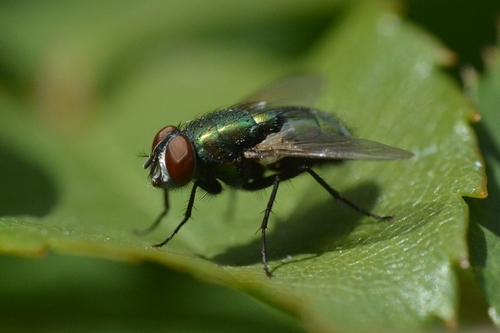
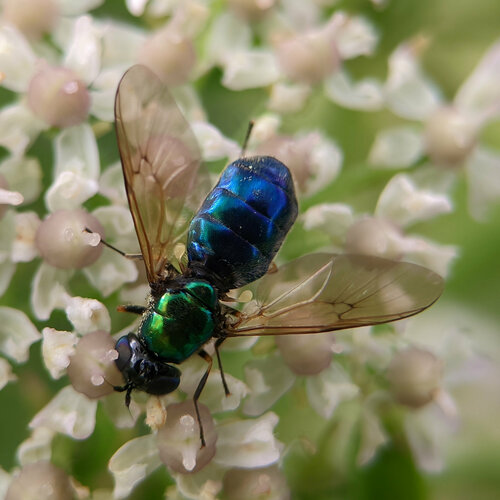
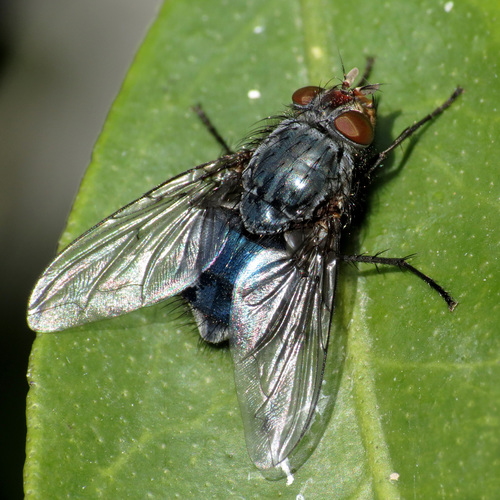
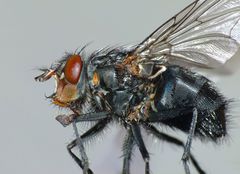
Calliphora vicina is known as a blue bottle fly because of the metallic blue-gray coloration of its thorax and abdomen. It is distinguished from the commonly known C. vomitoria by its bright orange cheeks. The blue bottle fly is approximately 10–11 mm in length. The sclerites at the base of the coxa are yellow or orange. By chaetotaxy, the study of bristle arrangement, Calliphorids are characterized by having black bristles on the meron and two to three... Wikipedia →
Global Distribution

Parks Where Found

# Park Country Daily sighting probability

More parks will be added in future updates.

Cities Where Found

# City Country Daily sighting probability
1 Ramallah 🇵🇸 Palestine
~30%
2 Jerusalem 🇮🇱 Israel
~20%
3 Santiago 🇨🇱 Chile
~10%
4 Montevideo 🇺🇾 Uruguay
~10%
5 Tel Aviv 🇮🇱 Israel
~10%
6 Auckland 🇳🇿 New Zealand
~10%
7 Melbourne 🇦🇺 Australia
~10%
8 Hobart 🇦🇺 Australia
~10%
9 Athens 🇬🇷 Greece
~10%
10 Madrid 🇪🇸 Spain
~10%

Before you go

What are the chances of seeing a Blue Blowfly in Liverpool?

With luck

About 10% of wildlife watchers report a Blue Blowfly sighting in Liverpool on a given day, based on 16 verified sightings from GBIF citizen-science data. It is the 361st most-seen of the 632 insects we can rate there. Over three days the chance rises to about 20%, and over a week to about 40%, if each day is a fresh chance.

When is the best time to see a Blue Blowfly in Liverpool?

February

In that month about 20% of wildlife watchers report a Blue Blowfly in Liverpool on a given day, against under 5% in May–October and December, the lowest months.

What time of day is best to see a Blue Blowfly?

Between 9 am and noon

Across all the parks we cover, that three-hour window holds the most Blue Blowfly sightings with a recorded time, and nearly all of them come between 6 am and 6 pm: it is a daytime animal.

Is Liverpool the best place to see a Blue Blowfly?

12th of 41

Of the 41 cities where we can rate Blue Blowfly sightings, Liverpool ranks 12th at about 10%. The best odds are in Ramallah (Palestine, about 30%), Jerusalem (Israel, about 20%) and Santiago (Chile, about 10%).

Where does the Blue Blowfly sighting chance come from?

GBIF citizen-science records

It is estimated from how often the Blue Blowfly is recorded against all the insects logged in Liverpool (16 verified sightings), calibrated against known sighting rates. Figures are rounded to the nearest 10% because citizen-science data supports honest approximations, not decimals, and months with records from fewer than five people show "—". How it works.

← Back to Liverpool