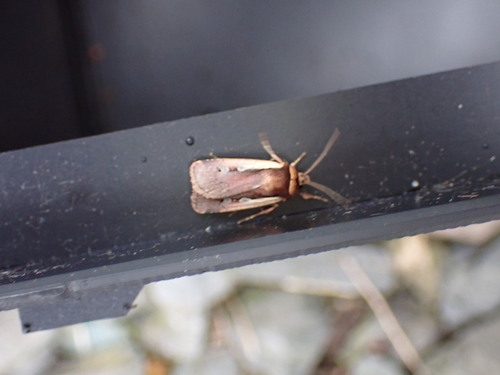
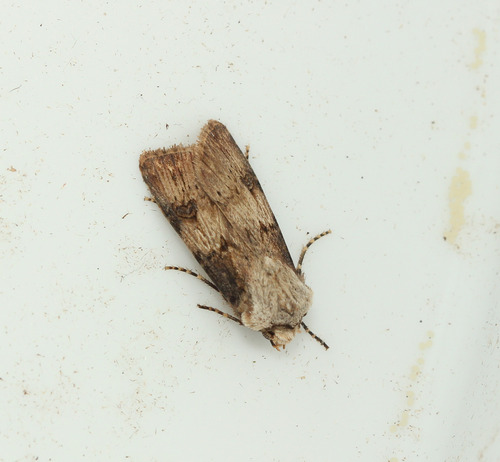
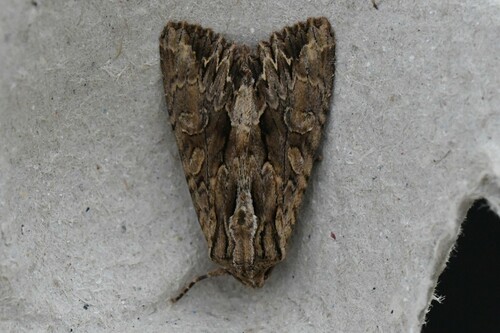
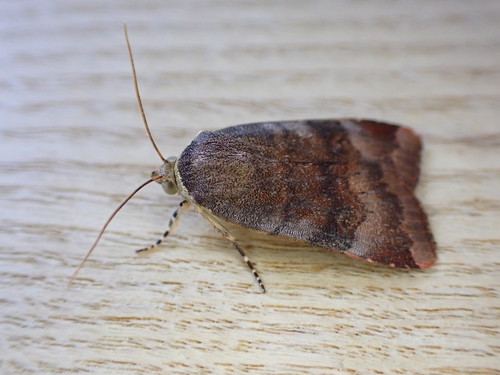
Bright-Line Brown-Eye

Bright-Line Brown-Eye

Lacanobia oleracea

Daily sighting probability ~30% · Possible
at Liverpool

In 3 days ~60% in a week ~90%

154 Verified sightings at Liverpool
159 In all 4 parks From 2019 to 2026
June Best month
🌅 Crepuscular When it's spotted

About the Bright-Line Brown-Eye

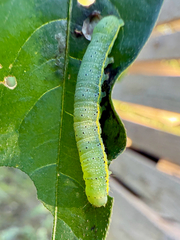
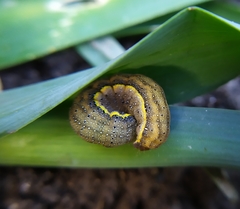
The bright-line brown-eye (Lacanobia oleracea) is a moth of the family Noctuidae. The species was first described by Carl Linnaeus in his 1758 10th edition of Systema Naturae. It is a common species throughout Europe, but is also found in North Africa (Morocco and Algeria), temperate North Asia and Central Asia, Asia Minor, Syria, and Turkestan, northern India, China, Korea and Japan.

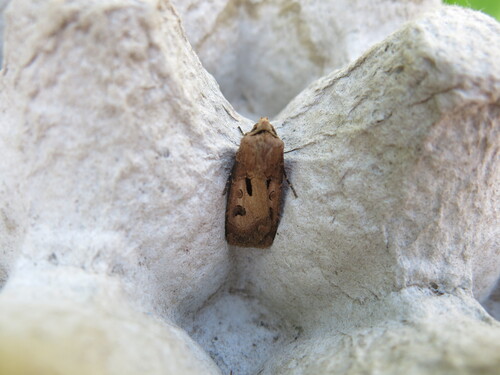
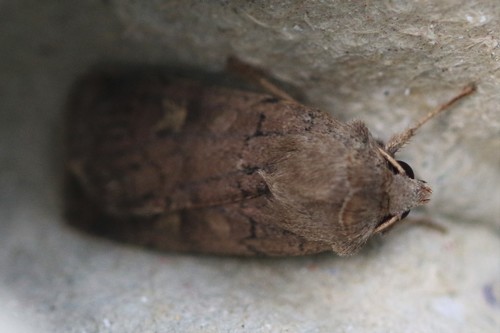
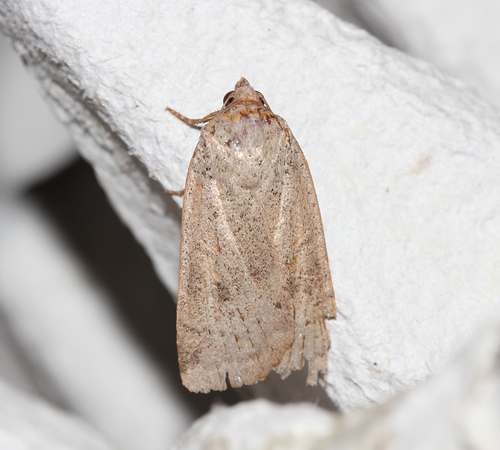
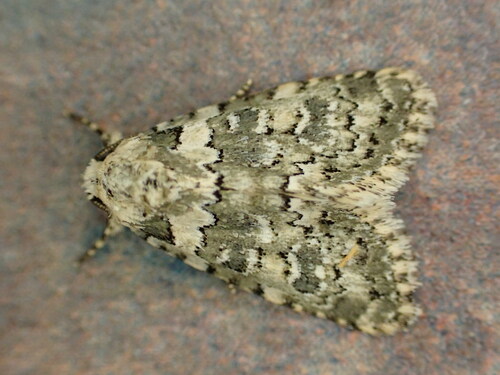
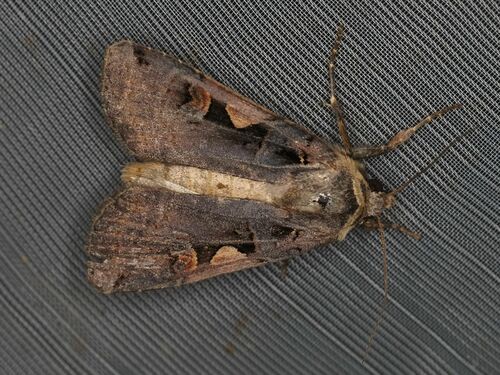
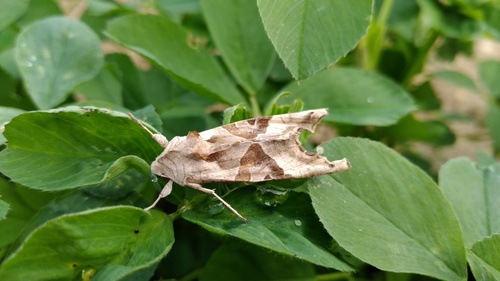
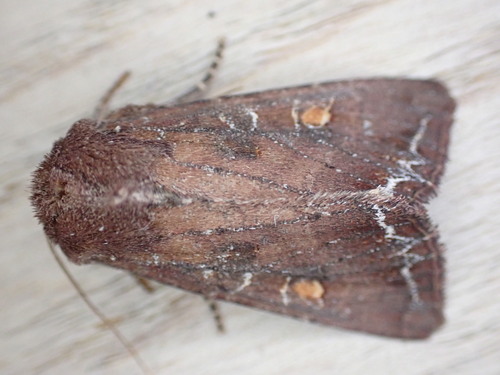
This species' common name is usefully descriptive: The forewings are dark reddish brown marked with a prominent light orange-brown stigma and a bright white subterminal line. The hindwings are grey, darker towards the termen. The wingspan is 34–44 mm. They are attracted to light, sugar and nectar-rich flowers.

[Wingspan 35 to 40 mm.] Forewing red brown clouded with darker; veins grey, whitish towards termen: reniform stigma orange in its upper part, dark fuscous below; orbicular round, white edged, sometimes very small; submarginal line finely white, toothed on veins 3 and 4 to termen; hindwing dull whitish, pale fuscous towards termen; the veins dark. The ground colour varies on one side to black brown, ab. obscura Spul, and on the other to rufous, ab. rufa... Wikipedia →
Global Distribution

Parks Where Found

# Park Country Daily sighting probability
1 Snowdonia National Park 🇬🇧 United Kingdom
~20%
2 Wadden Sea National Park 🇩🇪 Germany
~10%
3 Bavarian Forest National Park 🇩🇪 Germany
~10%
4 Pyrénées National Park 🇫🇷 France
<5%

Cities Where Found

# City Country Daily sighting probability
1 Liverpool 🇬🇧 United Kingdom
~30%
2 Kharkiv 🇺🇦 Ukraine
~10%
3 Manchester 🇬🇧 United Kingdom
~10%
4 Birmingham 🇬🇧 United Kingdom
~10%
5 Porto 🇵🇹 Portugal
~10%
6 Kyiv 🇺🇦 Ukraine
~10%
7 London 🇬🇧 United Kingdom
~10%
8 Hamburg 🇩🇪 Germany
~10%
9 Leeds 🇬🇧 United Kingdom
~10%
10 Amsterdam 🇳🇱 Netherlands
<5%

Before you go

What are the chances of seeing a Bright-Line Brown-Eye in Liverpool?

Possible

About 30% of wildlife watchers report a Bright-Line Brown-Eye sighting in Liverpool on a given day, based on 154 verified sightings from GBIF citizen-science data. It is the 58th most-seen of the 632 insects we can rate there. Over three days the chance rises to about 60%, and over a week to about 90%, if each day is a fresh chance.

When is the best time to see a Bright-Line Brown-Eye in Liverpool?

June and July

In those months about 40% of wildlife watchers report a Bright-Line Brown-Eye in Liverpool on a given day, against under 5% in November to March, the lowest months.

What time of day is best to see a Bright-Line Brown-Eye?

Between 6 and 9 am

Across all the parks we cover, that three-hour window holds the most Bright-Line Brown-Eye sightings with a recorded time, and about 6 in 10 of them come between 6 am and 6 pm: it is most active around dawn and dusk.

Is Liverpool the best place to see a Bright-Line Brown-Eye?

Yes

Of the 22 cities where we can rate Bright-Line Brown-Eye sightings, Liverpool has the highest daily chance: about 30%. Next come Kharkiv (Ukraine, about 10%) and Manchester (United Kingdom, about 10%).

Which relatives of the Bright-Line Brown-Eye live in Liverpool?

Same family: Noctuidae

The closest relatives of the Bright-Line Brown-Eye that you can see in Liverpool (family Noctuidae, Cutworm Moths and Allies) are Large Yellow Underwing (about 50%), Silver Υ (about 40%) and Heart And Dart (about 40%), with each one's daily chance of a sighting.

Where does the Bright-Line Brown-Eye sighting chance come from?

GBIF citizen-science records

It is estimated from how often the Bright-Line Brown-Eye is recorded against all the insects logged in Liverpool (154 verified sightings), calibrated against known sighting rates. Figures are rounded to the nearest 10% because citizen-science data supports honest approximations, not decimals, and months with records from fewer than five people show "—". How it works.

← Back to Liverpool