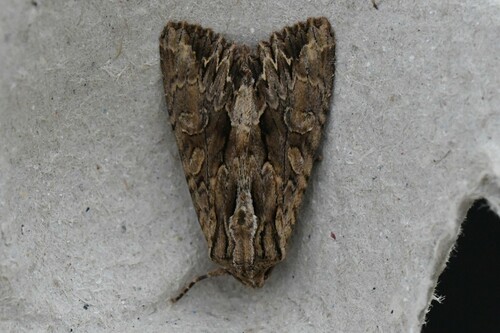
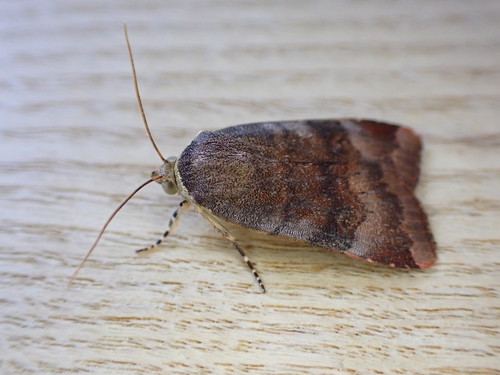
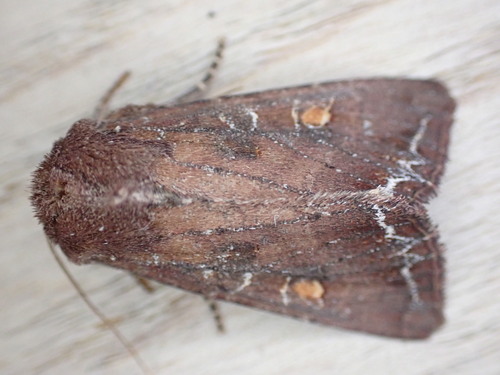
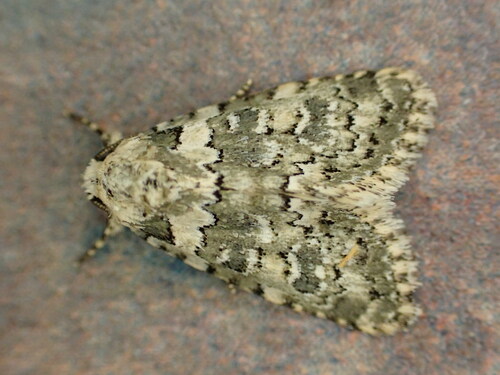
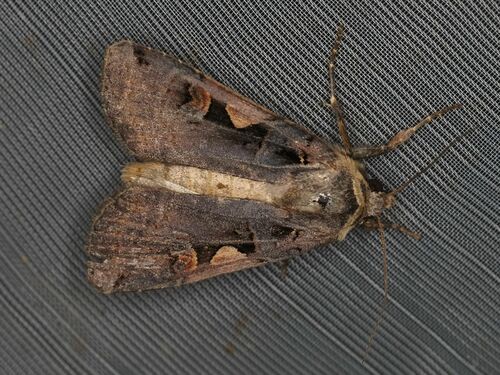
Mullein Moth

Mullein Moth

Cucullia verbasci

Daily sighting probability ~10% · With luck
at Liverpool

In 3 days ~20% in a week ~40%

15 Verified sightings at Liverpool
41 In all 4 parks From 2019 to 2026
June Best month
☀️ Diurnal When it's spotted

About the Mullein Moth

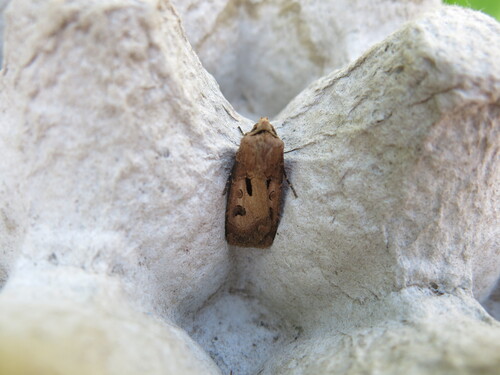
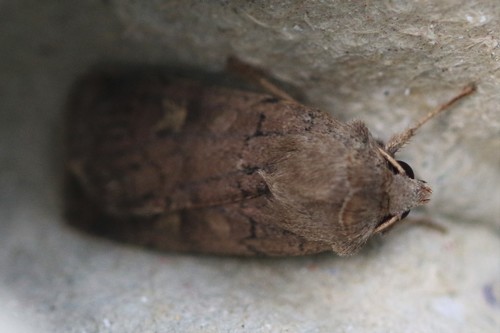
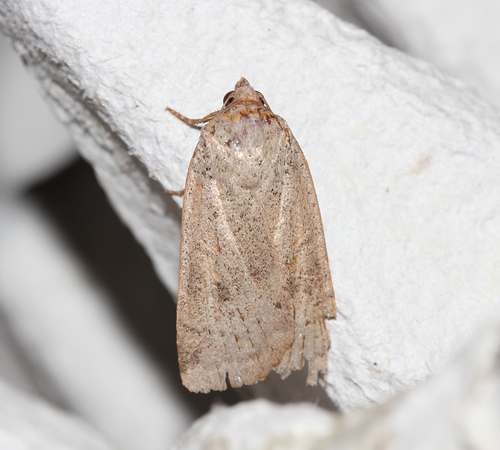
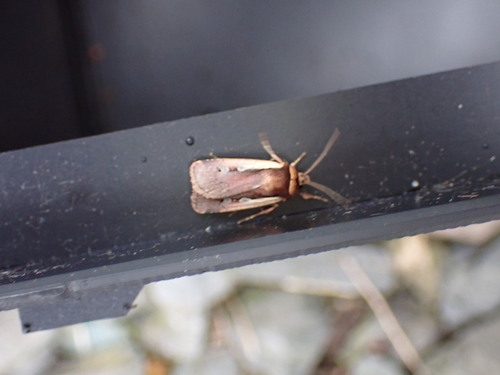
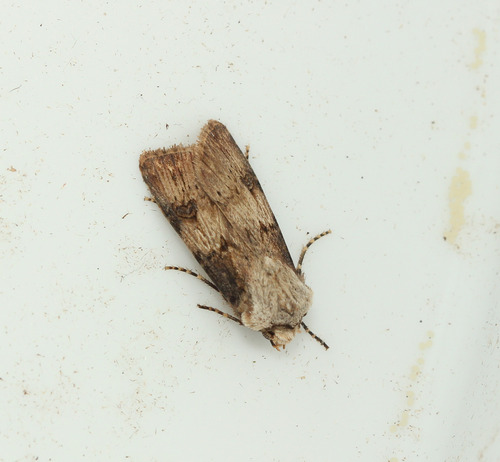
The mullein moth (Cucullia verbasci) is a noctuid moth with a Palearctic distribution. The species was first described by Carl Linnaeus in his landmark 1758 10th edition of Systema Naturae. The forewing is broad (for the genus) and brownish ochreous; the costal streak and those preceding and following the lower part of outer line are a deep red brown; the lunules following the line are white and conspicuous; the space below median paler, becoming almost whitish above the outer dark brown streak; the stigmata are marked by dark brown spots; a row of deep brown streaks from apex to vein 6, and another, more faint, from below the apex to the end of cell. The hindwing of the male is whitish, with dark veins and cellspot, becoming diffusely fuscous along the termen; in the female it is darker throughout.

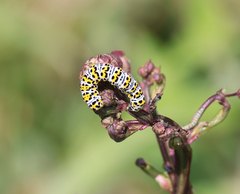
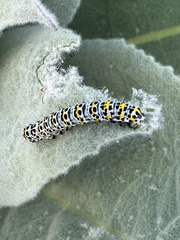
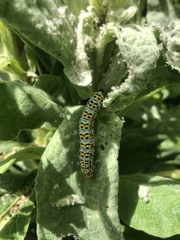
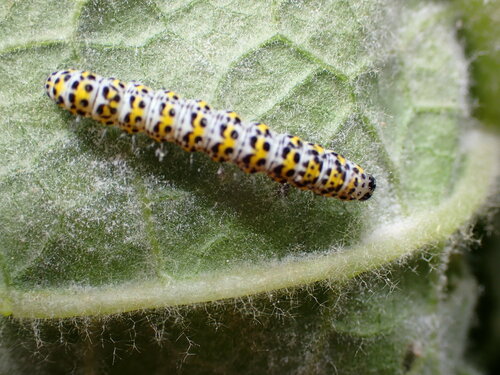
The larva is creamy with black and yellow spots. Cucullia verbasci is difficult to certainly distinguish from these congeners. Shargacucullia scrophulariae (Denis & Schiffermüller, 1775) Shargacucullia lychnitis (Rambur, 1833)

It is found in western, southern and central Europe and North Africa. However, there are only individual finds... Wikipedia →
Global Distribution

Parks Where Found

# Park Country Daily sighting probability
1 Snowdonia National Park 🇬🇧 United Kingdom
~10%
2 Fertő-Hanság National Park 🇭🇺 Hungary
~10%
3 Cévennes National Park 🇫🇷 France
~10%
4 Bavarian Forest National Park 🇩🇪 Germany
~10%

Cities Where Found

# City Country Daily sighting probability
1 Birmingham 🇬🇧 United Kingdom
~10%
2 Liverpool 🇬🇧 United Kingdom
~10%
3 London 🇬🇧 United Kingdom
~10%
4 Manchester 🇬🇧 United Kingdom
~10%
5 Lyon 🇫🇷 France
~10%
6 Prague 🇨🇿 Czechia
<5%
7 Rome 🇮🇹 Italy
<5%
8 Munich 🇩🇪 Germany
<5%
9 Copenhagen 🇩🇰 Denmark
<5%
10 Vienna 🇦🇹 Austria
<5%

Before you go

What are the chances of seeing a Mullein Moth in Liverpool?

With luck

About 10% of wildlife watchers report a Mullein Moth sighting in Liverpool on a given day, based on 15 verified sightings from GBIF citizen-science data. It is the 344th most-seen of the 632 insects we can rate there. Over three days the chance rises to about 20%, and over a week to about 40%, if each day is a fresh chance.

When is the best time to see a Mullein Moth in Liverpool?

June

In that month about 20% of wildlife watchers report a Mullein Moth in Liverpool on a given day, against under 5% in July to April, the lowest months.

What time of day is best to see a Mullein Moth?

Between 9 am and noon

Across all the parks we cover, that three-hour window holds the most Mullein Moth sightings with a recorded time, and about 8 in 10 of them come between 6 am and 6 pm: it is a daytime animal.

Is Liverpool the best place to see a Mullein Moth?

Among the best

Of the 10 cities where we can rate Mullein Moth sightings, Liverpool ranks 2nd at about 10%, level with the leaders once rounded. The best odds are in Birmingham (United Kingdom, about 10%).

Which relatives of the Mullein Moth live in Liverpool?

Same family: Noctuidae

The closest relatives of the Mullein Moth that you can see in Liverpool (family Noctuidae, Cutworm Moths and Allies) are Large Yellow Underwing (about 50%), Silver Υ (about 40%) and Heart And Dart (about 40%), with each one's daily chance of a sighting.

Where does the Mullein Moth sighting chance come from?

GBIF citizen-science records

It is estimated from how often the Mullein Moth is recorded against all the insects logged in Liverpool (15 verified sightings), calibrated against known sighting rates. Figures are rounded to the nearest 10% because citizen-science data supports honest approximations, not decimals, and months with records from fewer than five people show "—". How it works.

← Back to Liverpool