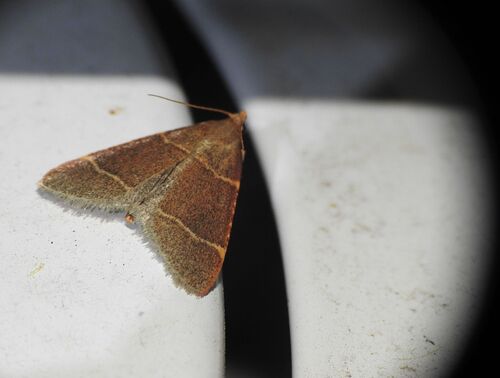
Ash-Bark Knot-Horn

Ash-Bark Knot-Horn

Euzophera pinguis

Daily sighting probability ~10% · With luck
at London

In 3 days ~20% in a week ~40%

106 Verified sightings at London
20 In all 2 parks From 2019 to 2026
July Best month
🌙 Nocturnal When it's spotted

About the Ash-Bark Knot-Horn

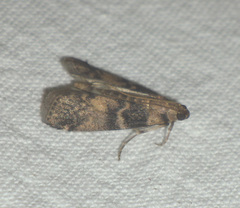
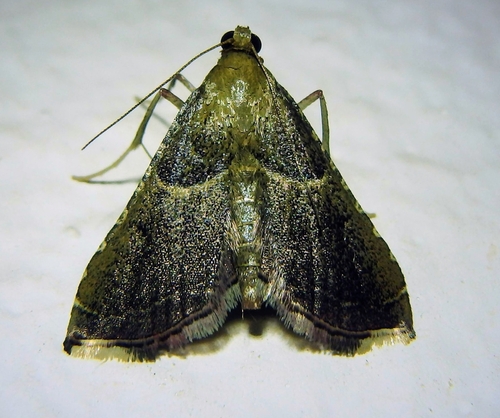
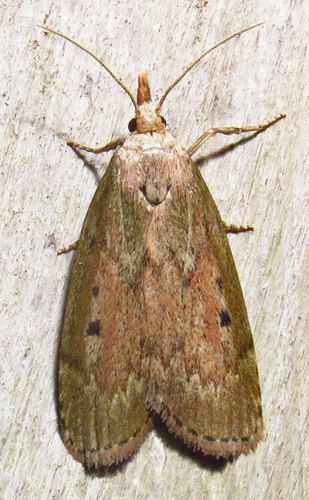
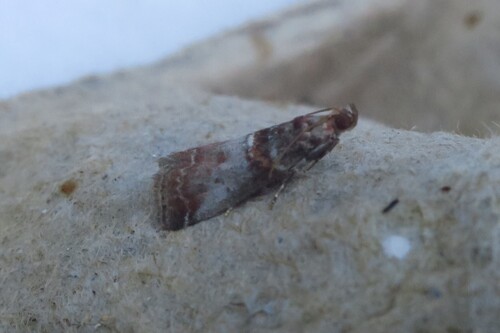
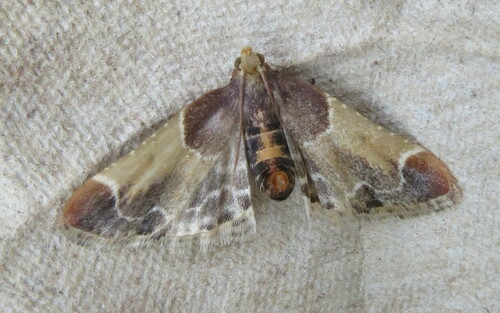
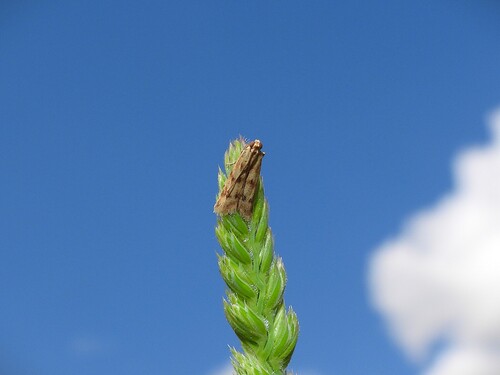
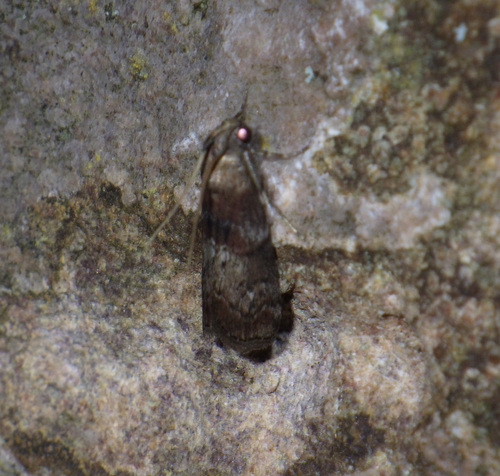
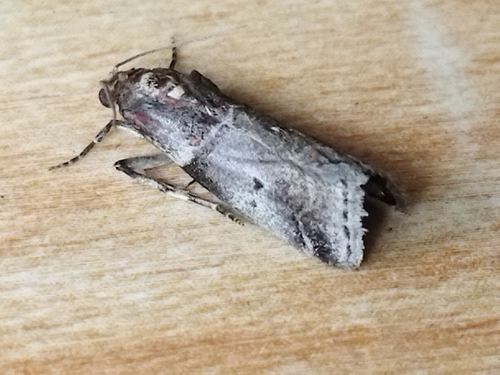
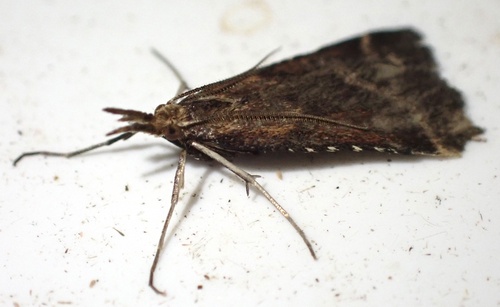
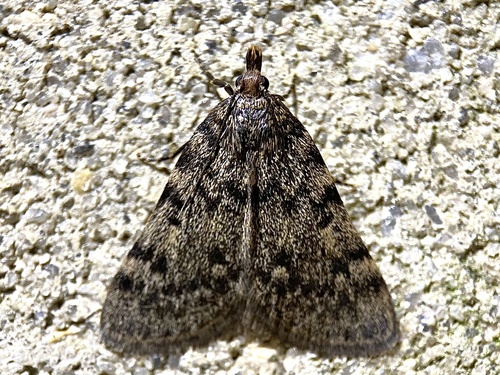
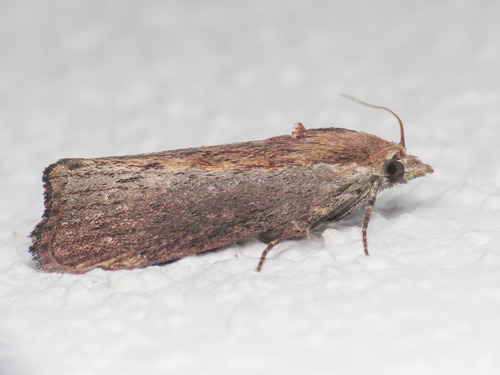
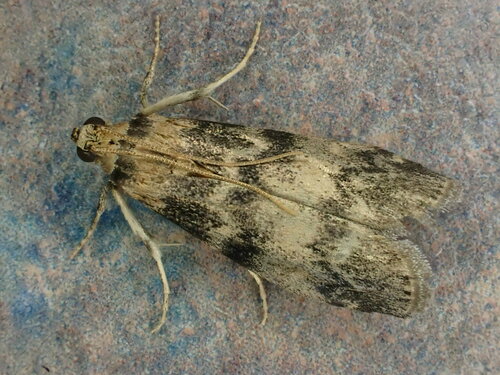
Euzophera pinguis, the tabby knot-horn, is a moth of the family Pyralidae. It was described by Adrian Hardy Haworth in 1811 and is found in Europe. The wingspan is 23–28 mm. The forewings are light brownish-ochreous, somewhat reddish-tinged, pale sprinkled, with a few blackish scales; lines hardly paler, first

rather curved, edged anteriorly by a broad blackish band, posteriorly by a thick blackish suffusion, second angulated in middle, strongly edged with dark fuscous; terminal area more infuscated. Hindwings light fuscous. The larva is pinkish ochreous; dorsal line darker, interrupted; a lateral spot on 3 and 12 ringed with reddish-brown; head and plate of 2 reddish-brown, blackish-marked: in bark of ash; 9–6, perhaps sometimes living two years.

The moths are on wing from July to August depending on the location. The larvae feed on Fraxinus excelsior. Wikipedia →
Global Distribution

Parks Where Found

# Park Country Daily sighting probability
1 Pyrénées National Park 🇫🇷 France
<5%
2 Wadden Sea National Park 🇩🇪 Germany
<5%

Cities Where Found

# City Country Daily sighting probability
1 Liverpool 🇬🇧 United Kingdom
~10%
2 London 🇬🇧 United Kingdom
~10%
3 Birmingham 🇬🇧 United Kingdom
<5%

Before you go

What are the chances of seeing an Ash-Bark Knot-Horn in London?

With luck

About 10% of wildlife watchers report an Ash-Bark Knot-Horn sighting in London on a given day, based on 106 verified sightings from GBIF citizen-science data. It is the 332nd most-seen of the 1504 insects we can rate there. Over three days the chance rises to about 20%, and over a week to about 40%, if each day is a fresh chance.

When is the best time to see an Ash-Bark Knot-Horn in London?

June to August

In those months about 10% of wildlife watchers report an Ash-Bark Knot-Horn in London on a given day, against under 5% in September to May, the lowest months.

What time of day is best to see an Ash-Bark Knot-Horn?

Between 10 pm and 1 am

Across all the parks we cover, that three-hour window holds the most Ash-Bark Knot-Horn sightings with a recorded time, and about 9 in 10 of them come between 6 pm and 6 am: it is mostly seen at night.

Is London the best place to see an Ash-Bark Knot-Horn?

Among the best

Of the 3 cities where we can rate Ash-Bark Knot-Horn sightings, London ranks 2nd at about 10%, level with the leaders once rounded. The best odds are in Liverpool (United Kingdom, about 10%).

Which relatives of the Ash-Bark Knot-Horn live in London?

Same family: Pyralidae

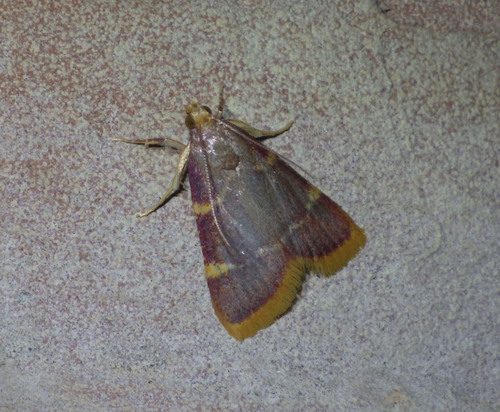
The closest relatives of the Ash-Bark Knot-Horn that you can see in London (family Pyralidae, Pyralid Snout Moths) are Rosy Tabby (about 10%), Bee Moth (about 10%) and Grey Knot-Horn (about 10%), with each one's daily chance of a sighting.

Where does the Ash-Bark Knot-Horn sighting chance come from?

GBIF citizen-science records

It is estimated from how often the Ash-Bark Knot-Horn is recorded against all the insects logged in London (106 verified sightings), calibrated against known sighting rates. Figures are rounded to the nearest 10% because citizen-science data supports honest approximations, not decimals, and months with records from fewer than five people show "—". How it works.

← Back to London