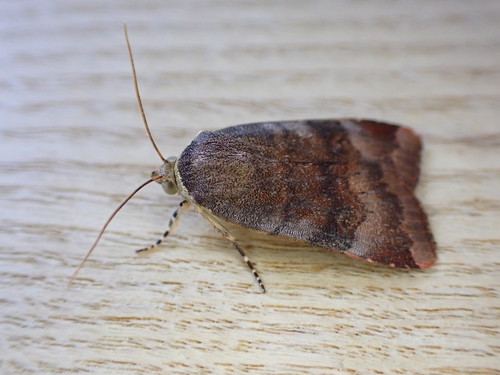
Early Grey

Early Grey

Xylocampa areola

Daily sighting probability ~10% · With luck
at London

In 3 days ~30% in a week ~50%

254 Verified sightings at London
99 In all 3 parks From 2019 to 2026
April Best month
☀️ Diurnal When it's spotted

About the Early Grey

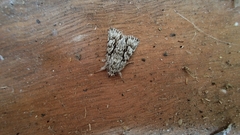
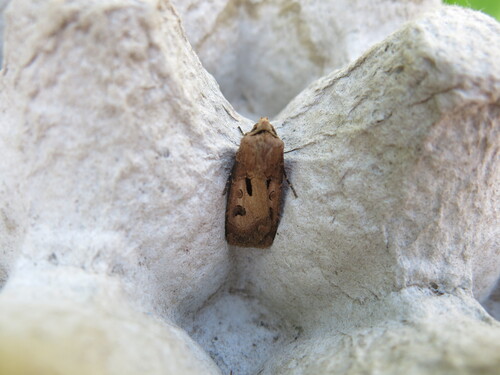
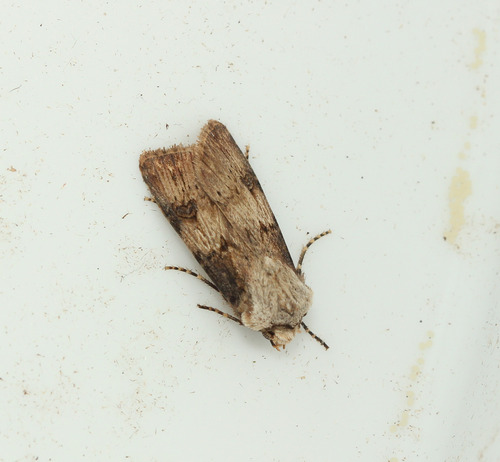
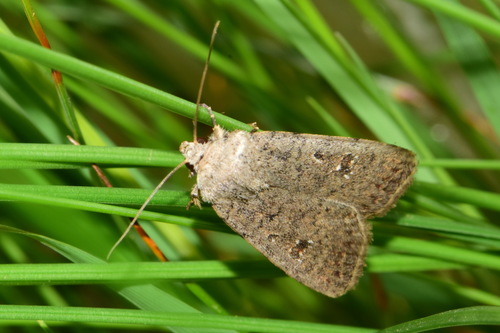
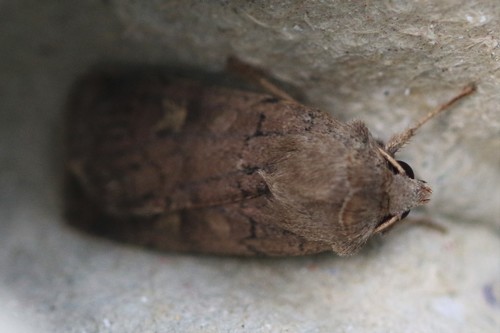
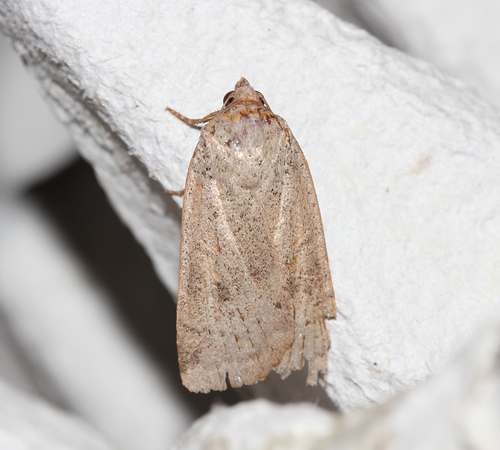
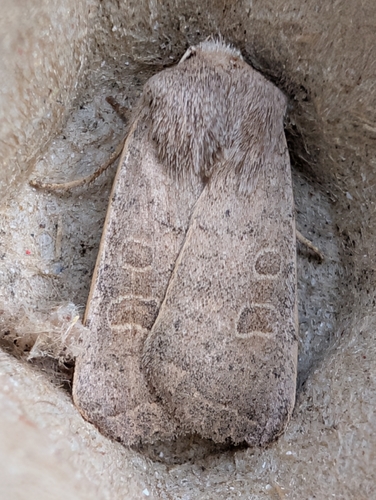
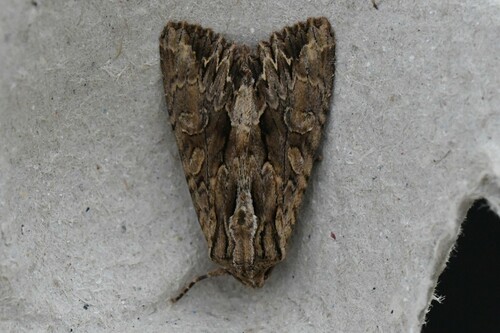
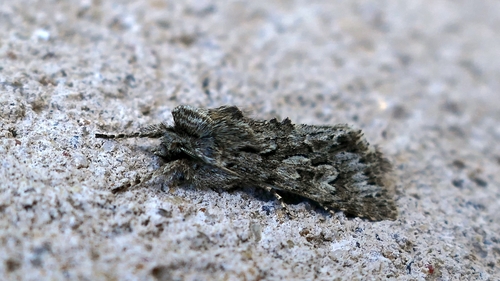
The Early Grey (Xylocampa areola) is a species of moth of the family Noctuidae. It is found in Europe and Morocco. The wingspan is 32–40 mm. Seitz describes it - Forewing pale grey varied with darker, darkest in median and marginal areas; veins black-speckled; a black streak from base on submedian fold, with a whitish patch above it; the two lines black, approximating below median, conversely edged with white; orbicular and reniform stigmata large, 8-shaped, pale grey, with darker centres, the orbicular projecting obliquely below median and connected there with reniform; submarginal line white, serrate, followed by a row of black marginal lunules; fringe deep, grey mottled with paler; hindwing pale grey, the cell spot, veins, and outer line darker: in the form suffusa Tutt the dark median area below the stigmata becomes blackish and forms with the black streak from base a curved black marking. The larva is dull pinkish ochreous, with a paler dorsal line and dark brown blotches on dorsum on segments 7 and 8; the 11th segment is slightly humped.

The moth flies from February to May depending on the location. The larvae feed on honeysuckle (Lonicera species). Wikipedia →
Global Distribution

Parks Where Found

# Park Country Daily sighting probability
1 Snowdonia National Park 🇬🇧 United Kingdom
~10%
2 Wadden Sea National Park 🇩🇪 Germany
~10%
3 Cévennes National Park 🇫🇷 France
~10%

Cities Where Found

# City Country Daily sighting probability
1 London 🇬🇧 United Kingdom
~10%
2 Liverpool 🇬🇧 United Kingdom
~10%
3 Porto 🇵🇹 Portugal
~10%
4 Birmingham 🇬🇧 United Kingdom
~10%
5 Manchester 🇬🇧 United Kingdom
~10%

Before you go

What are the chances of seeing an Early Grey in London?

With luck

About 10% of wildlife watchers report an Early Grey sighting in London on a given day, based on 254 verified sightings from GBIF citizen-science data. It is the 210th most-seen of the 1504 insects we can rate there. Over three days the chance rises to about 30%, and over a week to about 50%, if each day is a fresh chance.

When is the best time to see an Early Grey in London?

April

In that month about 30% of wildlife watchers report an Early Grey in London on a given day, against under 5% in June to February, the lowest months.

What time of day is best to see an Early Grey?

Between 6 and 9 am

Across all the parks we cover, that three-hour window holds the most Early Grey sightings with a recorded time, and about 7 in 10 of them come between 6 am and 6 pm: it is a daytime animal.

Is London the best place to see an Early Grey?

Yes

Of the 5 cities where we can rate Early Grey sightings, London has the highest daily chance: about 10%. Next come Liverpool (United Kingdom, about 10%) and Porto (Portugal, about 10%).

Which relatives of the Early Grey live in London?

Same family: Noctuidae

The closest relatives of the Early Grey that you can see in London (family Noctuidae, Cutworm Moths and Allies) are Large Yellow Underwing (about 30%), Heart And Dart (about 20%) and Shuttle-Shaped Dart (about 20%), with each one's daily chance of a sighting.

Where does the Early Grey sighting chance come from?

GBIF citizen-science records

It is estimated from how often the Early Grey is recorded against all the insects logged in London (254 verified sightings), calibrated against known sighting rates. Figures are rounded to the nearest 10% because citizen-science data supports honest approximations, not decimals, and months with records from fewer than five people show "—". How it works.

← Back to London