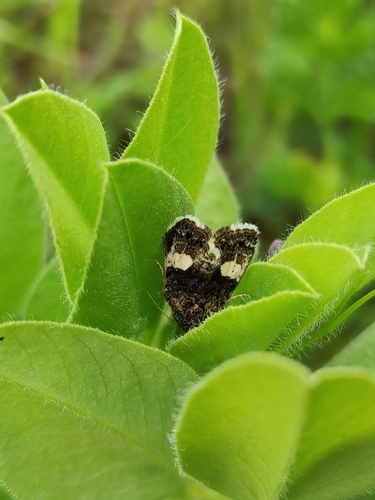
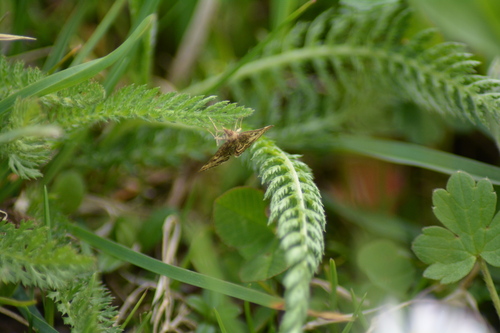
Morning-Glory Plume Moth

Morning-Glory Plume Moth

Emmelina monodactyla

Daily sighting probability ~10% · With luck
at Lyon

In 3 days ~30% in a week ~50%

29 Verified sightings at Lyon
65 In all 4 parks From 2019 to 2026
September Best month
☀️🌙 Day & Night When it's spotted

About the Morning-Glory Plume Moth

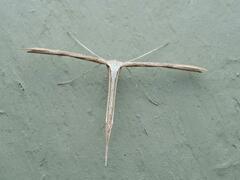
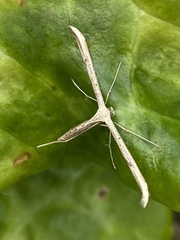
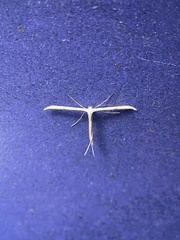
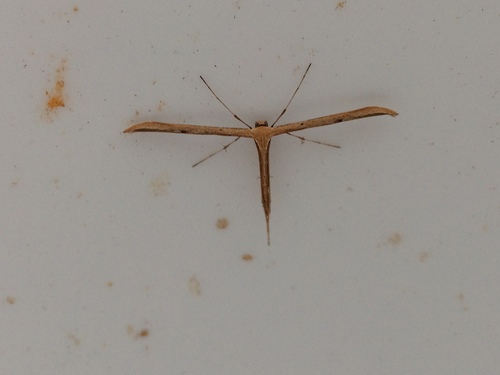
Emmelina monodactyla, commonly known as the Common plume or Morning-glory plume, is a moth of the family Pterophoridae found in Africa, Asia, Europe, and North America. It was first described by Carl Linnaeus in 1758. The moths fly nearly year-round.

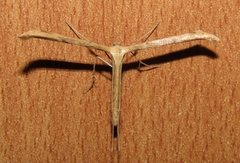
They are pale russet in colour, with a wingspan of 18–27 millimeters. The colouration is extremely variable, ranging from off-white with indistinct markings to a strong rust brown. The markings may vary considerably in size. The second and third segments are elongate. The caterpillars are greenish-yellow with a broad green band on the back, and a narrow broken yellow line running down the center. Some specimens may also have a wine-red marking on the back. The colour of the pupae may range from green to reddish brown, sometimes with black markings.

The moth often rests with its wings collapsed together tightly. The common name "Morning glory plume" refers to its association with Ipomoea. The larvae feed from May to September in two overlapping generations. They mainly feed on Convolvulaceae species, including hedge bindweed (Calystegia sepium), low false bindweed (Calystegia spithamaea), sea bindweed (Calystegia... Wikipedia →
Global Distribution

Parks Where Found

# Park Country Daily sighting probability
1 Bavarian Forest National Park 🇩🇪 Germany
~10%
2 Cévennes National Park 🇫🇷 France
~10%
3 Shenandoah National Park 🇺🇸 United States
~10%
4 Pyrénées National Park 🇫🇷 France
<5%

Cities Where Found

# City Country Daily sighting probability
1 London 🇬🇧 United Kingdom
~20%
2 Liverpool 🇬🇧 United Kingdom
~20%
3 Birmingham 🇬🇧 United Kingdom
~10%
4 Sofia 🇧🇬 Bulgaria
~10%
5 Rotterdam [The Hague] 🇳🇱 Netherlands
~10%
6 Belgrade 🇷🇸 Serbia
~10%
7 Milan 🇮🇹 Italy
~10%
8 Lyon 🇫🇷 France
~10%
9 Valencia 🇪🇸 Spain
~10%
10 Helsinki 🇫🇮 Finland
~10%

Before you go

What are the chances of seeing a Morning-Glory Plume Moth in Lyon?

With luck

About 10% of wildlife watchers report a Morning-Glory Plume Moth sighting in Lyon on a given day, based on 29 verified sightings from GBIF citizen-science data. It is the 92nd most-seen of the 411 insects we can rate there. Over three days the chance rises to about 30%, and over a week to about 50%, if each day is a fresh chance.

When is the best time to see a Morning-Glory Plume Moth in Lyon?

September and November

In those months about 20% of wildlife watchers report a Morning-Glory Plume Moth in Lyon on a given day, against under 5% in April and December–February, the lowest months.

What time of day is best to see a Morning-Glory Plume Moth?

Between 8 and 11 pm

Across all the parks we cover, that three-hour window holds the most Morning-Glory Plume Moth sightings with a recorded time, and about half of them come between 6 am and 6 pm: it is seen both by day and at night.

Is Lyon the best place to see a Morning-Glory Plume Moth?

8th of 63

Of the 63 cities where we can rate Morning-Glory Plume Moth sightings, Lyon ranks 8th at about 10%. The best odds are in London (United Kingdom, about 20%), Liverpool (United Kingdom, about 20%) and Birmingham (United Kingdom, about 10%).

Which relatives of the Morning-Glory Plume Moth live in Lyon?

Same order: Lepidoptera

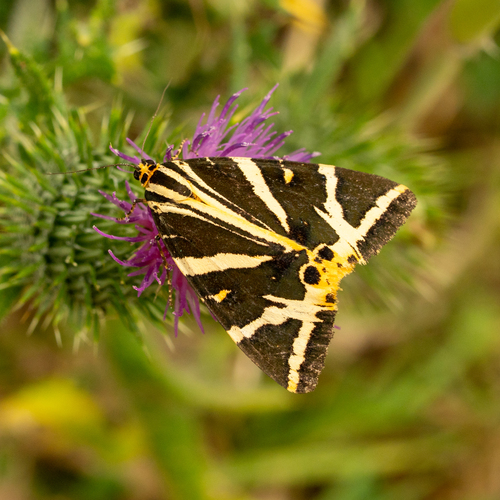
The closest relatives of the Morning-Glory Plume Moth that you can see in Lyon (order Lepidoptera, Butterflies and Moths) are Speckled Wood (about 30%), Common Blue (about 20%) and Jersey Tiger (about 20%), with each one's daily chance of a sighting.

Where does the Morning-Glory Plume Moth sighting chance come from?

GBIF citizen-science records

It is estimated from how often the Morning-Glory Plume Moth is recorded against all the insects logged in Lyon (29 verified sightings), calibrated against known sighting rates. Figures are rounded to the nearest 10% because citizen-science data supports honest approximations, not decimals, and months with records from fewer than five people show "—". How it works.

← Back to Lyon