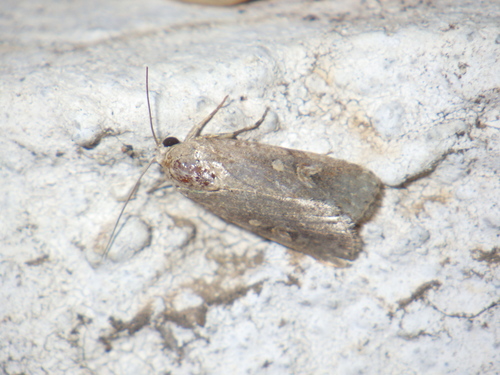
Crescent Dart

Crescent Dart

Agrotis trux

Daily sighting probability <5% · Rare
at Madrid

In 3 days ~10% in a week ~30%

13 Verified sightings at Madrid
50 In all 3 parks From 2019 to 2026
October Best month
🌙 Nocturnal When it's spotted

About the Crescent Dart

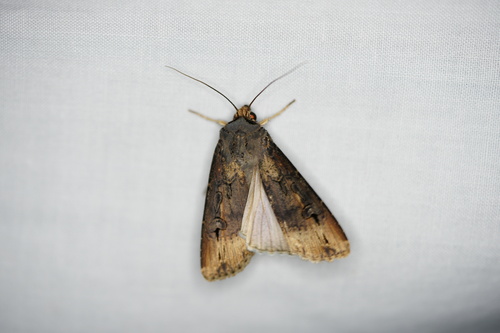
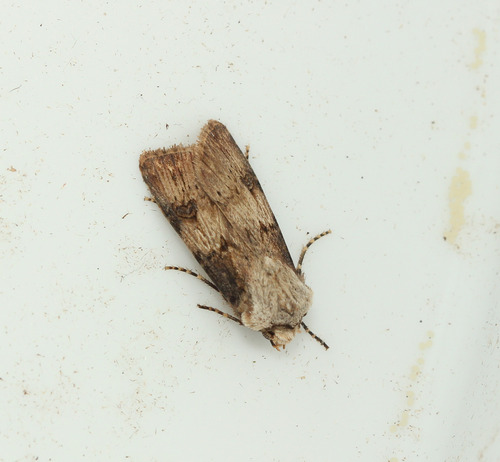
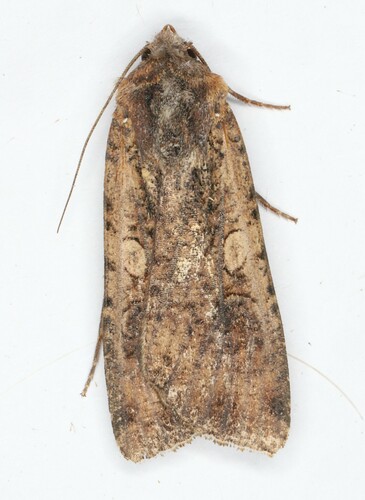
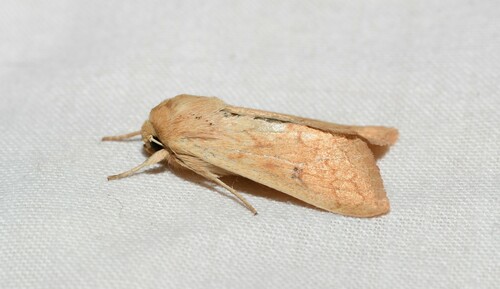
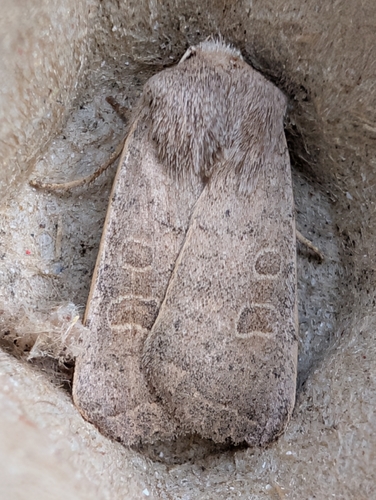
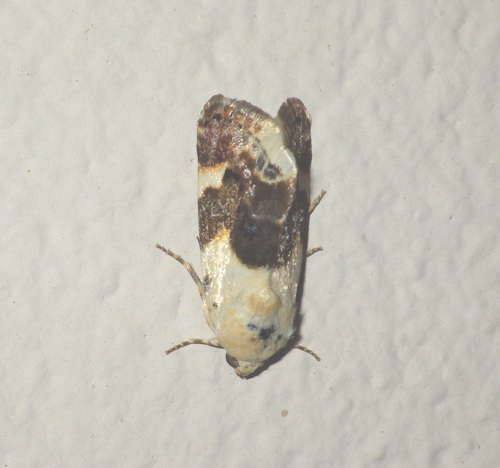
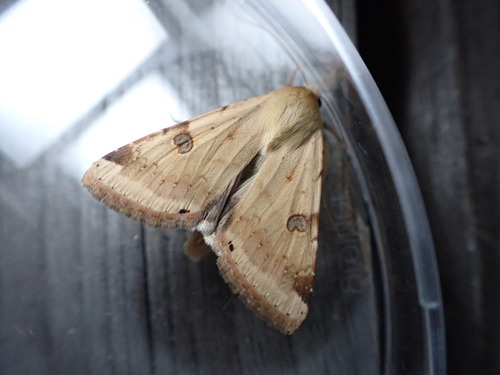
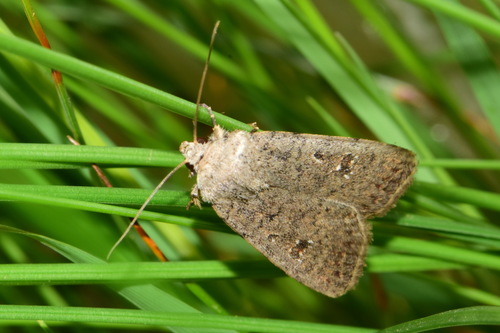
Agrotis trux, the crescent dart, is a moth of the family Noctuidae. The species was first described by Jacob Hübner in 1824. It has a circum-Mediterranean distribution and is found along the coasts of France, Ireland, England, southern Europe, Algeria, Syria, Iraq, Iran, southern Russia and the Arabian Peninsula. In Africa, it is found as far south as South Africa.

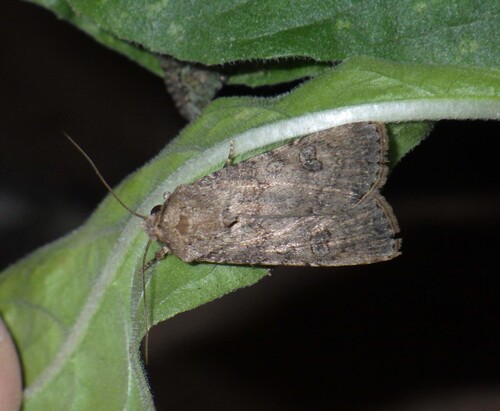
The wingspan is 35–42 mm. Forewing ochreous grey, dappled and striated, and often, especially in the females, suffused with dark fuscous; claviform stigma black-edged; reniform large, filled in with black; orbicular small, round, with a pale ring; fringe rufous; hindwing dull whitish, with fuscous terminal suffusion, broader in female; or with a curved row of dark dashes on veins and no suffusion; a variable species, occurring throughout southern Europe, in Algeria, the Canaries, southern Russia and Asia Minor; — in ab. olivina Stgr. the forewing is smooth olive grey, with no or little irroration (sprinkling), the markings concisely red brown: - ab. terranea Frr. has the suffusion and markings rufous; — ab. amasina Stgr. is fuscous grey, with blackish median shade, the ground colour darker in the female... Wikipedia →

Global Distribution

Parks Where Found

# Park Country Daily sighting probability
1 Sierra Nevada National Park 🇪🇸 Spain
~10%
2 Sierra de Guadarrama National Park 🇪🇸 Spain
~10%
3 Pyrénées National Park 🇫🇷 France
<5%

Cities Where Found

# City Country Daily sighting probability
1 Porto 🇵🇹 Portugal
~10%
2 Madrid 🇪🇸 Spain
<5%

Before you go

What are the chances of seeing a Crescent Dart in Madrid?

Rare

Under 5% of wildlife watchers report a Crescent Dart sighting in Madrid on a given day, based on 13 verified sightings from GBIF citizen-science data. It is the 226th most-seen of the 457 insects we can rate there. Over three days the chance rises to about 10%, and over a week to about 30%, if each day is a fresh chance.

When is the best time to see a Crescent Dart in Madrid?

July, September–October and December

In those months about 10% of wildlife watchers report a Crescent Dart in Madrid on a given day, against under 5% in January–June, August and November, the lowest months.

What time of day is best to see a Crescent Dart?

Between 9 pm and midnight

Across all the parks we cover, that three-hour window holds the most Crescent Dart sightings with a recorded time, and about 9 in 10 of them come between 6 pm and 6 am: it is mostly seen at night.

Is Madrid the best place to see a Crescent Dart?

2nd of 2

Of the 2 cities where we can rate Crescent Dart sightings, Madrid ranks 2nd at under 5%. The best odds are in Porto (Portugal, about 10%).

Which relatives of the Crescent Dart live in Madrid?

Same genus: Agrotis

The closest relatives of the Crescent Dart that you can see in Madrid (genus Agrotis) are Turnip Moth (about 10%) and Ipsilon Dart Moth (about 10%), with each one's daily chance of a sighting.

Where does the Crescent Dart sighting chance come from?

GBIF citizen-science records

It is estimated from how often the Crescent Dart is recorded against all the insects logged in Madrid (13 verified sightings), calibrated against known sighting rates. Figures are rounded to the nearest 10% because citizen-science data supports honest approximations, not decimals, and months with records from fewer than five people show "—". How it works.

← Back to Madrid