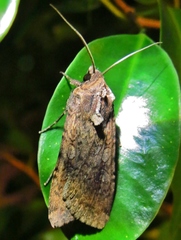
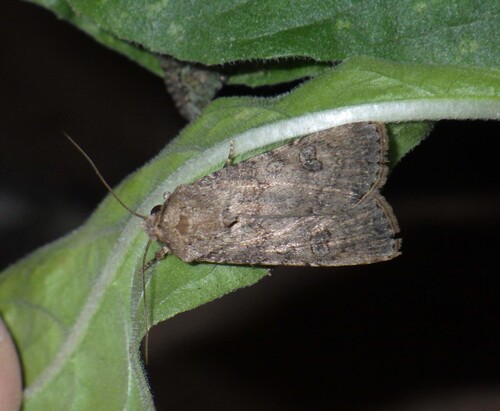
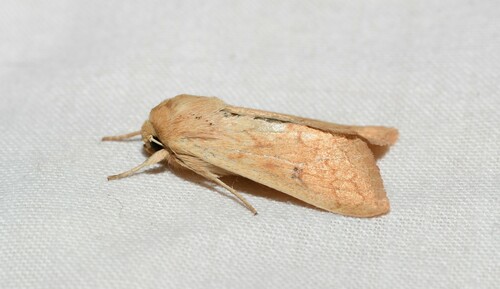
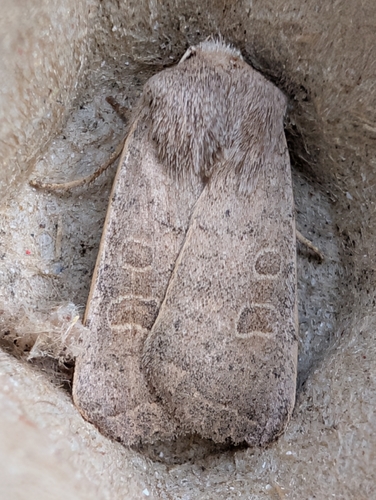
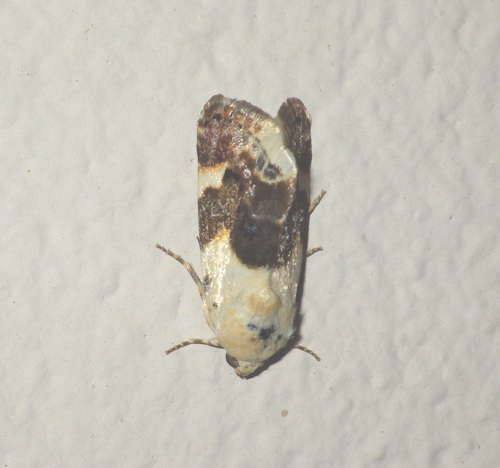
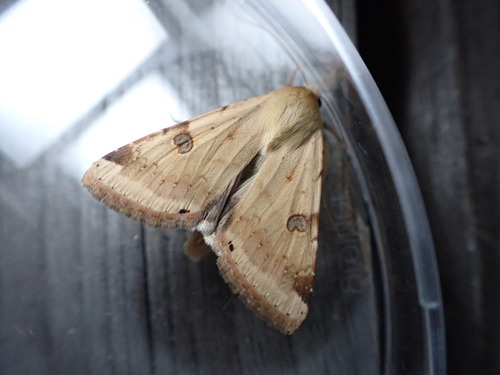
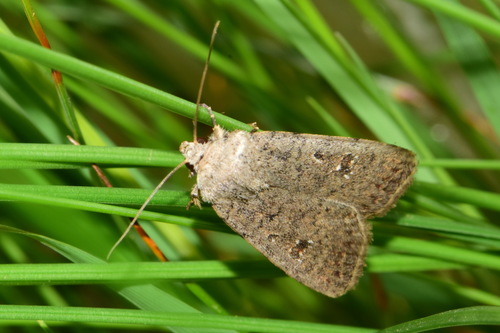
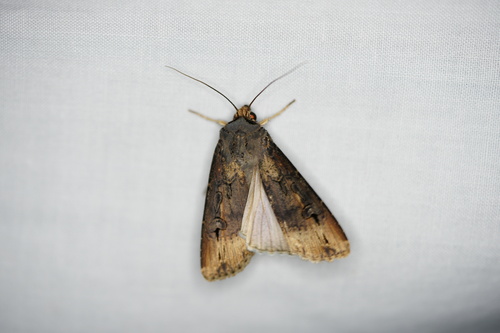
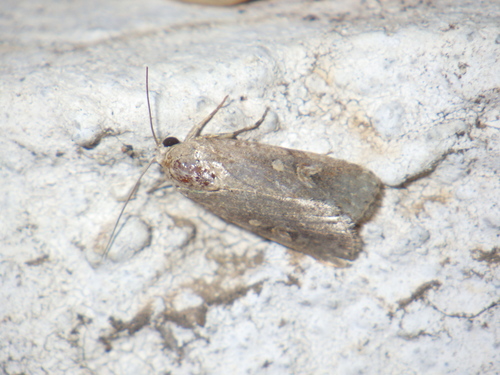
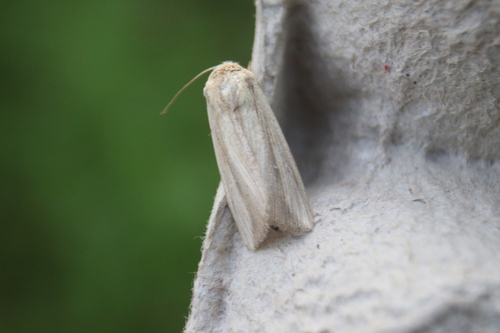
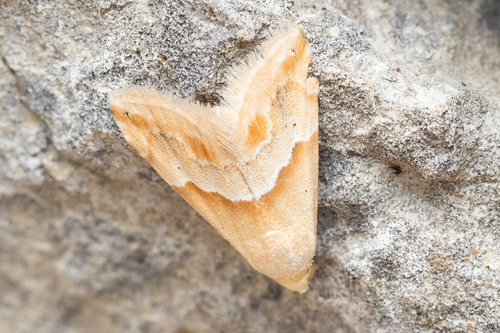
Variegated Cutworm Moth

Variegated Cutworm Moth

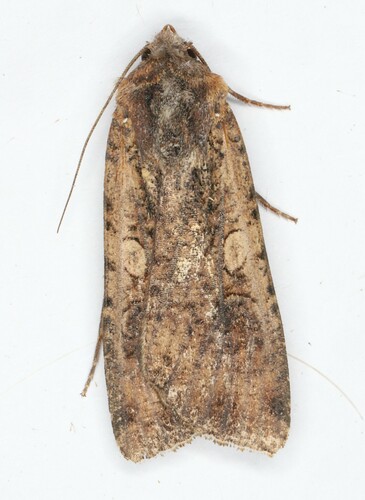
Peridroma saucia

Daily sighting probability ~10% · With luck
at Madrid

In 3 days ~30% in a week ~50%

68 Verified sightings at Madrid
80 In all 5 parks From 2019 to 2026
June Best month
🌙 Nocturnal When it's spotted

About the Variegated Cutworm Moth

Peridroma saucia, the pearly underwing or variegated cutworm, is a moth of the family Noctuidae. The species was first described by Jacob Hübner in 1808. It is found in North and South America, Europe, Asia and Africa. The variegated cutworm feeds on many plants, especially common fruits and vegetables. The moth undergoes two to four generations per year. The development of the moth slows in colder temperatures, indicative of its migratory nature. All stages of the life cycle have a developmental threshold for temperature. The moth is known to migrate to the northern regions during warmer months, returning to the southern regions when the climate becomes colder.

The variegated cutworm has a number of wasp and fly parasites, which account for most of the larval deaths each year. The female P. saucia produces a sex pheromone to attract male moths. Most notably, the variegated cutworm is known as one of the most damaging garden pests. The larvae cause considerable damage to common garden vegetables and fruits, destroying large amounts of crops every year. There are many methods of pest control that are being implemented in order to control P. saucia and its damage to crops. Wikipedia →

Global Distribution

Parks Where Found

# Park Country Daily sighting probability
1 Sierra Nevada National Park 🇪🇸 Spain
~20%
2 Pyrénées National Park 🇫🇷 France
~10%
3 Sierra de Guadarrama National Park 🇪🇸 Spain
~10%
4 Big Bend National Park 🇺🇸 United States
<5%
5 Cévennes National Park 🇫🇷 France
<5%

Cities Where Found

# City Country Daily sighting probability
1 Porto 🇵🇹 Portugal
~20%
2 Valencia 🇪🇸 Spain
~20%
3 Austin 🇺🇸 United States
~10%
4 Madrid 🇪🇸 Spain
~10%
5 Dallas 🇺🇸 United States
~10%
6 Chicago 🇺🇸 United States
~10%
7 Barcelona 🇪🇸 Spain
~10%
8 Lisbon 🇵🇹 Portugal
~10%
9 Houston 🇺🇸 United States
~10%
10 Rome 🇮🇹 Italy
<5%

Before you go

What are the chances of seeing a Variegated Cutworm Moth in Madrid?

With luck

About 10% of wildlife watchers report a Variegated Cutworm Moth sighting in Madrid on a given day, based on 68 verified sightings from GBIF citizen-science data. It is the 64th most-seen of the 457 insects we can rate there. Over three days the chance rises to about 30%, and over a week to about 50%, if each day is a fresh chance.

When is the best time to see a Variegated Cutworm Moth in Madrid?

June

In that month about 20% of wildlife watchers report a Variegated Cutworm Moth in Madrid on a given day, against under 5% in August to March, the lowest months. That is one of Madrid's driest months, with about 20 mm of rain against 65 mm in October.

What time of day is best to see a Variegated Cutworm Moth?

Between 10 pm and 1 am

Across all the parks we cover, that three-hour window holds the most Variegated Cutworm Moth sightings with a recorded time, and about 8 in 10 of them come between 6 pm and 6 am: it is mostly seen at night.

Is Madrid the best place to see a Variegated Cutworm Moth?

4th of 25

Of the 25 cities where we can rate Variegated Cutworm Moth sightings, Madrid ranks 4th at about 10%. The best odds are in Porto (Portugal, about 20%), Valencia (Spain, about 20%) and Austin (United States, about 10%).

Which relatives of the Variegated Cutworm Moth live in Madrid?

Same family: Noctuidae

The closest relatives of the Variegated Cutworm Moth that you can see in Madrid (family Noctuidae, Cutworm Moths and Allies) are Large Yellow Underwing (about 10%), Silver Υ (about 10%) and Turnip Moth (about 10%), with each one's daily chance of a sighting.

Where does the Variegated Cutworm Moth sighting chance come from?

GBIF citizen-science records

It is estimated from how often the Variegated Cutworm Moth is recorded against all the insects logged in Madrid (68 verified sightings), calibrated against known sighting rates. Figures are rounded to the nearest 10% because citizen-science data supports honest approximations, not decimals, and months with records from fewer than five people show "—". How it works.
← Back to Madrid