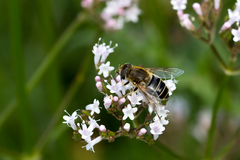
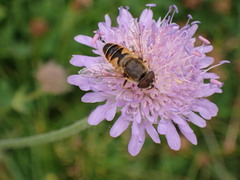
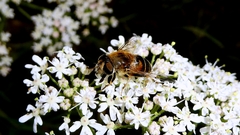
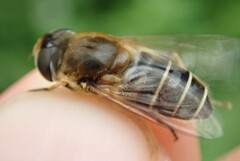
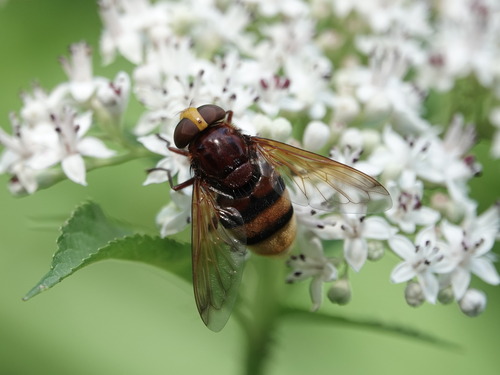
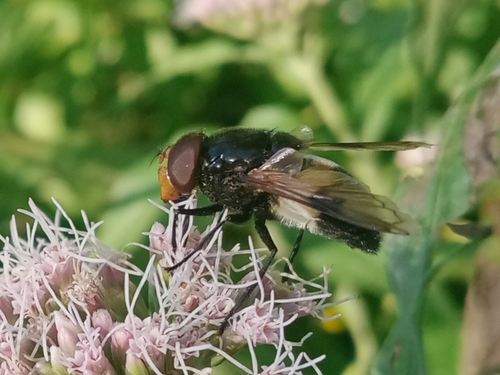
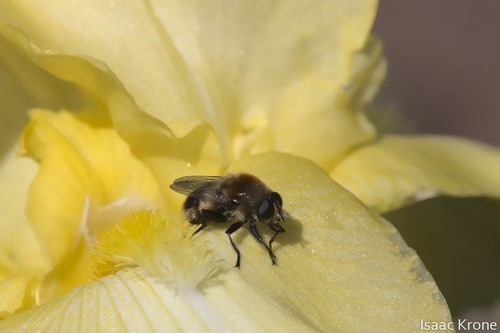
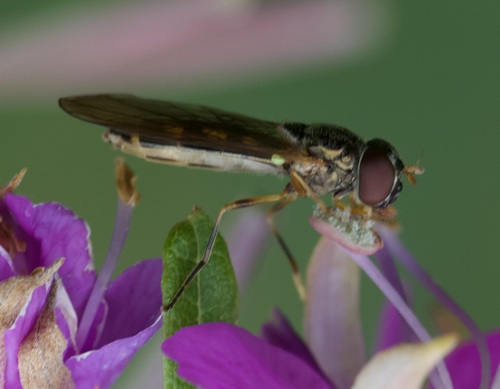
Orange-Spined Drone Fly

Orange-Spined Drone Fly

Eristalis nemorum

Daily sighting probability <5% · Rare
at Manchester

In 3 days ~10% in a week ~30%

8 Verified sightings at Manchester
29 In all 4 parks From 2019 to 2026
August Best month
☀️ Diurnal When it's spotted

About the Orange-Spined Drone Fly

Eristalis nemorum is a species of hoverfly. It is found in the Palearctic (Fennoscandia South to Iberia, the Balkans and Italy, Ireland eastwards through Central Europe into Turkey and Russia and on into the Russian Far East, Siberia and Japan) and in the Nearctic (Quebec south to Colorado).

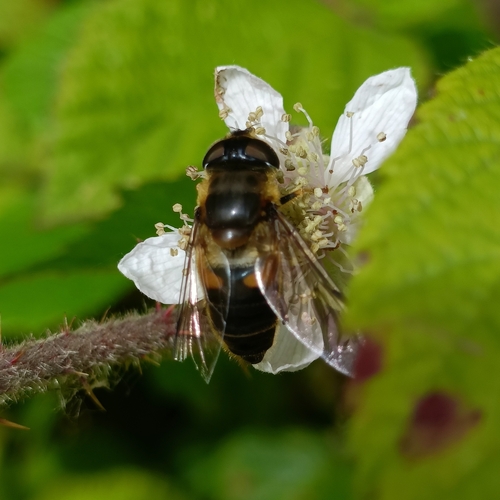
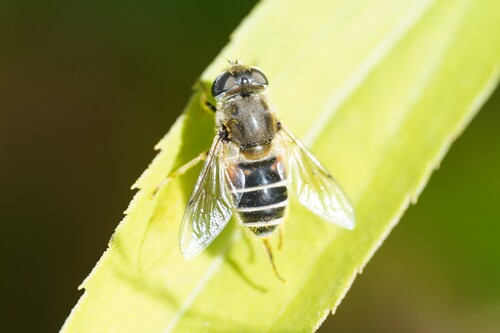
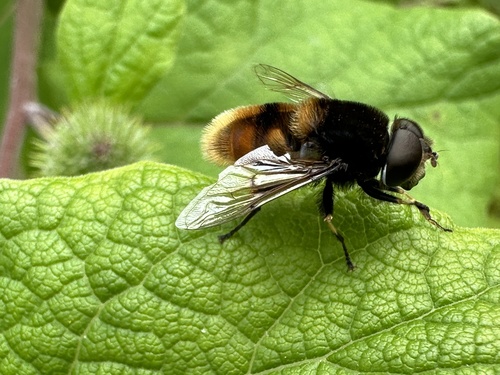
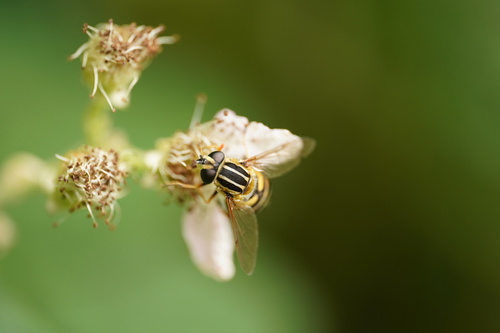
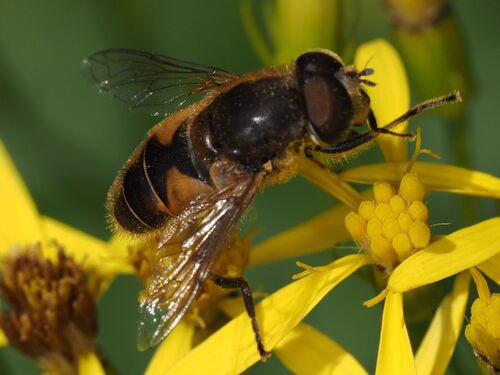
External images For terms, see: Morphology of Diptera. Wing length: 8.25–10.5 mm (0.325–0.413 in). All tarsi are extensively black. Body-hairs are short. Arista plumose basal half. Densely dusted face has a black shining stripe. Hind femora are black in male. Wings are hyaline with quadrate brownish pterostigma (basal to merge of vein sc with costa). Body is yellow-haired. Hind metatarsi are darkened.

The male genitalia are figured by Hippa et al. (2001). The larva is figured by Hartley (1961). The larvae are aquatic, and of the Rat-tailed maggot type. Adults are often seen visiting flowers. Flight period in the United Kingdom is from April to October, peaking around July and August. The males show a characteristic courtship display, hovering above a foraging female for minutes.

When many males are present two or more males may hover above one female.... Wikipedia →
Global Distribution

Parks Where Found

# Park Country Daily sighting probability
1 Snowdonia National Park 🇬🇧 United Kingdom
~10%
2 Bavarian Forest National Park 🇩🇪 Germany
<5%
3 Wadden Sea National Park 🇩🇪 Germany
<5%
4 Pyrénées National Park 🇫🇷 France
<5%

Cities Where Found

# City Country Daily sighting probability
1 Amsterdam 🇳🇱 Netherlands
~10%
2 Helsinki 🇫🇮 Finland
~10%
3 Birmingham 🇬🇧 United Kingdom
~10%
4 Rotterdam [The Hague] 🇳🇱 Netherlands
~10%
5 Essen 🇩🇪 Germany
~10%
6 Leeds 🇬🇧 United Kingdom
<5%
7 Manchester 🇬🇧 United Kingdom
<5%
8 Liverpool 🇬🇧 United Kingdom
<5%
9 Brussels 🇧🇪 Belgium
<5%
10 London 🇬🇧 United Kingdom
<5%

Before you go

What are the chances of seeing an Orange-Spined Drone Fly in Manchester?

Rare

Under 5% of wildlife watchers report an Orange-Spined Drone Fly sighting in Manchester on a given day, based on 8 verified sightings from GBIF citizen-science data. It is the 320th most-seen of the 458 insects we can rate there. Over three days the chance rises to about 10%, and over a week to about 30%, if each day is a fresh chance.

When is the best time to see an Orange-Spined Drone Fly in Manchester?

April and August

In those months about 10% of wildlife watchers report an Orange-Spined Drone Fly in Manchester on a given day, against under 5% in May–July and September–March, the lowest months.

What time of day is best to see an Orange-Spined Drone Fly?

Between 11 am and 2 pm

Across all the parks we cover, that three-hour window holds the most Orange-Spined Drone Fly sightings with a recorded time, and nearly all of them come between 6 am and 6 pm: it is a daytime animal.

Is Manchester the best place to see an Orange-Spined Drone Fly?

7th of 13

Of the 13 cities where we can rate Orange-Spined Drone Fly sightings, Manchester ranks 7th at under 5%. The best odds are in Amsterdam (Netherlands, about 10%), Helsinki (Finland, about 10%) and Birmingham (United Kingdom, about 10%).

Which relatives of the Orange-Spined Drone Fly live in Manchester?

Same genus: Eristalis

The closest relatives of the Orange-Spined Drone Fly that you can see in Manchester (genus Eristalis, Drone Flies) are Tapered Drone Fly (about 30%), Common Drone Fly (about 30%) and Eurasian Drone Fly (about 10%), with each one's daily chance of a sighting.

Where does the Orange-Spined Drone Fly sighting chance come from?

GBIF citizen-science records

It is estimated from how often the Orange-Spined Drone Fly is recorded against all the insects logged in Manchester (8 verified sightings), calibrated against known sighting rates. Figures are rounded to the nearest 10% because citizen-science data supports honest approximations, not decimals, and months with records from fewer than five people show "—". How it works.

← Back to Manchester