
Blue-billed Duck

Blue-billed Duck

Oxyura australis

Silhouette: Sheatherius · PhyloPic

LCLeast ConcernNTVUENCR Endemic
Daily sighting probability <5% · Rare
at Melbourne

In 3 days ~10% in a week ~30%

1,312 Verified sightings at Melbourne
6 In 1 park From 2019 to 2026
October Best month
☀️ Diurnal When it's spotted

About the Blue-billed Duck

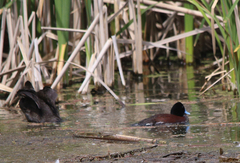
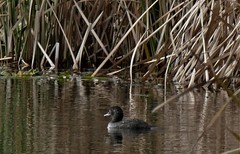
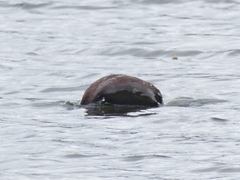
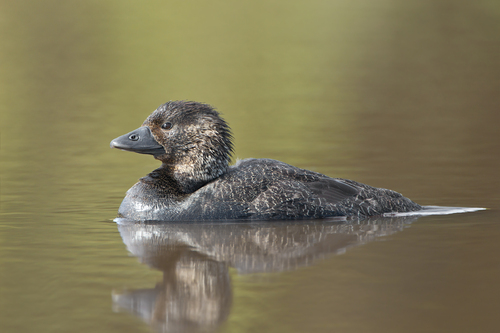
The blue-billed duck (Oxyura australis) is a small Australian stiff-tailed duck, with both the male and female growing to a length of 40 cm (16 in). The male has a slate-blue bill which changes to bright-blue during the breeding season, hence the duck's common name. The male has deep chestnut plumage during breeding season, reverting to a dark grey. The female retains black plumage with brown tips all year round. The duck is endemic to Australia's temperate regions, inhabiting natural inland wetlands and also artificial wetlands, such as sewage ponds, in large numbers. It can be difficult to observe due to its cryptic nature during its breeding season through autumn and winter. The male duck exhibits a complex mating ritual. The blue-billed duck is omnivorous, with a preference for small aquatic invertebrates. BirdLife International has classified this species as Least concern. Major threats include drainage of deep permanent wetlands, or their degradation as a result of introduced fish, peripheral cattle grazing, salinization, and lowering of ground water.

The blue-billed duck was described in 1836 by ornithologist John Gould. The specific name australis is derived from... Wikipedia →

Global Distribution

Parks Where Found

# Park Country Daily sighting probability
1 Hattah-Kulkyne National Park 🇦🇺 Australia
<5%

More parks will be added in future updates.

Cities Where Found

# City Country Daily sighting probability
1 Perth 🇦🇺 Australia
~20%
2 Melbourne 🇦🇺 Australia
<5%

Zoos & Centres Where Found

# Zoo / Centre Country
1 Healesville Sanctuary 🇦🇺 Australia In captivity
2 Taronga Zoo 🇦🇺 Australia In captivity
3 Houston Zoo 🇺🇸 United States In captivity
4 Melbourne Zoo 🇦🇺 Australia In captivity
5 Perth Zoo 🇦🇺 Australia In captivity
6 Featherdale Sydney Wildlife Park 🇦🇺 Australia In captivity
7 Caversham Wildlife Park 🇦🇺 Australia In captivity

Before you go

What are the chances of seeing a Blue-billed Duck in Melbourne?

Rare

Under 5% of wildlife watchers report a Blue-billed Duck sighting in Melbourne on a given day, based on 1,312 verified sightings from GBIF citizen-science data. It is the 84th most-seen of the 236 birds we can rate there. Over three days the chance rises to about 10%, and over a week to about 30%, if each day is a fresh chance.

When is the best time to see a Blue-billed Duck in Melbourne?

January–February and October

In those months about 10% of wildlife watchers report a Blue-billed Duck in Melbourne on a given day, against under 5% in March–September and November–December, the lowest months.

What time of day is best to see a Blue-billed Duck?

Between 11 am and 2 pm

Across all the parks we cover, that three-hour window holds the most Blue-billed Duck sightings with a recorded time, and nearly all of them come between 6 am and 6 pm: it is a daytime animal.

Is Melbourne the best place to see a Blue-billed Duck?

2nd of 2

Of the 2 cities where we can rate Blue-billed Duck sightings, Melbourne ranks 2nd at under 5%. The best odds are in Perth (Australia, about 20%).

Which relatives of the Blue-billed Duck live in Melbourne?

Same family: Anatidae

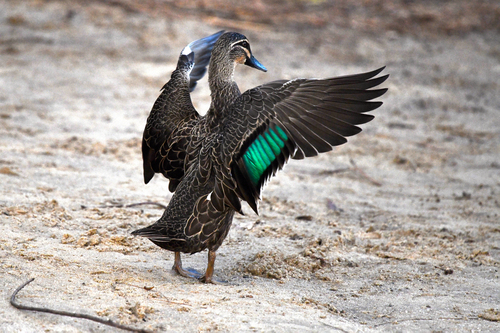
The closest relatives of the Blue-billed Duck that you can see in Melbourne (family Anatidae, Ducks, Geese, and Swans) are Pacific Black Duck (about 60%), Chestnut Teal (about 50%) and Australian Wood Duck (about 40%), with each one's daily chance of a sighting.

Where does the Blue-billed Duck sighting chance come from?

GBIF citizen-science records

It is estimated from how often the Blue-billed Duck is recorded against all the birds logged in Melbourne (1,312 verified sightings), calibrated against known sighting rates. Figures are rounded to the nearest 10% because citizen-science data supports honest approximations, not decimals, and months with records from fewer than five people show "—". How it works.

← Back to Melbourne