Cunningham's Skink

Cunningham's Skink

Egernia cunninghami

Silhouette: Kailah Thorn & Ben King · PhyloPic

LCLeast ConcernNTVUENCR Endemic
Daily sighting probability <5% · Rare
at Melbourne

In 3 days ~10% in a week ~20%

27 Verified sightings at Melbourne
173 In all 3 parks From 2019 to 2026
October Best month
☀️ Diurnal When it's spotted

About the Cunningham's Skink

Cunningham's spiny-tailed skink (Egernia cunninghami), also known commonly as Cunningham's skink, is a species of large skink, a lizard in the family Scincidae. The species is native to southeastern Australia. Both the specific name, cunninghami, and the common names are in honour of English botanist and explorer Allan Cunningham.

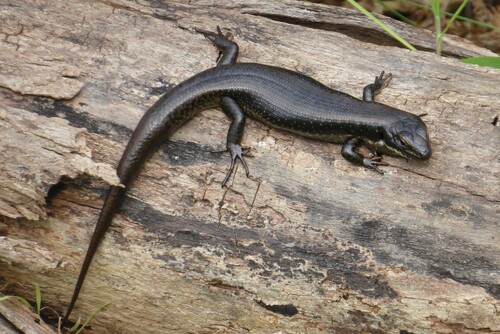
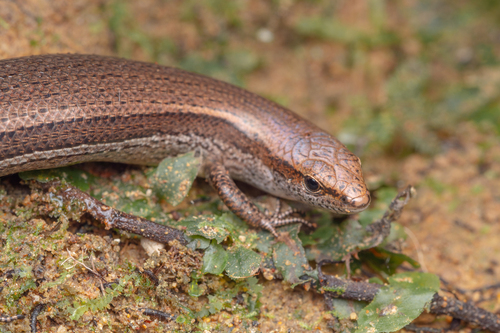
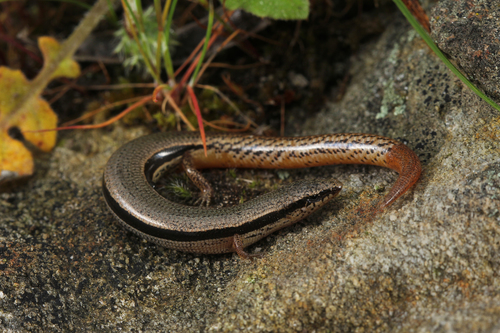
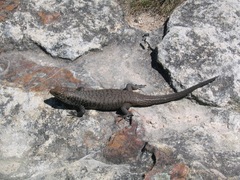
E. cunninghami can reach up to 40 cm (16 inches) in total length (including tail), and may be confused with the blue-tongued lizards (genus Tiliqua). Cunningham's spiny-tailed skink has a distinctive keel on each scale, which gives it a slightly spiny appearance. It is extremely variable in colour, ranging from dark brown to black, with or without blotchy patches, speckles, or narrow bands.

E. cunninghami prefers to live communally in the crevices of rocky outcrops or hollow logs. Cunningham's spiny-tailed skink is primarily herbivorous. There is currently research being done on the isolated population of Cunningham's skink that inhabits the southern Mount Lofty Ranges in South Australia. This population is considered vulnerable due to the fragmented (disjunct) distribution... Wikipedia →

Global Distribution

Parks Where Found

# Park Country Daily sighting probability
1 Kosciuszko National Park 🇦🇺 Australia
~40%
2 Blue Mountains National Park 🇦🇺 Australia
~30%
3 Royal National Park 🇦🇺 Australia
~20%

Cities Where Found

# City Country Daily sighting probability
1 Sydney 🇦🇺 Australia
~10%
2 Melbourne 🇦🇺 Australia
<5%

Zoos & Centres Where Found

# Zoo / Centre Country
1 Australia Zoo 🇦🇺 Australia In captivity
2 Brookfield Zoo 🇺🇸 United States In captivity
3 Omaha’s Henry Doorly Zoo and Aquarium 🇺🇸 United States In captivity
4 Kyabram Fauna Park 🇦🇺 Australia In captivity
5 Australia Walkabout Wildlife Park 🇦🇺 Australia In captivity
6 Berlin Zoological Garden 🇩🇪 Germany In captivity
7 Wrocław Zoological Garden 🇵🇱 Poland In captivity
8 Taronga Zoo 🇦🇺 Australia In captivity
9 Melbourne Zoo 🇦🇺 Australia In captivity
10 Auckland Zoo 🇳🇿 New Zealand In captivity
11 Hartley’s Crocodile Adventures 🇦🇺 Australia In captivity
12 Wellington Zoo 🇳🇿 New Zealand In captivity
13 Grodno Zoo 🇧🇾 Belarus In captivity
14 Gorge Wildlife Park 🇦🇺 Australia In captivity
15 Symbio Wildlife Park 🇦🇺 Australia In captivity
16 Featherdale Sydney Wildlife Park 🇦🇺 Australia In captivity
17 Melbourne Aquarium 🇦🇺 Australia In captivity
18 Africarium 🇵🇱 Poland In captivity
19 Aquarium Berlin 🇩🇪 Germany In captivity
20 terrarium ogrodu zoologicznego we Wrocławiu 🇵🇱 Poland In captivity
21 Wirrimbirra Flora & Fauna Sanctuary 🇦🇺 Australia In captivity

Before you go

What are the chances of seeing a Cunningham's Skink in Melbourne?

Rare

Under 5% of wildlife watchers report a Cunningham's Skink sighting in Melbourne on a given day, based on 27 verified sightings from GBIF citizen-science data. It is the 18th most-seen of the 23 reptiles we can rate there. Over three days the chance rises to about 10%, and over a week to about 20%, if each day is a fresh chance.

When is the best time to see a Cunningham's Skink in Melbourne?

October

In that month about 10% of wildlife watchers report a Cunningham's Skink in Melbourne on a given day, against under 5% in November to September, the lowest months.

What time of day is best to see a Cunningham's Skink?

Between noon and 3 pm

Across all the parks we cover, that three-hour window holds the most Cunningham's Skink sightings with a recorded time, and about 9 in 10 of them come between 6 am and 6 pm: it is a daytime animal.

Is Melbourne the best place to see a Cunningham's Skink?

2nd of 2

Of the 2 cities where we can rate Cunningham's Skink sightings, Melbourne ranks 2nd at under 5%. The best odds are in Sydney (Australia, about 10%).

Where does the Cunningham's Skink sighting chance come from?

GBIF citizen-science records

It is estimated from how often the Cunningham's Skink is recorded against all the reptiles logged in Melbourne (27 verified sightings), calibrated against known sighting rates. Figures are rounded to the nearest 10% because citizen-science data supports honest approximations, not decimals, and months with records from fewer than five people show "—". How it works.

← Back to Melbourne