Pasture Day Moth

Pasture Day Moth

Apina callisto

Daily sighting probability <5% · Rare
at Melbourne

In 3 days ~10% in a week ~20%

11 Verified sightings at Melbourne
April Best month

About the Pasture Day Moth

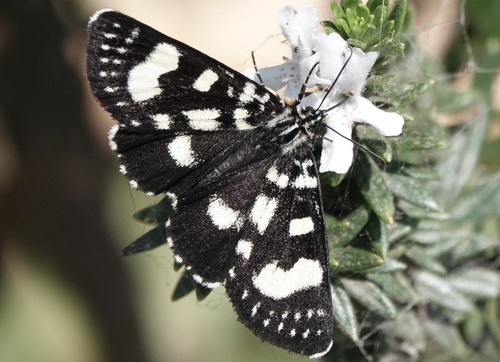
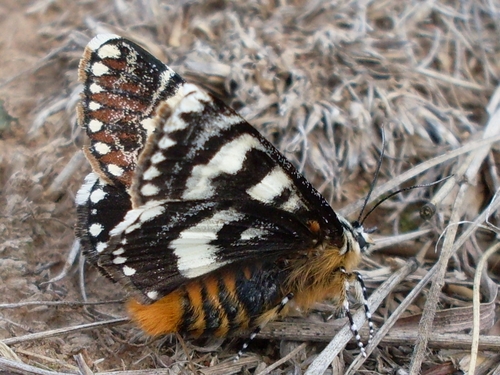
The pasture day moth (Apina callisto) is a species in the moth family Noctuidae which is active during the day, as its common name implies, making it unlike most other noctuid species. It is found in most southern areas of Australia, ranging from lower Queensland to Tasmania. The species was first described by George French Angas in 1847. It is the only species in the monotypic genus Apina, erected by Francis Walker in 1855.

The pasture day moth lays its eggs in pastures, and they hatch after heavy rains in early spring. When the larvae are fully grown, measuring about 60 mm (2.4 in), they burrow down before becoming pupae. They have striking coloration; two yellow stripes run down their mottled-black back, interspersed with blue spots. Their bodies are covered with white spines. They feed on various broad leaved plants (see list below).

The adult moth's wings are black with cream and chestnut markings, with a wingspan of approximately 50 mm (2.0 in). Its thorax is black and the abdomen is orange, ringed with black. Arctotheca - capeweed Erodium - storksbill

Lepidium Malva - mallow Modiola - bristle mallow Plantago - plantain Poaceae - grasses (including... Wikipedia →
Global Distribution

Parks Where Found

# Park Country Daily sighting probability

More parks will be added in future updates.

Cities Where Found

# City Country Daily sighting probability
1 Melbourne 🇦🇺 Australia
<5%

Before you go

What are the chances of seeing a Pasture Day Moth in Melbourne?

Rare

Under 5% of wildlife watchers report a Pasture Day Moth sighting in Melbourne on a given day, based on 11 verified sightings from GBIF citizen-science data. It is the 583rd most-seen of the 875 insects we can rate there. Over three days the chance rises to about 10%, and over a week to about 20%, if each day is a fresh chance.

When is the best time to see a Pasture Day Moth in Melbourne?

Any time of year

In every month with enough records, under 5% of wildlife watchers report a Pasture Day Moth in Melbourne on a given day, so our monthly data shows no clear season.

Where else can you see a Pasture Day Moth?

Only Melbourne, in our data

Melbourne is the only city on Wallace's Line with enough records to rate Pasture Day Moth sightings: under 5% of wildlife watchers there report one on a given day.

Which relatives of the Pasture Day Moth live in Melbourne?

Same family: Noctuidae

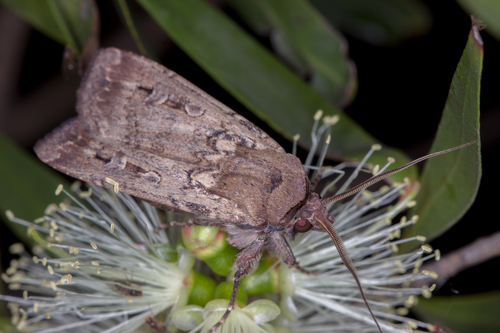
The closest relatives of the Pasture Day Moth that you can see in Melbourne (family Noctuidae, Cutworm Moths and Allies) are Bogong Moth (about 20%), Australian Grapevine Moth (about 10%) and Brown Cutworm (about 10%), with each one's daily chance of a sighting.

Where does the Pasture Day Moth sighting chance come from?

GBIF citizen-science records

It is estimated from how often the Pasture Day Moth is recorded against all the insects logged in Melbourne (11 verified sightings), calibrated against known sighting rates. Figures are rounded to the nearest 10% because citizen-science data supports honest approximations, not decimals, and months with records from fewer than five people show "—". How it works.

← Back to Melbourne