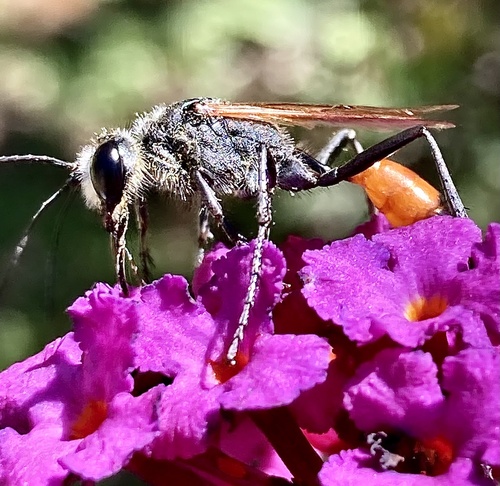
Tyde's Sand Wasp

Tyde's Sand Wasp

Podalonia tydei

Daily sighting probability <5% · Rare
at Melbourne

In 3 days ~10% in a week ~30%

63 Verified sightings at Melbourne
22 In all 2 parks From 2019 to 2026
November Best month
☀️ Diurnal When it's spotted

About the Tyde's Sand Wasp

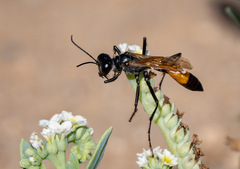
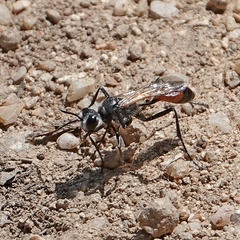
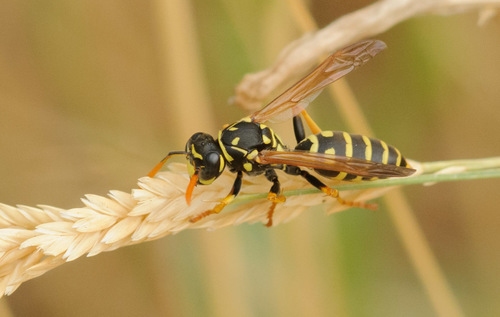
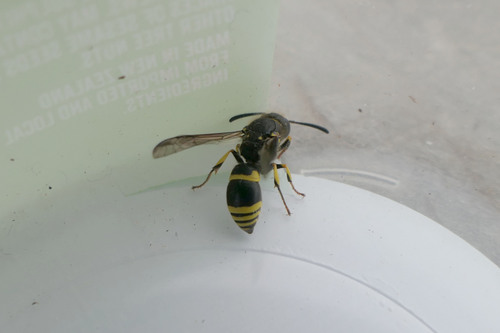
Podalonia tydei, commonly known as Tyde's sand wasp, is a species of sand wasp and thread-wasted wasp in the family Sphecidae. It is found throughout Australia, southern Europe, Asia, North Africa, and New Zealand, and frequent areas with exposed sand, especially coastal dunes. Adults are active at day during periods of strong sunlight, disappearing when it becomes overcast.

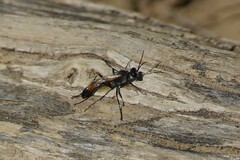
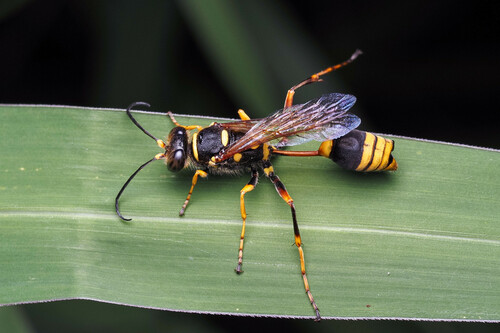
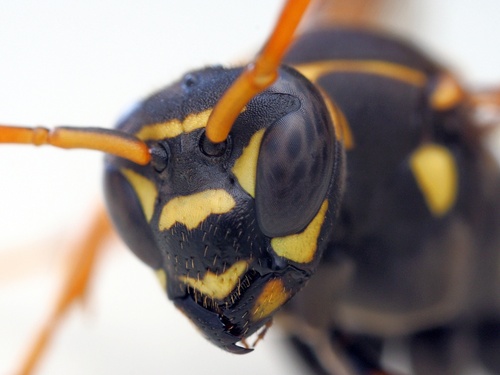
The subspecies P. t. suspiciosa occurs only in Australia and New Zealand. Adult females grow to 22.2 mm in length, while males grow up to 17.5 mm. Head, mesosoma, legs, and distal half of the metasoma black, while the proximal half of the metasoma is described as being a "fulvous-red". Fine, silver-white hairs on the head, coxae, and metasoma. Mandibles large and long, dark red in colour, with three mesal molar teeth. Fore-tarsi with a rake of long, stiff bristles, and all legs are long and slender.

Larvae of P. tydei grow to 13.5 mm in length, and are slightly compressed dorsoventrally, tapered toward the head capsule. Head with a width of 1.34 mm, pale, with mandibles and three large teeth. Cocoon is a light brown.

P. tydei wasps are known to often bask in... Wikipedia →
Global Distribution

Parks Where Found

# Park Country Daily sighting probability
1 Grampians National Park 🇦🇺 Australia
~10%
2 Great Otway National Park 🇦🇺 Australia
~10%

Cities Where Found

# City Country Daily sighting probability
1 Perth 🇦🇺 Australia
~10%
2 Melbourne 🇦🇺 Australia
<5%
3 Sydney 🇦🇺 Australia
<5%

Before you go

What are the chances of seeing a Tyde's Sand Wasp in Melbourne?

Rare

Under 5% of wildlife watchers report a Tyde's Sand Wasp sighting in Melbourne on a given day, based on 63 verified sightings from GBIF citizen-science data. It is the 207th most-seen of the 875 insects we can rate there. Over three days the chance rises to about 10%, and over a week to about 30%, if each day is a fresh chance.

When is the best time to see a Tyde's Sand Wasp in Melbourne?

November to January

In those months about 10% of wildlife watchers report a Tyde's Sand Wasp in Melbourne on a given day, against under 5% in February to October, the lowest months.

What time of day is best to see a Tyde's Sand Wasp?

Between 2 and 5 pm

Across all the parks we cover, that three-hour window holds the most Tyde's Sand Wasp sightings with a recorded time, and about 9 in 10 of them come between 6 am and 6 pm: it is a daytime animal.

Is Melbourne the best place to see a Tyde's Sand Wasp?

2nd of 3

Of the 3 cities where we can rate Tyde's Sand Wasp sightings, Melbourne ranks 2nd at under 5%. The best odds are in Perth (Australia, about 10%).

Where does the Tyde's Sand Wasp sighting chance come from?

GBIF citizen-science records

It is estimated from how often the Tyde's Sand Wasp is recorded against all the insects logged in Melbourne (63 verified sightings), calibrated against known sighting rates. Figures are rounded to the nearest 10% because citizen-science data supports honest approximations, not decimals, and months with records from fewer than five people show "—". How it works.

← Back to Melbourne