About the Familiar Bluet
The familiar bluet (Enallagma civile) is a narrow-winged damselfly of the family Coenagrionidae, which is native to much of the United States and southern Canada. In a broader sense, it is a part of the order Odonata. It is an order that consists of predatory flying insects, such as dragonflies and damselflies. Damselflies are structurally similar to dragonflies, except damselflies have a slimmer body and they have widely-separated eyes; whereas dragonflies have larger eyes that nearly touch.
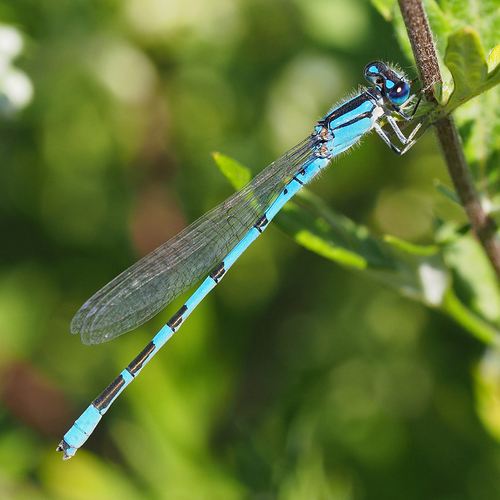
The familiar bluet have been found to reside in natural or artificially-made ponds, or simply places where bodies of non-polluted freshwater and vegetation are located: lakes, ponds, or slow streams. The familiar bluet is generally less tolerant of significant chemical imbalances, thus helping to indicate pure water quality. It has a torpedo-shaped thorax that tapers into a slender abdomen, separated by an average of 10 segments, and it is on average 30-39 mm in length. The familiar bluet has a striking resemblance to the tule bluet, bearing the same sky-blue and black bodies, but differs due to the less heavy black coloration on the abdomen and thorax.
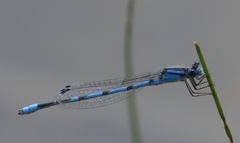
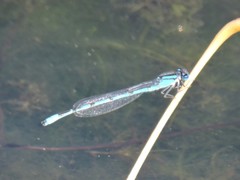
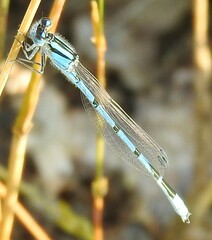
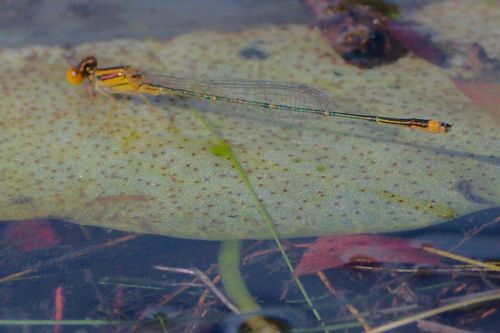
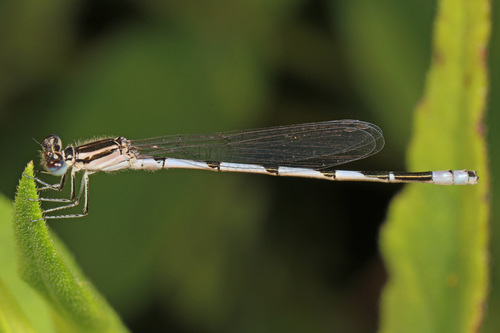
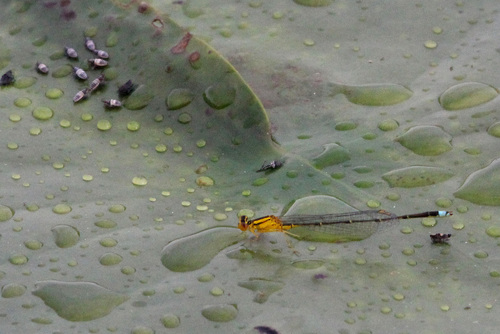
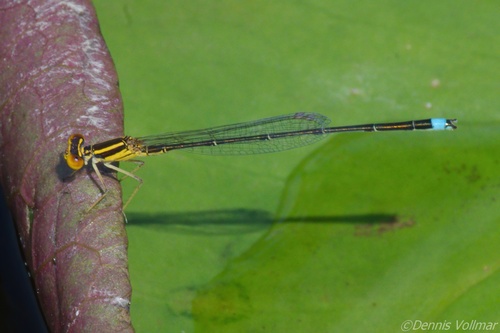
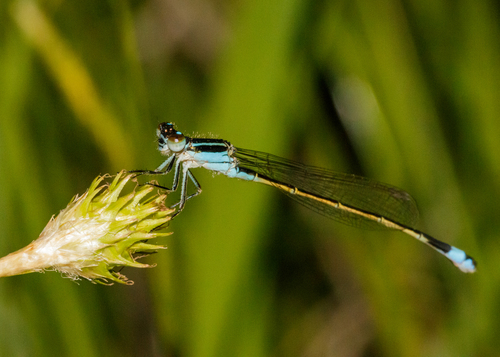
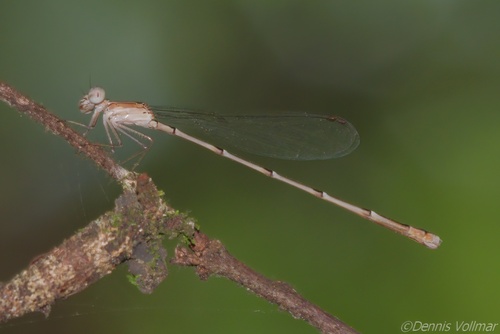
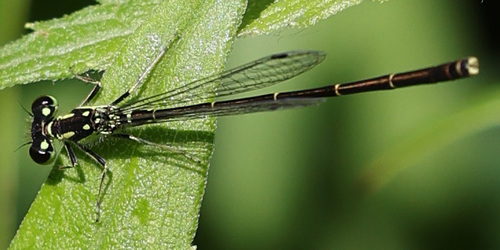
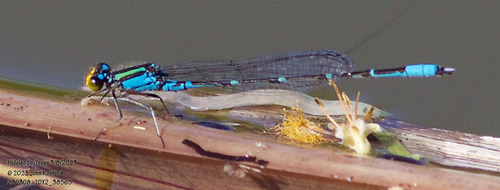
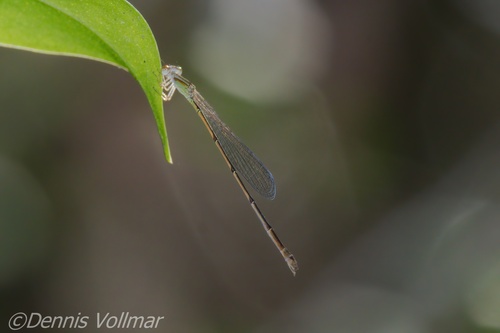
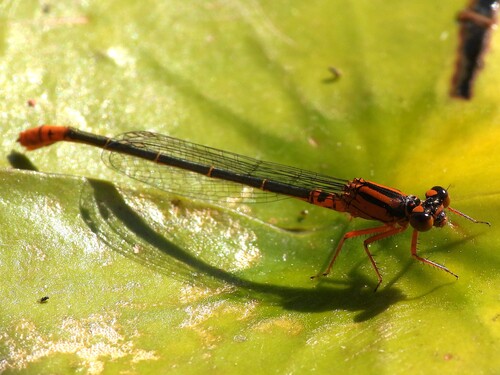
Familiar bluets display sexual dimorphism. Male familiar bluets have a distinct bright, blue color that covers the majority of its head and body and has jet-black spots that cover the dorsal portion of its eyes, segments and upper abdomen. Females are polymorphic; they may appear in nature as a pale blue or an olive-tan color.
The life cycle of damselflies is an incomplete metamorphosis. Once the familiar bluets hatch from their eggs, they are in their nymphal stage, where they will spend the majority of the lifetime molting and developing important adult anatomical structures. Wikipedia →