Texas Alligator Lizard

Texas Alligator Lizard

Gerrhonotus infernalis

Silhouette: SeismicShrimp · PhyloPic

LCLeast ConcernNTVUENCR
Daily sighting probability <5% · Rare
at Monterrey

In 3 days ~10% in a week ~30%

8 Verified sightings at Monterrey
194 In all 2 parks From 2019 to 2026
November Best month
☀️ Diurnal When it's spotted

About the Texas Alligator Lizard

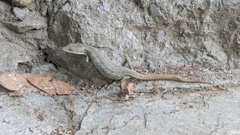
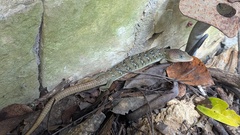
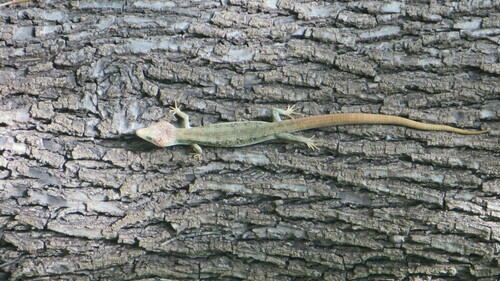
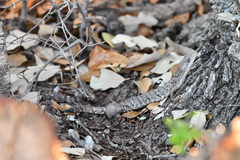
The Texas alligator lizard (Gerrhonotus infernalis) is a species of lizard in the subfamily Gerrhonotinae of the family Anguidae. The species is endemic to the central region of the American state of Texas, and south into adjacent northern Mexico.

The Texas alligator lizard is a medium-sized lizard, attaining a maximum total length (including tail) of around 24 to 25 in (61 to 64 cm). It is the largest lizard species in Texas, and one of the largest alligator lizards in the world. This lizard has a flat, wedge-shaped head. Its body is generally a yellow-brown color, often with darker brown and white checker patterning on its dorsal surfaces, and uniformly light-colored, white, or grey on its ventral surfaces. Its scales are very stiff and plate-like. It has short limbs, and a tail that can fall off to distract a potential predator, but will regrow in time.

Errhonotine lizards are known for their broad heads, short limbs and being heavily armored with scales, from which the common name alligator lizard derived. Gerrhonotus liocephalus, in particular, can be easily recognized by 16 longitudinal rows of dorsal scales and 46 to 54 dorsal scales from the occiput to the... Wikipedia →
Global Distribution

Parks Where Found

# Park Country Daily sighting probability
1 Big Bend National Park 🇺🇸 United States
~20%
2 Cumbres de Monterrey National Park 🇲🇽 Mexico
~20%

Cities Where Found

# City Country Daily sighting probability
1 Austin 🇺🇸 United States
~10%
2 Monterrey 🇲🇽 México
<5%

Zoos & Centres Where Found

# Zoo / Centre Country
1 Fort Worth Zoo 🇺🇸 United States In captivity

Closest Relatives at Monterrey

No species of the same family or order lives in Monterrey, so these are its closest relatives here: other reptiles.

Before you go

What are the chances of seeing a Texas Alligator Lizard in Monterrey?

Rare

Under 5% of wildlife watchers report a Texas Alligator Lizard sighting in Monterrey on a given day, based on 8 verified sightings from GBIF citizen-science data. It is the 17th most-seen of the 26 reptiles we can rate there. Over three days the chance rises to about 10%, and over a week to about 30%, if each day is a fresh chance.

When is the best time to see a Texas Alligator Lizard in Monterrey?

January, July and October–November

In those months about 10% of wildlife watchers report a Texas Alligator Lizard in Monterrey on a given day, against under 5% in February–June, August–September and December, the lowest months.

What time of day is best to see a Texas Alligator Lizard?

Between 9 am and noon

Across all the parks we cover, that three-hour window holds the most Texas Alligator Lizard sightings with a recorded time, and about 9 in 10 of them come between 6 am and 6 pm: it is a daytime animal.

Is Monterrey the best place to see a Texas Alligator Lizard?

2nd of 2

Of the 2 cities where we can rate Texas Alligator Lizard sightings, Monterrey ranks 2nd at under 5%. The best odds are in Austin (United States, about 10%).

Where does the Texas Alligator Lizard sighting chance come from?

GBIF citizen-science records

It is estimated from how often the Texas Alligator Lizard is recorded against all the reptiles logged in Monterrey (8 verified sightings), calibrated against known sighting rates. Figures are rounded to the nearest 10% because citizen-science data supports honest approximations, not decimals, and months with records from fewer than five people show "—". How it works.

← Back to Monterrey