Great Plains Ratsnake

Great Plains Ratsnake

Pantherophis emoryi

Silhouette: Alex Slavenko · PhyloPic

LCLeast ConcernNTVUENCR
Daily sighting probability ~10% · With luck
at Monterrey

In 3 days ~30% in a week ~50%

41 Verified sightings at Monterrey
66 In all 3 parks From 2019 to 2026
September Best month
☀️🌙 Day & Night When it's spotted

About the Great Plains Ratsnake

Pantherophis emoryi, commonly known as the Great Plains rat snake, is a species of nonvenomous rat snake in the family Colubridae. The species is native to the central part of the United States, from Missouri to Nebraska, to Colorado, south to Texas, and into northern Mexico.

The epithet, emoryi, is in honor of Brigadier General William Hemsley Emory, who was chief surveyor of the U.S. Boundary Survey team of 1852 and collected specimens for the Smithsonian Institution. As such, it is sometimes referred to as Emory's rat snake.

Additional common names for Pantherophis emoryi include the following: brown rat snake, chicken snake, eastern spotted snake, Emory's Coluber, Emory's pilot snake, Emory's racer, Emory's snake, gray rat snake, mouse snake, prairie rat snake, spotted mouse snake, Texas rat snake, and western pilot snake.

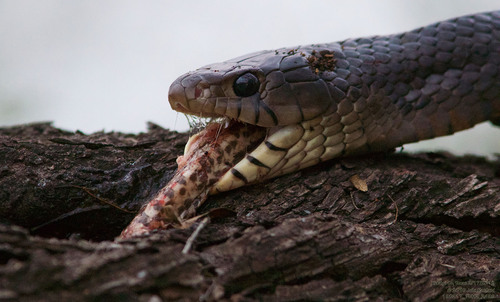
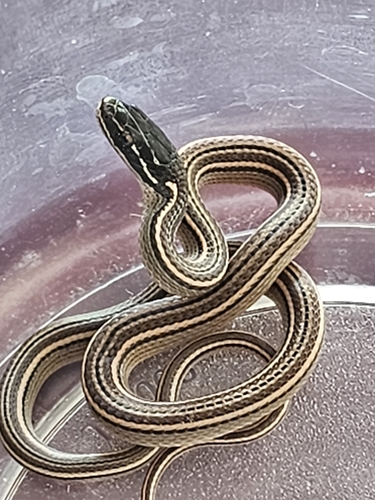
The Great Plains rat snake is typically light gray or tan in color, with dark gray, brown, or green-gray blotching down its back, and stripes on either side of the head which meet to form a point between the eyes. It is capable of growing to 3–5 feet (0.91–1.52 m) in total length (including tail). Wikipedia →

Global Distribution

Parks Where Found

# Park Country Daily sighting probability
1 Padre Island National Seashore 🇺🇸 United States
~10%
2 Cumbres de Monterrey National Park 🇲🇽 Mexico
~10%
3 Big Bend National Park 🇺🇸 United States
~10%

Cities Where Found

# City Country Daily sighting probability
1 Monterrey 🇲🇽 México
~10%
2 San Antonio 🇺🇸 United States
<5%
3 Austin 🇺🇸 United States
<5%

Zoos & Centres Where Found

# Zoo / Centre Country
1 Dickerson Park Zoo 🇺🇸 United States In captivity
2 Wonders of Wildlife Museum & Aquarium 🇺🇸 United States In captivity

Before you go

What are the chances of seeing a Great Plains Ratsnake in Monterrey?

With luck

About 10% of wildlife watchers report a Great Plains Ratsnake sighting in Monterrey on a given day, based on 41 verified sightings from GBIF citizen-science data. It is the 5th most-seen of the 26 reptiles we can rate there. Over three days the chance rises to about 30%, and over a week to about 50%, if each day is a fresh chance.

When is the best time to see a Great Plains Ratsnake in Monterrey?

September

In that month about 20% of wildlife watchers report a Great Plains Ratsnake in Monterrey on a given day, against under 5% in January and March, the lowest months. That is one of Monterrey's wettest months, with about 200 mm of rain against 20 mm in February.

What time of day is best to see a Great Plains Ratsnake?

Between 8 and 11 pm

Across all the parks we cover, that three-hour window holds the most Great Plains Ratsnake sightings with a recorded time, and about half of them come between 6 pm and 6 am: it is seen both by day and at night.

Is Monterrey the best place to see a Great Plains Ratsnake?

Yes

Of the 3 cities where we can rate Great Plains Ratsnake sightings, Monterrey has the highest daily chance: about 10%. Next come San Antonio (United States, under 5%) and Austin (United States, under 5%).

Where does the Great Plains Ratsnake sighting chance come from?

GBIF citizen-science records

It is estimated from how often the Great Plains Ratsnake is recorded against all the reptiles logged in Monterrey (41 verified sightings), calibrated against known sighting rates. Figures are rounded to the nearest 10% because citizen-science data supports honest approximations, not decimals, and months with records from fewer than five people show "—". How it works.

← Back to Monterrey