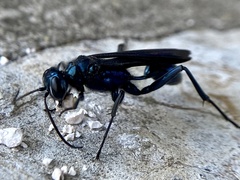
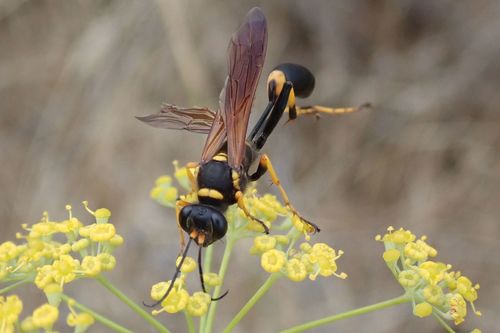
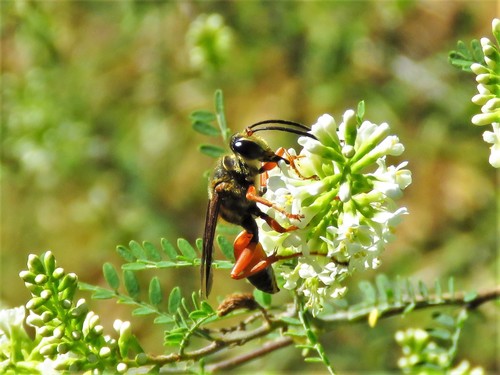
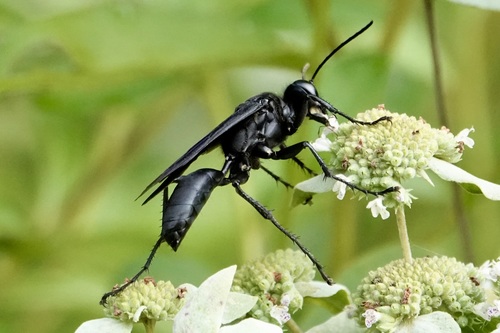
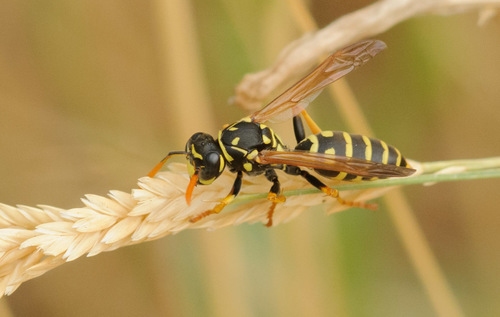
Common Blue Mud-Dauber Wasp

Common Blue Mud-Dauber Wasp

Chalybion californicum

Daily sighting probability ~10% · With luck
at Montreal

In 3 days ~20% in a week ~40%

138 Verified sightings at Montreal
50 In 1 park From 2019 to 2026
June Best month
☀️ Diurnal When it's spotted

About the Common Blue Mud-Dauber Wasp

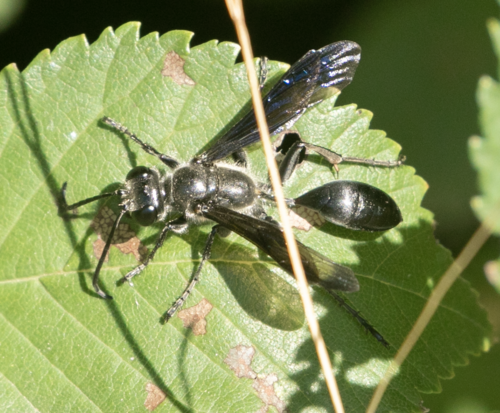
Chalybion californicum, the Nearctic blue mud-dauber wasp or common blue mud-dauber wasp of North America, is a metallic blue species of mud dauber wasp formally described by Henri Louis Frédéric de Saussure in 1867. It is not normally aggressive towards humans. It is similar in shape and color to the steel-blue cricket hunter (Chlorion aerarium). Like other types of wasps, males do not have an ovipositor, and therefore cannot sting.

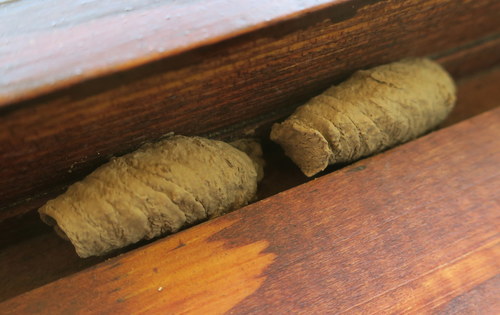
It is ranged from northern Mexico to southern Canada, including most of the United States. It has also been introduced to regions including Hawaii, Bermuda, Croatia, and other European countries. Females can build their own nests, but often refurbish nests abandoned by other wasps and bees, particularly those of Sceliphron caementarium, removing any spiders captured by S. caementarium and the larva, replacing it with an egg of its own and freshly caught spiders. They go through multiple generations in a year.

This species is most famous for its predation of black widow spiders. Adults feed on the nectar of flowers, which powers their flight. They pollinate some common wildflowers... Wikipedia →

Global Distribution

Parks Where Found

# Park Country Daily sighting probability
1 Everglades National Park 🇺🇸 United States
~10%

More parks will be added in future updates.

Cities Where Found

# City Country Daily sighting probability
1 Montreal 🇨🇦 Canada
~10%
2 Chicago 🇺🇸 United States
~10%
3 Toronto 🇨🇦 Canada
~10%
4 New York City 🇺🇸 United States
~10%
5 Detroit 🇺🇸 United States
<5%
6 Baltimore 🇺🇸 United States
<5%
7 Boston 🇺🇸 United States
<5%
8 Vancouver 🇨🇦 Canada
<5%
9 Portland 🇺🇸 United States
<5%
10 Washington 🇺🇸 United States
<5%

Before you go

What are the chances of seeing a Common Blue Mud-Dauber Wasp in Montreal?

With luck

About 10% of wildlife watchers report a Common Blue Mud-Dauber Wasp sighting in Montreal on a given day, based on 138 verified sightings from GBIF citizen-science data. It is the 77th most-seen of the 926 insects we can rate there. Over three days the chance rises to about 20%, and over a week to about 40%, if each day is a fresh chance.

When is the best time to see a Common Blue Mud-Dauber Wasp in Montreal?

June to August

In those months about 10% of wildlife watchers report a Common Blue Mud-Dauber Wasp in Montreal on a given day, against under 5% in September to May, the lowest months.

What time of day is best to see a Common Blue Mud-Dauber Wasp?

Between 8 and 11 am

Across all the parks we cover, that three-hour window holds the most Common Blue Mud-Dauber Wasp sightings with a recorded time, and about 9 in 10 of them come between 6 am and 6 pm: it is a daytime animal.

Is Montreal the best place to see a Common Blue Mud-Dauber Wasp?

Yes

Of the 20 cities where we can rate Common Blue Mud-Dauber Wasp sightings, Montreal has the highest daily chance: about 10%. Next come Chicago (United States, about 10%) and Toronto (Canada, about 10%).

Which relatives of the Common Blue Mud-Dauber Wasp live in Montreal?

Same family: Sphecidae

The closest relatives of the Common Blue Mud-Dauber Wasp that you can see in Montreal (family Sphecidae, Thread-waisted Wasps) are Yellow-Legged Mud-Dauber Wasp (about 10%) and Great Golden Digger Wasp (about 10%), with each one's daily chance of a sighting.

Where does the Common Blue Mud-Dauber Wasp sighting chance come from?

GBIF citizen-science records

It is estimated from how often the Common Blue Mud-Dauber Wasp is recorded against all the insects logged in Montreal (138 verified sightings), calibrated against known sighting rates. Figures are rounded to the nearest 10% because citizen-science data supports honest approximations, not decimals, and months with records from fewer than five people show "—". How it works.

← Back to Montreal