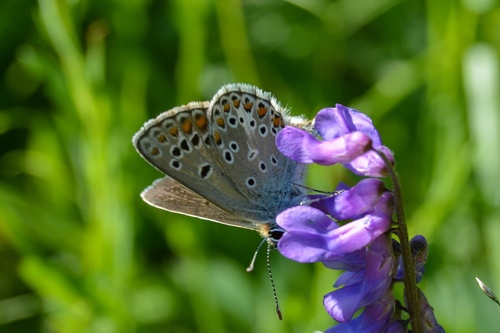
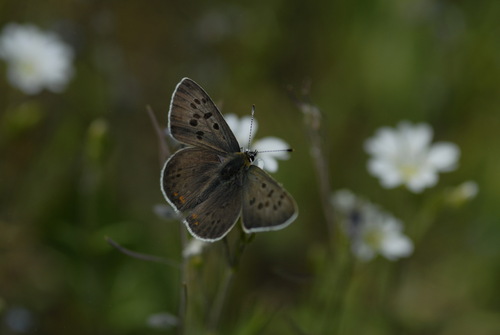
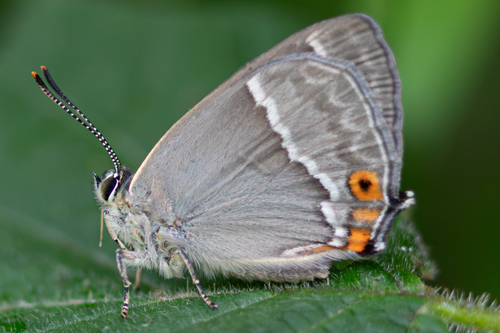
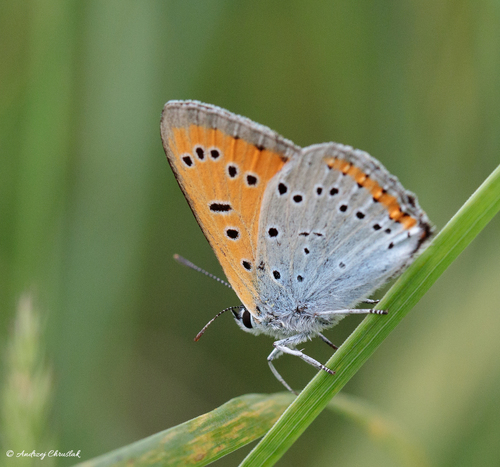
Large Copper
Daily sighting probability <5% · Rare
at Moscow

In 3 days ~10% in a week ~30%

60 Verified sightings at Moscow
80 In all 5 parks From 2019 to 2026
August Best month
☀️ Diurnal When it's spotted

About the Large Copper

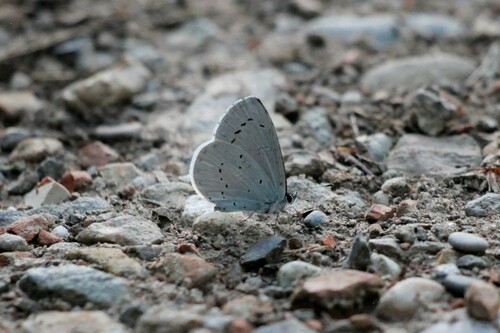
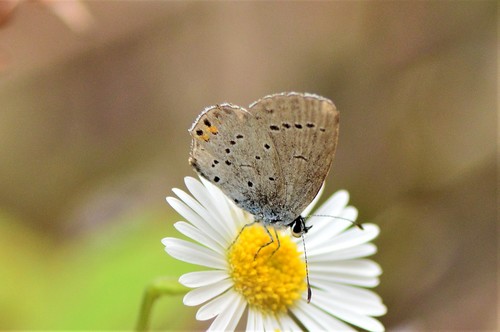
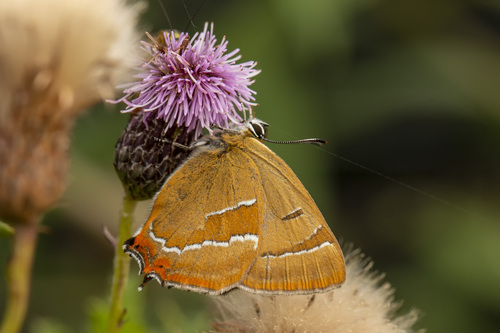
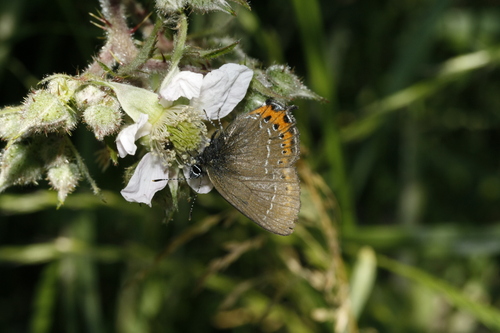
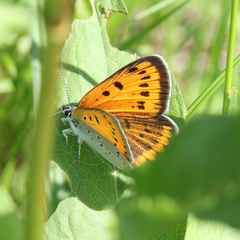
Large copper (Lycaena dispar) is a butterfly of the family Lycaenidae. Lycaena dispar is widely distributed across temperate Eurasia from western Europe to the Amur region, Korea and Manchuria. While it is currently in severe decline in north-western Europe, it is expanding in central, northern and eastern regions.

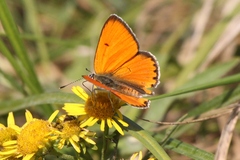
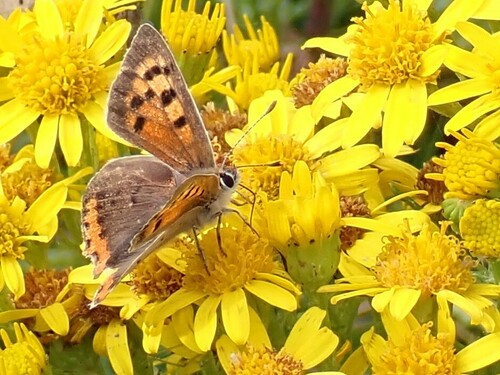
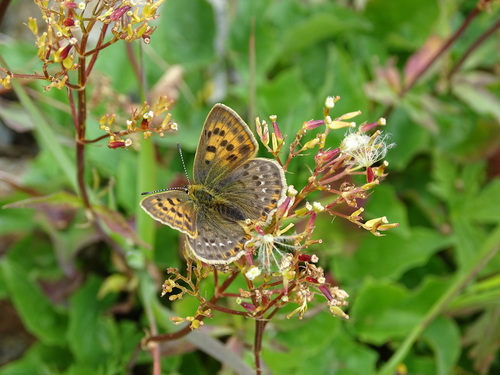
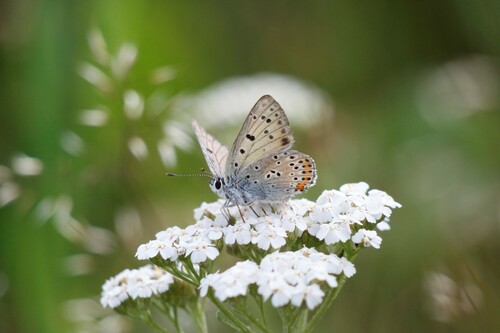
Several Asian subspecies extend the range eastward. The species has been declining in many European countries mainly as a result of habitat loss. Lycaena dispar is a large lycaenid butterfly with a wingspan of 44–52 mm. The species exhibits strong sexual dimorphism. Males have bright orange wings with narrow black margins and white fringes. The short androconia (sex brands) are located near the leading edge of the forewing. Females have broader dark brown margins on the forewings with a parallel row of dark spots.

Both sexes have distinctive silvery-blue hindwing undersides patterned with... Wikipedia →

Global Distribution

Parks Where Found

# Park Country Daily sighting probability
1 Hortobágy National Park 🇭🇺 Hungary
~30%
2 Kiskunság National Park 🇭🇺 Hungary
~20%
3 Białowieża National Park 🇵🇱 Poland
~10%
4 Bavarian Forest National Park 🇩🇪 Germany
~10%
5 Fertő-Hanság National Park 🇭🇺 Hungary
~10%

Cities Where Found

# City Country Daily sighting probability
1 Daegu 🇰🇷 South Korea
~20%
2 Daejeon 🇰🇷 South Korea
~20%
3 Seoul 🇰🇷 South Korea
~10%
4 Warsaw 🇵🇱 Poland
~10%
5 Novosibirsk 🇷🇺 Russia
~10%
6 Vienna 🇦🇹 Austria
~10%
7 Prague 🇨🇿 Czechia
~10%
8 Kyiv 🇺🇦 Ukraine
~10%
9 Birmingham 🇬🇧 United Kingdom
<5%
10 Moscow 🇷🇺 Russia
<5%

Before you go

What are the chances of seeing a Large Copper in Moscow?

Rare

Under 5% of wildlife watchers report a Large Copper sighting in Moscow on a given day, based on 60 verified sightings from GBIF citizen-science data. It is the 173rd most-seen of the 1111 insects we can rate there. Over three days the chance rises to about 10%, and over a week to about 30%, if each day is a fresh chance.

When is the best time to see a Large Copper in Moscow?

June to August

In those months about 10% of wildlife watchers report a Large Copper in Moscow on a given day, against under 5% in September to May, the lowest months.

What time of day is best to see a Large Copper?

Between 9 am and noon

Across all the parks we cover, that three-hour window holds the most Large Copper sightings with a recorded time, and about 8 in 10 of them come between 6 am and 6 pm: it is a daytime animal.

Is Moscow the best place to see a Large Copper?

10th of 12

Of the 12 cities where we can rate Large Copper sightings, Moscow ranks 10th at under 5%. The best odds are in Daegu (South Korea, about 20%), Daejeon (South Korea, about 20%) and Seoul (South Korea, about 10%).

Where does the Large Copper sighting chance come from?

GBIF citizen-science records

It is estimated from how often the Large Copper is recorded against all the insects logged in Moscow (60 verified sightings), calibrated against known sighting rates. Figures are rounded to the nearest 10% because citizen-science data supports honest approximations, not decimals, and months with records from fewer than five people show "—". How it works.
← Back to Moscow