About the March Tubic
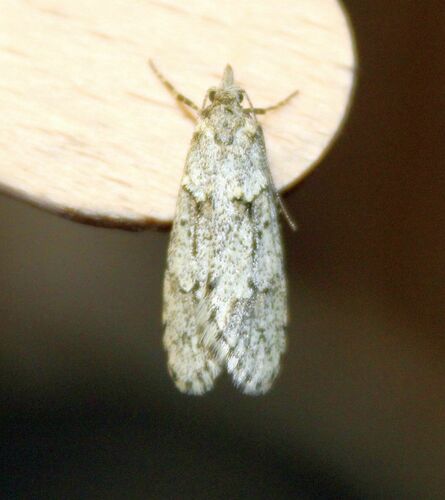
Diurnea fagella, the March dagger moth, is a moth of the subfamily Chimabachinae. It is found in Europe and was first described by Michael Denis & Ignaz Schiffermüller in 1775. The wingspan of the male is from 26–30 mm The female is smaller with reduced wings and a wingspan of 15–20 mm. The antennae of the male are
shortly and evenly ciliated. Forewings whitish or ochreous whitish, sprinkled or sometimes densely irrorated with fuscous and dark fuscous; an indistinct blackish angulated transverse line about 1/3, not reaching dorsum; stigmata black, first discal double, followed by another black dot, plical confluent with transverse line, second discal forming a transverse mark or pair of dots; often an angulated and indented blackish subterminal line. Hindwings are light grey.
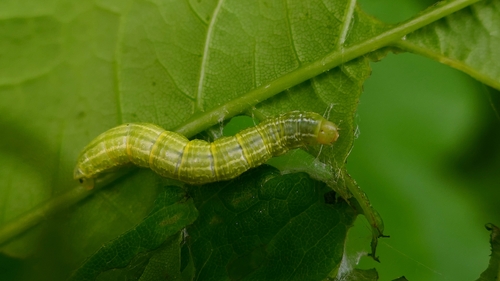
The larva is grey - green; head yellowish-grey; 3rd pair of legs placed on tubercle.Melanic forms are common in both male and female and can be found in some northern and industrial areas of England. In northern Scotland only pale specimens are found and albinistic forms can be found everywhere.
The moth flies in one generation from March to May depending on the location. During the day males... Wikipedia →