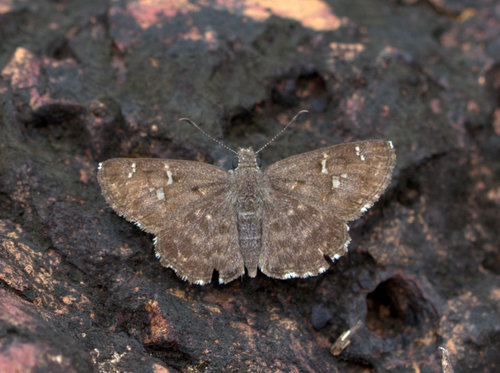
Pale Palm Dart

Pale Palm Dart

Telicota colon

Daily sighting probability ~10% · With luck
at Mumbai

In 3 days ~20% in a week ~30%

14 Verified sightings at Mumbai
7 In 1 park From 2019 to 2026
October Best month
☀️ Diurnal When it's spotted

About the Pale Palm Dart

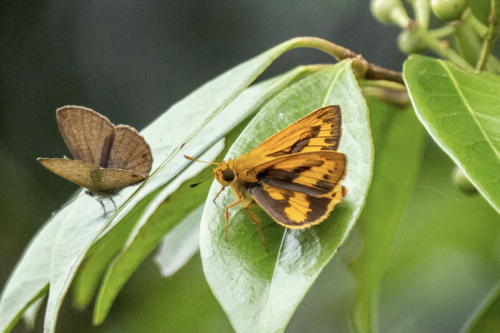
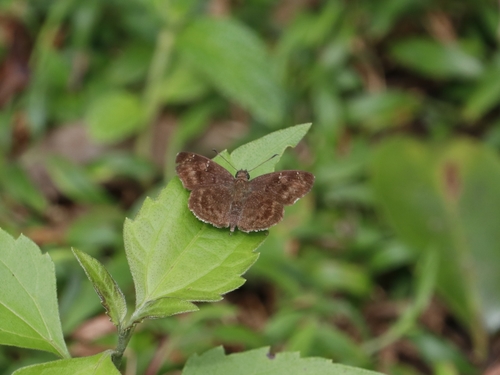
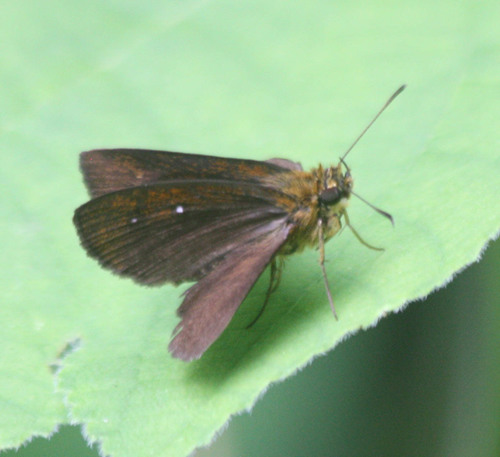
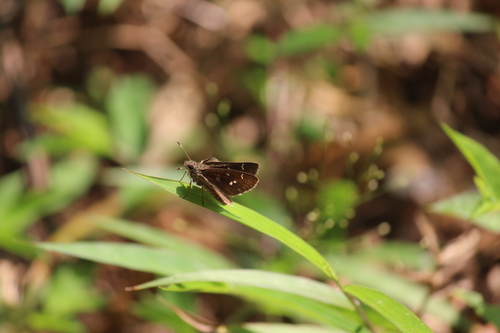
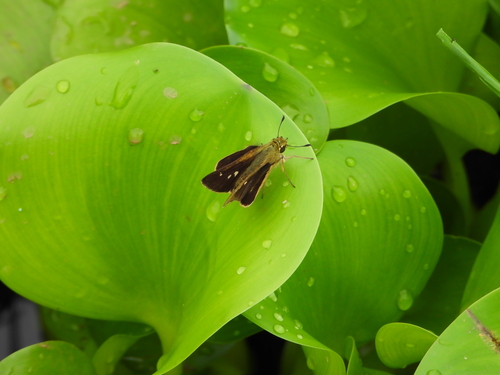
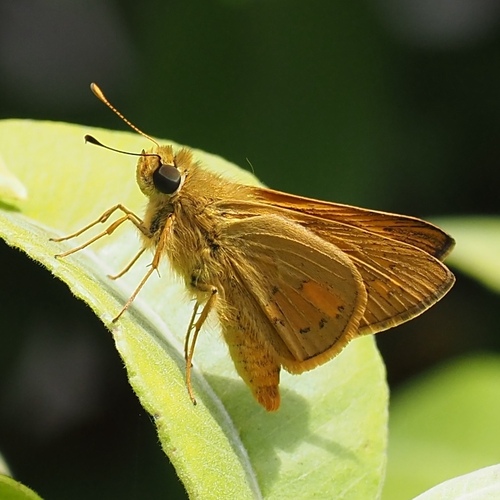
Telicota colon, commonly known as the pale palm dart or common palm dart, is a species of butterfly in the family Hesperiidae. It is found from India to Australia. Male. Upperside. Forewing golden-ochreous, costal and outer marginal line black, a narrow, pale blackish streak beneath the upper and lower margins of the cell, a broad, black, more or less oval-shaped band from the lower end of the cell to the middle of the sub-median vein, containing a linear discal stigma throughout its length, with some pale obscure spots in continuation upwards towards the apex of the wing; all the veins black, some blackish suffusion on the hinder marginal area below the sub-median vein, a black, macular, marginal baud consisting of elongated square spots, decreasing in size upwards, one in each interspace. Hindwing black, a golden-orange, rather large spot at the end of the cell, a large discal patch of that colour, from above vein 6 to below vein 2 where it joins a golden-yellow streak which runs through interspace 1 from its base to its end, the patch divided by the black veins 2, 3, 4 and 6, into elongated spots mostly scalloped on their outer sides and rounded on their inner... Wikipedia →
Global Distribution

Parks Where Found

# Park Country Daily sighting probability
1 Kakadu National Park 🇦🇺 Australia
~10%

More parks will be added in future updates.

Cities Where Found

# City Country Daily sighting probability
1 Salem 🇮🇳 India
~10%
2 Brisbane 🇦🇺 Australia
~10%
3 Mumbai 🇮🇳 India
~10%
4 Tuen Mun 🇨🇳 China
~10%
5 New Delhi 🇮🇳 India
<5%
6 Pune 🇮🇳 India
<5%
7 Singapore 🇸🇬 Singapore
<5%
8 Sydney 🇦🇺 Australia
<5%

Before you go

What are the chances of seeing a Pale Palm Dart in Mumbai?

With luck

About 10% of wildlife watchers report a Pale Palm Dart sighting in Mumbai on a given day, based on 14 verified sightings from GBIF citizen-science data. It is the 176th most-seen of the 362 insects we can rate there. Over three days the chance rises to about 20%, and over a week to about 30%, if each day is a fresh chance.

When is the best time to see a Pale Palm Dart in Mumbai?

February, July–August and October–December

In those months about 10% of wildlife watchers report a Pale Palm Dart in Mumbai on a given day, against under 5% in January, March–June and September, the lowest months.

What time of day is best to see a Pale Palm Dart?

Between 7 and 10 am

Across all the parks we cover, that three-hour window holds the most Pale Palm Dart sightings with a recorded time, and about 9 in 10 of them come between 6 am and 6 pm: it is a daytime animal.

Is Mumbai the best place to see a Pale Palm Dart?

Among the best

Of the 8 cities where we can rate Pale Palm Dart sightings, Mumbai ranks 3rd at about 10%, level with the leaders once rounded. The best odds are in Salem (India, about 10%) and Brisbane (Australia, about 10%).

Where does the Pale Palm Dart sighting chance come from?

GBIF citizen-science records

It is estimated from how often the Pale Palm Dart is recorded against all the insects logged in Mumbai (14 verified sightings), calibrated against known sighting rates. Figures are rounded to the nearest 10% because citizen-science data supports honest approximations, not decimals, and months with records from fewer than five people show "—". How it works.

← Back to Mumbai