About the Knopper Gall Wasp
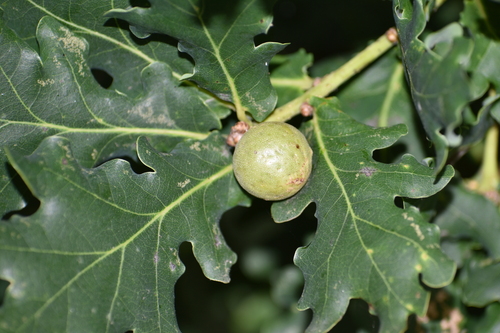
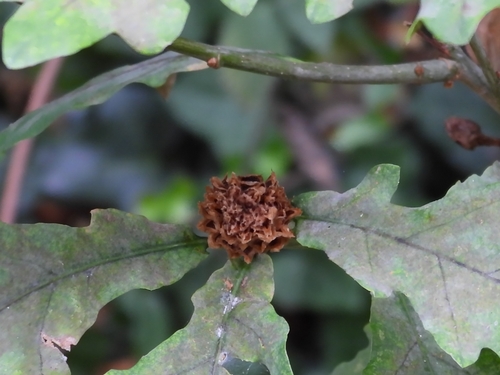
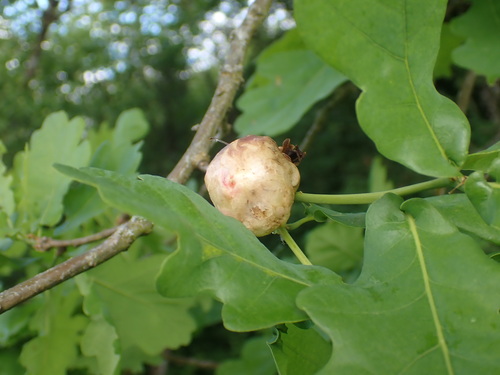
Andricus quercuscalicis is a gall wasp species inducing knopper galls. Knopper galls develop as a chemically induced distortion of growing acorns on pedunculate oak (Quercus robur L.) trees, caused by gall wasps, which lay eggs in buds with their ovipositor. The gall thus produced can greatly reduce the fecundity of the oak host, making this gall potentially more of a threat to the reproductive ability of the tree than those that develop on leaves, buds, stems, etc.
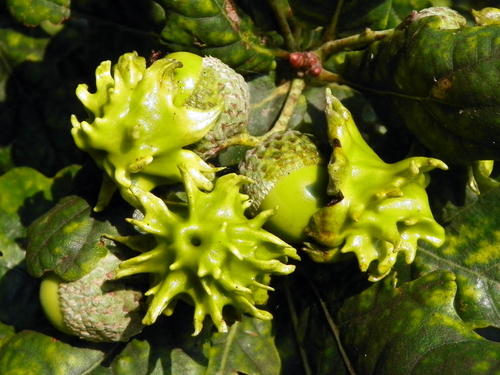
The large 2 cm gall growth appears as a mass of green to yellowish-green, ridged, and at first sticky plant tissue on the bud of the oak, that breaks out as the gall between the cup and the acorn. If only a few grubs are developing within, then it may appear only as a group of bland folds. Where several grubs are competing for space the shape may become much more contorted, with several tightly bunched galls.
The word knopper derives from the German word 'Knoppe', meaning a kind of felt cap or helmet worn during the 17th century; also a small rounded protuberance, often decorative, such as a stud, a tassel or a knob. Although normally distinctive the knopper gall can, under some... Wikipedia →