Oak Apple Gall Wasp

Oak Apple Gall Wasp

Biorhiza pallida

Daily sighting probability <5% · Rare
at Munich

In 3 days ~10% in a week ~20%

6 Verified sightings at Munich
50 In all 4 parks From 2019 to 2026
May Best month
☀️ Diurnal When it's spotted

About the Oak Apple Gall Wasp

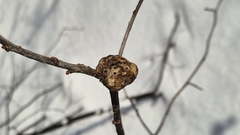
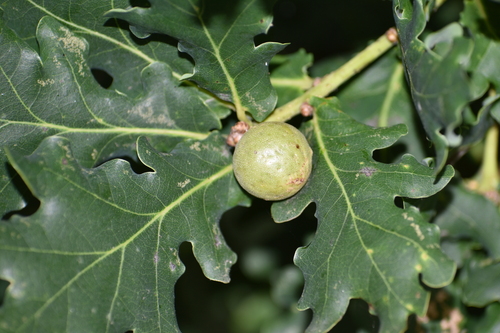
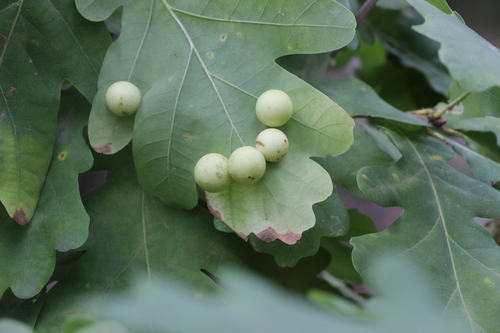
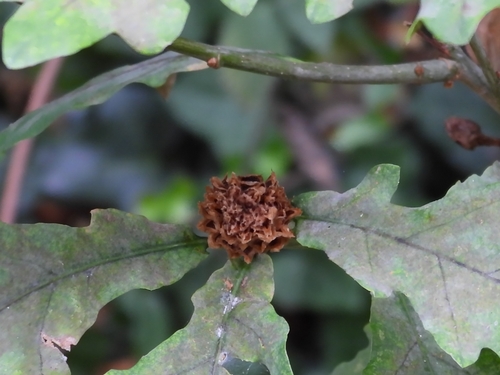
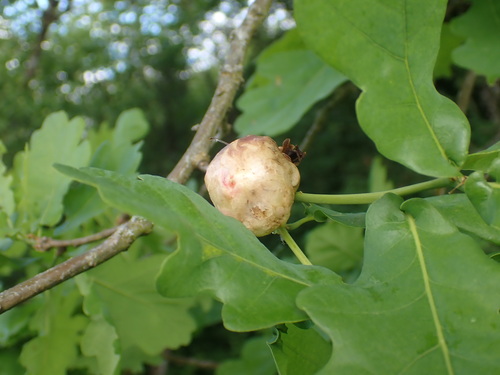
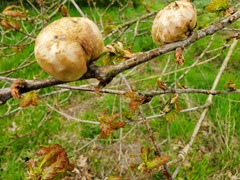
Biorhiza pallida, also known as the oak apple gall wasp, is a gall wasp species in the family Cynipidae. This species is a member of the tribe Cynipini: the oak gall wasp tribe. Cynipini is the tribe partially responsible for the formation of galls known as oak apples on oak trees. These are formed after the wasp lays eggs inside the leaf buds and the plant tissues swell as the larvae of the gall wasp develop inside. This wasp has a widespread distribution within Europe.

Biorhiza pallida has a complex life cycle involving an agamic female that reproduces by parthenogenesis without a male during the winter/spring, and a summer generation of adults where individuals are either male or female. These mate and produce fertilised eggs.

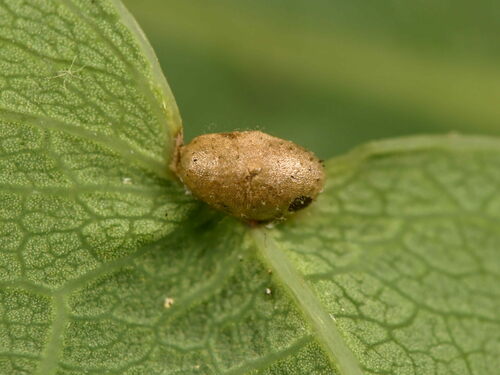
The wingless agamic wasp is between 4.8 and 6.3 millimetres (0.19 and 0.25 in) long. The head is golden brown with mid-brown eyes and orange ocelli (simple eyes). The long antennae have fifteen segments and are orangeish-brown. The thorax, legs and bulbous, glistening gaster (abdomen) are yellowish-brown.

Male and female wasps that develop in the summer generation are smaller with a length between 2 and 3.5 mm (0.08 and 0.14 in). The head... Wikipedia →
Global Distribution

Parks Where Found

# Park Country Daily sighting probability
1 Snowdonia National Park 🇬🇧 United Kingdom
~10%
2 Bavarian Forest National Park 🇩🇪 Germany
~10%
3 Sierra de Guadarrama National Park 🇪🇸 Spain
~10%
4 Wadden Sea National Park 🇩🇪 Germany
<5%

Cities Where Found

# City Country Daily sighting probability
1 London 🇬🇧 United Kingdom
~10%
2 Birmingham 🇬🇧 United Kingdom
~10%
3 Liverpool 🇬🇧 United Kingdom
~10%
4 Manchester 🇬🇧 United Kingdom
~10%
5 Leeds 🇬🇧 United Kingdom
~10%
6 Berlin 🇩🇪 Germany
~10%
7 Prague 🇨🇿 Czechia
~10%
8 Stockholm 🇸🇪 Sweden
~10%
9 Essen 🇩🇪 Germany
<5%
10 Warsaw 🇵🇱 Poland
<5%

Before you go

What are the chances of seeing an Oak Apple Gall Wasp in Munich?

Rare

Under 5% of wildlife watchers report an Oak Apple Gall Wasp sighting in Munich on a given day, based on 6 verified sightings from GBIF citizen-science data. It is the 392nd most-seen of the 521 insects we can rate there. Over three days the chance rises to about 10%, and over a week to about 20%, if each day is a fresh chance.

When is the best time to see an Oak Apple Gall Wasp in Munich?

April and May

In those months about 10% of wildlife watchers report an Oak Apple Gall Wasp in Munich on a given day, against under 5% in June to March, the lowest months.

What time of day is best to see an Oak Apple Gall Wasp?

Between 9 am and noon

Across all the parks we cover, that three-hour window holds the most Oak Apple Gall Wasp sightings with a recorded time, and about 8 in 10 of them come between 6 am and 6 pm: it is a daytime animal.

Is Munich the best place to see an Oak Apple Gall Wasp?

12th of 14

Of the 14 cities where we can rate Oak Apple Gall Wasp sightings, Munich ranks 12th at under 5%. The best odds are in London (United Kingdom, about 10%), Birmingham (United Kingdom, about 10%) and Liverpool (United Kingdom, about 10%).

Which relatives of the Oak Apple Gall Wasp live in Munich?

Same family: Cynipidae

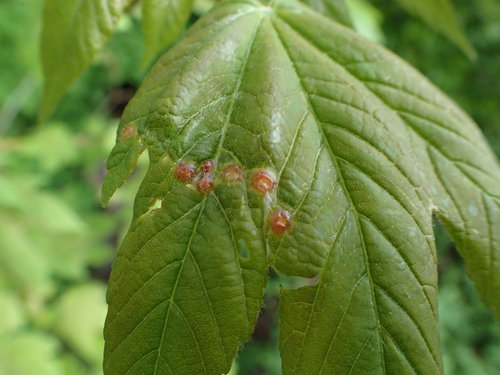
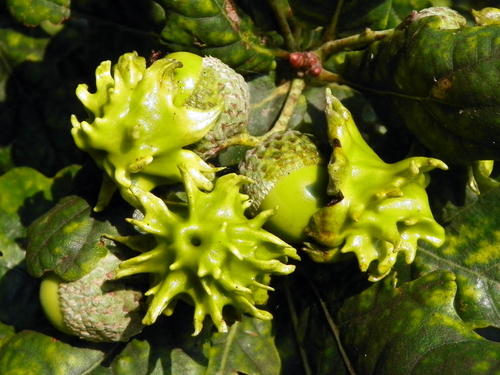
The closest relatives of the Oak Apple Gall Wasp that you can see in Munich (family Cynipidae, Gall Wasps) are Maple Gall Wasp (about 10%) and Knopper Gall Wasp (about 10%), with each one's daily chance of a sighting.

Where does the Oak Apple Gall Wasp sighting chance come from?

GBIF citizen-science records

It is estimated from how often the Oak Apple Gall Wasp is recorded against all the insects logged in Munich (6 verified sightings), calibrated against known sighting rates. Figures are rounded to the nearest 10% because citizen-science data supports honest approximations, not decimals, and months with records from fewer than five people show "—". How it works.

← Back to Munich