Indian Cotton Stainer

Indian Cotton Stainer

Dysdercus cingulatus

Daily sighting probability ~20% · Possible
at Naha

In 3 days ~50% in a week ~80%

14 Verified sightings at Naha
6 In 1 park From 2019 to 2026
July Best month
☀️🌙 Day & Night When it's spotted

About the Indian Cotton Stainer

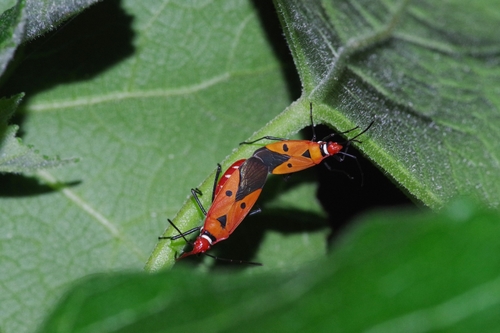
Dysdercus cingulatus is a species of true bug in the family Pyrrhocoridae, commonly known as the red cotton stainer. It is a serious pest of cotton crops, the adults and older nymphs feeding on the emerging bolls and the cotton seeds as they mature, transmitting cotton-staining fungi as they do so.

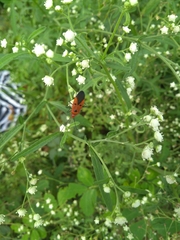
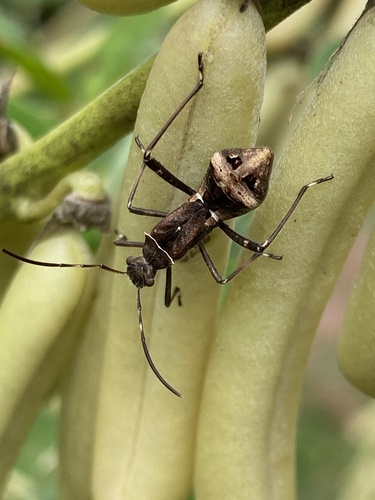
Dysdercus cingulatus grows to a length of 12 to 18 mm (0.47 to 0.71 in). It is mainly red but has a white collar and black hemelytral spots. It is closely related and very similar to Dysdercus koenigii but D. cingulatus is slightly larger and the femora have varying amounts of black while D. koenigii has completely red femora.

D. cingulatus is reported to occur in Sumatra, Borneo, the Philippines, Sri Lanka, northern India, western Pakistan, Bangladesh, Cambodia, Thailand, Papua New Guinea, and northern Australia. The exact distribution is difficult to ascertain because of historical confusion between this species and D. koenigii.

As well as cotton (Gossypium), D. cingulatus feeds on a number of other crop plants including okra (Abelmoschus esculentus), muskmallow (Abelmoschus moschatus), hibiscus, white jute (Corchorus capsularis),... Wikipedia →
Global Distribution

Parks Where Found

# Park Country Daily sighting probability
1 Daintree National Park 🇦🇺 Australia
~10%

More parks will be added in future updates.

Cities Where Found

# City Country Daily sighting probability
1 Naha 🇯🇵 Japan
~20%
2 Tuen Mun 🇨🇳 China
~10%
3 Tainan 🇹🇼 Taiwan
~10%
4 Prayagraj 🇮🇳 India
~10%
5 Fuzhou 🇨🇳 China
~10%
6 Bengaluru 🇮🇳 India
~10%
7 Xiamen City 🇨🇳 China
~10%
8 Manila 🇵🇭 Philippines
~10%
9 Kaohsiung 🇹🇼 Taiwan
~10%
10 Zhuhai [Macau] 🇨🇳 China
~10%

Before you go

What are the chances of seeing an Indian Cotton Stainer in Naha?

Possible

About 20% of wildlife watchers report an Indian Cotton Stainer sighting in Naha on a given day, based on 14 verified sightings from GBIF citizen-science data. It is the 34th most-seen of the 94 insects we can rate there. Over three days the chance rises to about 50%, and over a week to about 80%, if each day is a fresh chance.

When is the best time to see an Indian Cotton Stainer in Naha?

July

In that month about 40% of wildlife watchers report an Indian Cotton Stainer in Naha on a given day, against under 5% in September to February, the lowest months.

What time of day is best to see an Indian Cotton Stainer?

Between 2 and 5 pm

Across all the parks we cover, that three-hour window holds the most Indian Cotton Stainer sightings with a recorded time, and about half of them come between 6 am and 6 pm: it is seen both by day and at night.

Is Naha the best place to see an Indian Cotton Stainer?

Yes

Of the 18 cities where we can rate Indian Cotton Stainer sightings, Naha has the highest daily chance: about 20%. Next come Tuen Mun (China, about 10%) and Tainan (Taiwan, about 10%).

Which relatives of the Indian Cotton Stainer live in Naha?

Same order: Hemiptera

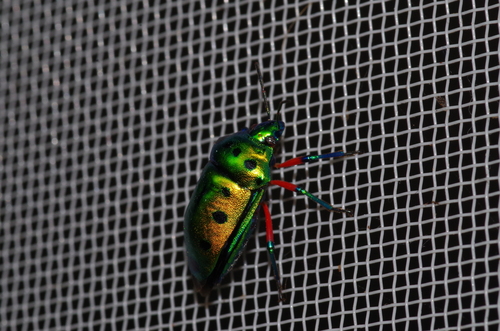
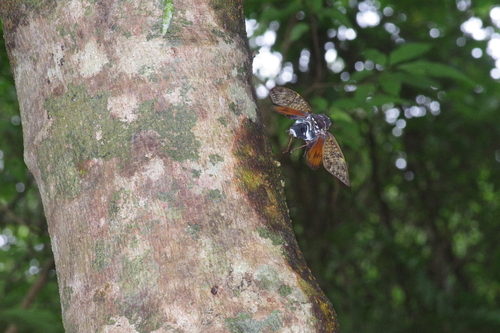
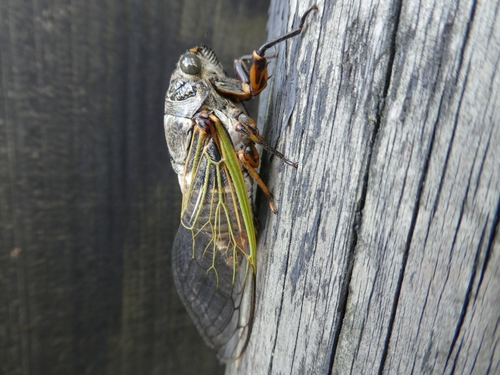
The closest relatives of the Indian Cotton Stainer that you can see in Naha (order Hemiptera, True Bugs, Hoppers, Aphids, and allies) are Calliphara excellens (about 40%), Graptopsaltria bimaculata (about 40%) and Black Giant Cicada (about 30%), with each one's daily chance of a sighting.

Where does the Indian Cotton Stainer sighting chance come from?

GBIF citizen-science records

It is estimated from how often the Indian Cotton Stainer is recorded against all the insects logged in Naha (14 verified sightings), calibrated against known sighting rates. Figures are rounded to the nearest 10% because citizen-science data supports honest approximations, not decimals, and months with records from fewer than five people show "—". How it works.

← Back to Naha