Common Lagoon Fly

Common Lagoon Fly

Eristalinus aeneus

Daily sighting probability <5% · Rare
at New York City

In 3 days ~10% in a week ~20%

68 Verified sightings at New York City
73 In all 4 parks From 2019 to 2026
March Best month
☀️ Diurnal When it's spotted

About the Common Lagoon Fly

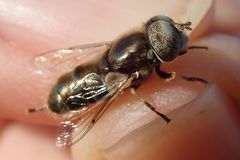
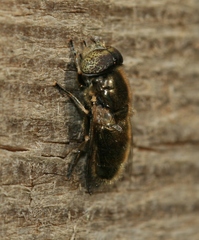
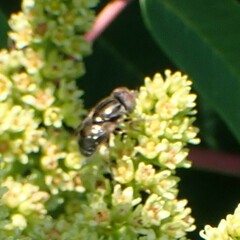
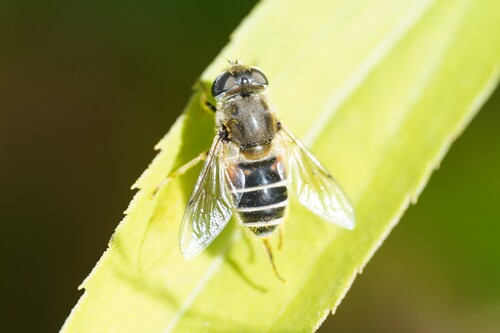
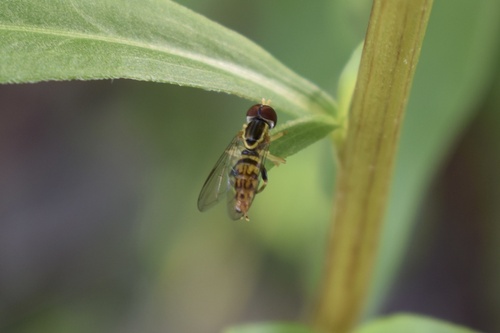
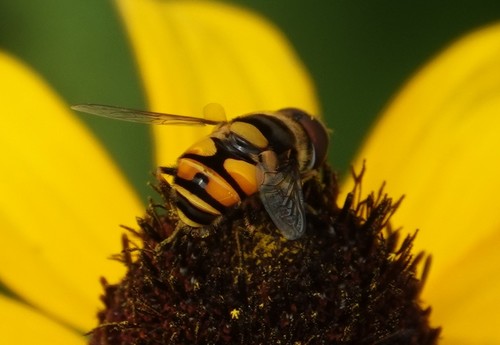
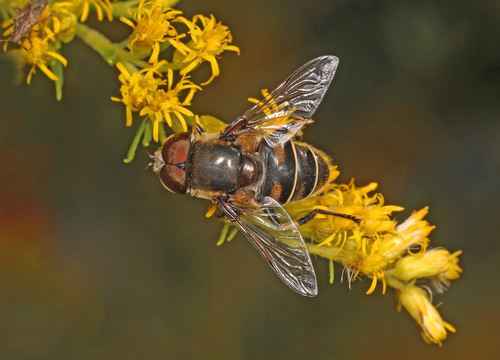
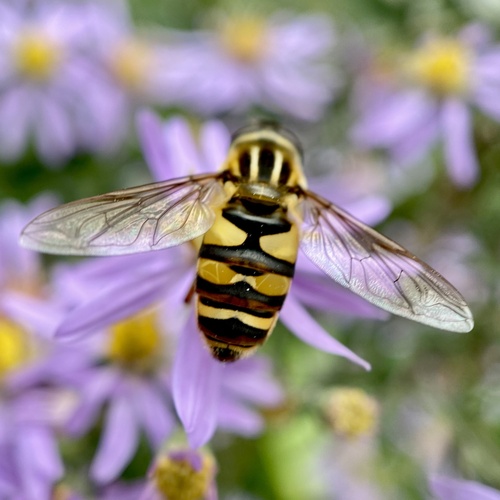
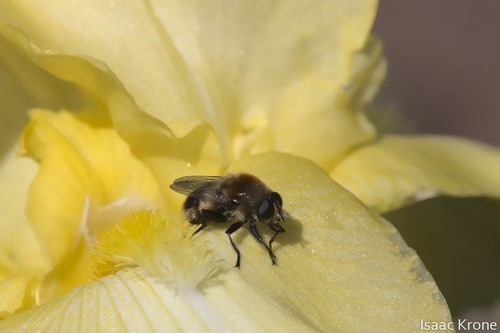
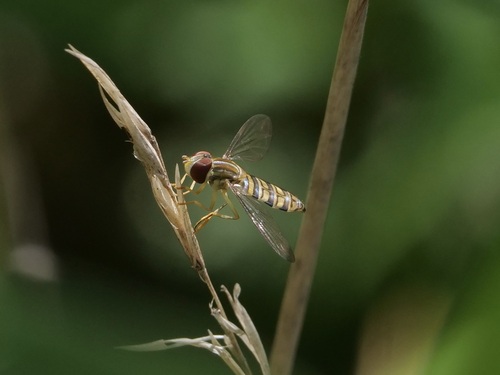
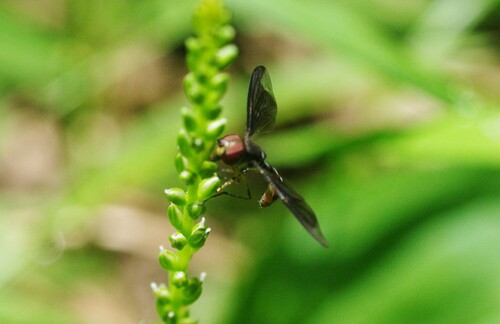
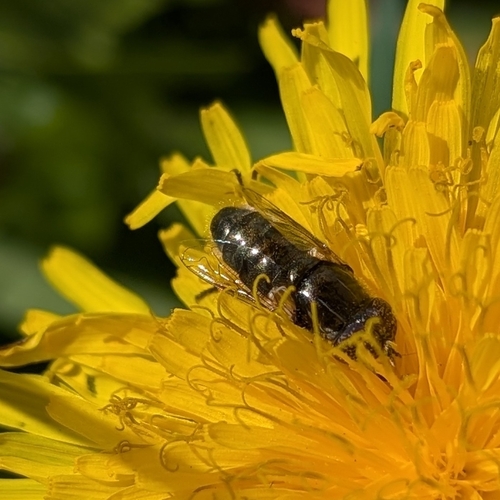
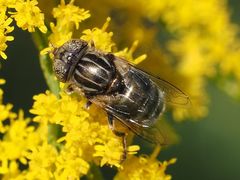
Eristalinus aeneus (Scopoli, 1763), the common lagoon fly, is a fairly common species of syrphid fly observed throughout the United States and Europe. Hoverflies can remain nearly motionless in flight. The adults are also known as flower flies for they are commonly found on flowers, from which they get both energy-giving nectar and protein-rich pollen. The larvae occurs along shorelines in rock pools containing large amounts of decaying seaweed.

For terms see Morphology of Diptera The wing length is 6.5–9.25 mm. The eyes are patterned with obvious black spots. Tergites 2 and 3 are completely shiny. The thoracic dorsum has faint greyish stripes (in Southern Europe it has five strong grey stripes). In males the eyes meet on the frons. In females the eyes are bare on the lower half. The hind tibiae have a black ring after middle, and all tarsi with segments 2–4 darkened.

The male genitalia are figured by Pérez-Bañón et al (2003). The larva is figured by Hartley (1961). The distribution of this species is cosmopolitan. inaturalist map The habitat for this species is freshwater: coastal lagoons, ponds, slow-moving rivers, streams and... Wikipedia →
Global Distribution

Parks Where Found

# Park Country Daily sighting probability
1 Camargue 🇫🇷 France
~10%
2 Acadia National Park 🇺🇸 United States
~10%
3 Pacific Rim National Park Reserve 🇨🇦 Canada
~10%
4 Wadden Sea National Park 🇩🇪 Germany
~10%

Cities Where Found

# City Country Daily sighting probability
1 Kuwait City 🇰🇼 Kuwait
~30%
2 Jerusalem 🇮🇱 Israel
~20%
3 Algiers 🇩🇿 Algeria
~10%
4 Tehran 🇮🇷 Iran
~10%
5 San Francisco 🇺🇸 United States
~10%
6 Torreón 🇲🇽 México
~10%
7 Las Vegas 🇺🇸 United States
<5%
8 Vancouver 🇨🇦 Canada
<5%
9 Sacramento 🇺🇸 United States
<5%
10 Boston 🇺🇸 United States
<5%

Before you go

What are the chances of seeing a Common Lagoon Fly in New York City?

Rare

Under 5% of wildlife watchers report a Common Lagoon Fly sighting in New York City on a given day, based on 68 verified sightings from GBIF citizen-science data. It is the 335th most-seen of the 1623 insects we can rate there. Over three days the chance rises to about 10%, and over a week to about 20%, if each day is a fresh chance.

When is the best time to see a Common Lagoon Fly in New York City?

Any time of year

In every month with enough records, under 5% of wildlife watchers report a Common Lagoon Fly in New York City on a given day, so our monthly data shows no clear season.

What time of day is best to see a Common Lagoon Fly?

Between noon and 3 pm

Across all the parks we cover, that three-hour window holds the most Common Lagoon Fly sightings with a recorded time, and nearly all of them come between 6 am and 6 pm: it is a daytime animal.

Is New York City the best place to see a Common Lagoon Fly?

11th of 16

Of the 16 cities where we can rate Common Lagoon Fly sightings, New York City ranks 11th at under 5%. The best odds are in Kuwait City (Kuwait, about 30%), Jerusalem (Israel, about 20%) and Algiers (Algeria, about 10%).

Which relatives of the Common Lagoon Fly live in New York City?

Same family: Syrphidae

The closest relatives of the Common Lagoon Fly that you can see in New York City (family Syrphidae, Hover Flies) are Eurasian Drone Fly (about 20%), Margined Calligrapher (about 10%) and Eastern Calligrapher (about 10%), with each one's daily chance of a sighting.

Where does the Common Lagoon Fly sighting chance come from?

GBIF citizen-science records

It is estimated from how often the Common Lagoon Fly is recorded against all the insects logged in New York City (68 verified sightings), calibrated against known sighting rates. Figures are rounded to the nearest 10% because citizen-science data supports honest approximations, not decimals, and months with records from fewer than five people show "—". How it works.

← Back to New York City