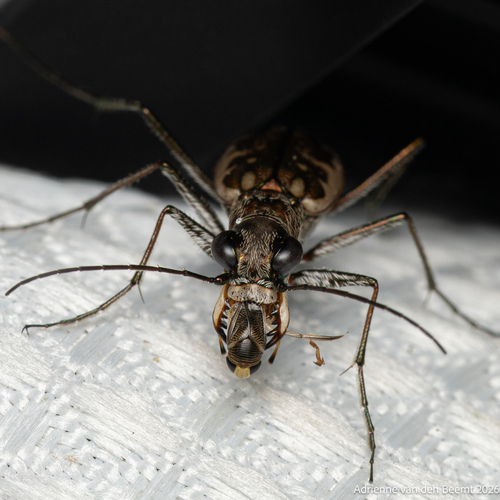
Fiery Searcher

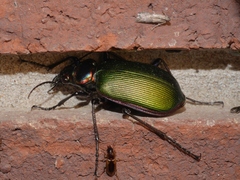
Fiery Searcher

Calosoma scrutator

Daily sighting probability <5% · Rare
at New York City

In 3 days ~10%

14 Verified sightings at New York City
24 In all 4 parks From 2019 to 2026
August Best month
☀️🌙 Day & Night When it's spotted

About the Fiery Searcher

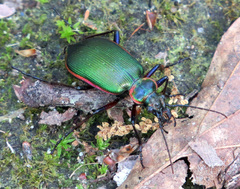
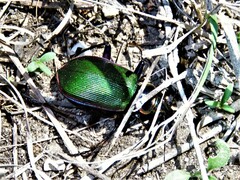
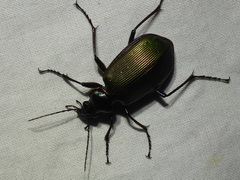
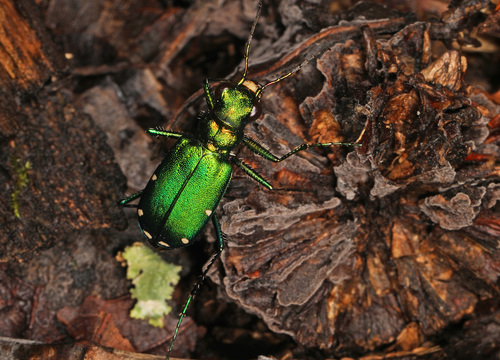
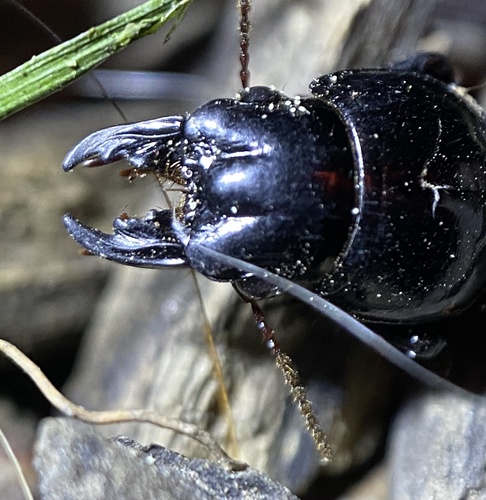
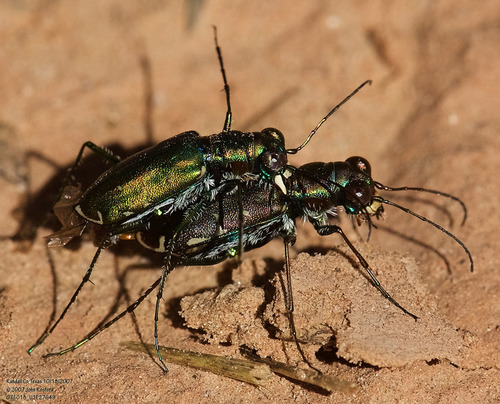
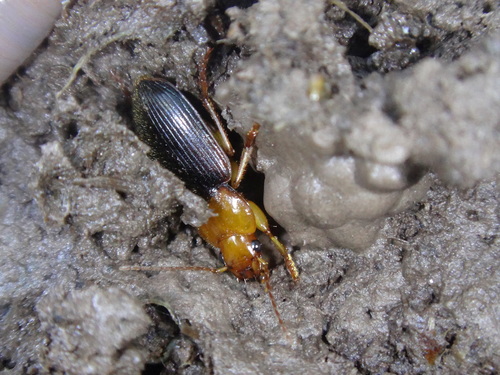
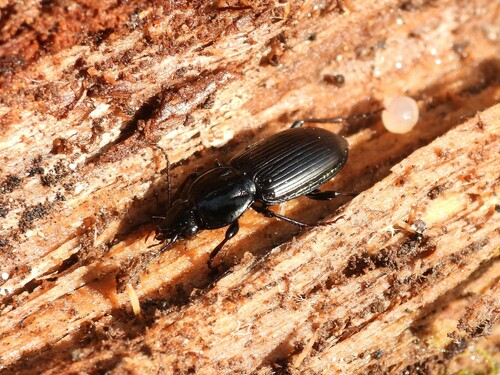
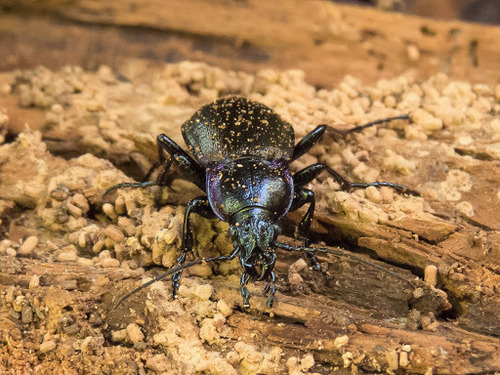
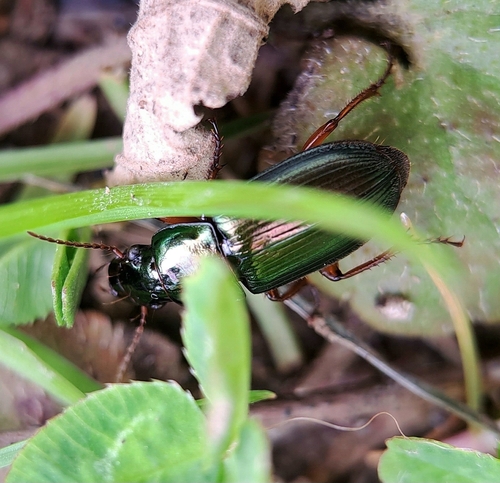
Calosoma scrutator, commonly known as the fiery searcher and caterpillar hunter, is a species of ground beetle belonging to the genus Calosoma. This beetle can be as large as 35 millimetres (1.4 in) long, and is hence among the largest of the ground beetles found in North America. The distribution of this species is relatively widespread, and is common in North America. The adult beetle is known to excrete a foul-smelling oil when it is handled. The oil has been described as smelling similar to rotten milk or rancid olive oil.

It was originally described in Virginia by Johan Christian Fabricius in 1775. It is a predatory beetle and also happens to be predatorial in its larval stage as well. Their varying colors and metallic shine make them very intriguing to those who spend time collecting different types of bugs. They are found mostly in North America along the east coast but have been found in Mexico, Venezuela, and Guatemala. Adults eat caterpillars and other worms, but most notably the forest tent caterpillar (Mala-cosoma disstria) and cankerworms. This fact gives Calosoma scrutator the nickname of "Caterpillar Hunter". These beetles are very good predators of agricultural pests such as spongy moth larvae. Predators that like to snack on the fiery searcher beetle include skunks, birds, raccoons, foxes, and toads. Wikipedia →

Global Distribution

Parks Where Found

# Park Country Daily sighting probability
1 Zion National Park 🇺🇸 United States
~10%
2 Grand Canyon National Park 🇺🇸 United States
~10%
3 Shenandoah National Park 🇺🇸 United States
<5%
4 Saguaro National Park 🇺🇸 United States
<5%

Cities Where Found

# City Country Daily sighting probability
1 Austin 🇺🇸 United States
~10%
2 Dallas 🇺🇸 United States
~10%
3 San Antonio 🇺🇸 United States
~10%
4 Houston 🇺🇸 United States
<5%
5 Baltimore 🇺🇸 United States
<5%
6 Washington 🇺🇸 United States
<5%
7 New York City 🇺🇸 United States
<5%

Before you go

What are the chances of seeing a Fiery Searcher in New York City?

Rare

Under 5% of wildlife watchers report a Fiery Searcher sighting in New York City on a given day, based on 14 verified sightings from GBIF citizen-science data. It is the 841st most-seen of the 1623 insects we can rate there. Over three days the chance rises to about 10%, if each day is a fresh chance.

When is the best time to see a Fiery Searcher in New York City?

Any time of year

In every month with enough records, under 5% of wildlife watchers report a Fiery Searcher in New York City on a given day, so our monthly data shows no clear season.

What time of day is best to see a Fiery Searcher?

Between 2 and 5 pm

Across all the parks we cover, that three-hour window holds the most Fiery Searcher sightings with a recorded time, and about 6 in 10 of them come between 6 am and 6 pm: it is seen both by day and at night.

Is New York City the best place to see a Fiery Searcher?

7th of 7

Of the 7 cities where we can rate Fiery Searcher sightings, New York City ranks 7th at under 5%. The best odds are in Austin (United States, about 10%), Dallas (United States, about 10%) and San Antonio (United States, about 10%).

Where does the Fiery Searcher sighting chance come from?

GBIF citizen-science records

It is estimated from how often the Fiery Searcher is recorded against all the insects logged in New York City (14 verified sightings), calibrated against known sighting rates. Figures are rounded to the nearest 10% because citizen-science data supports honest approximations, not decimals, and months with records from fewer than five people show "—". How it works.

← Back to New York City