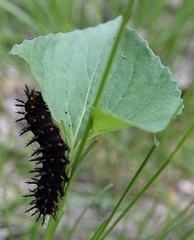


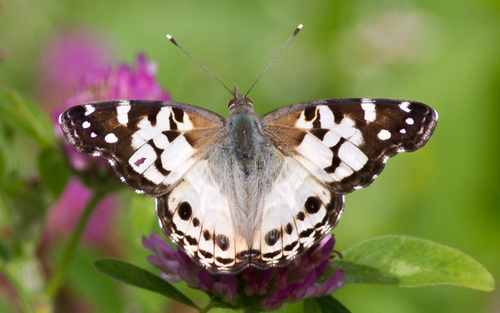
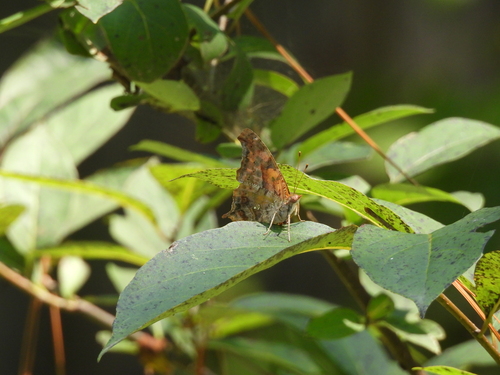
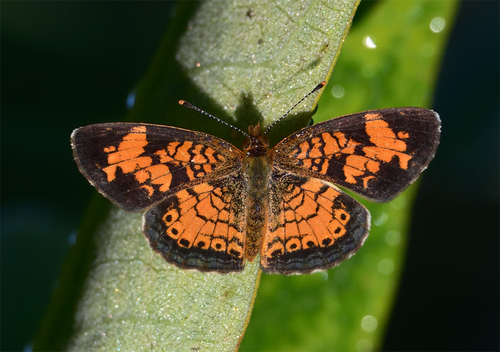

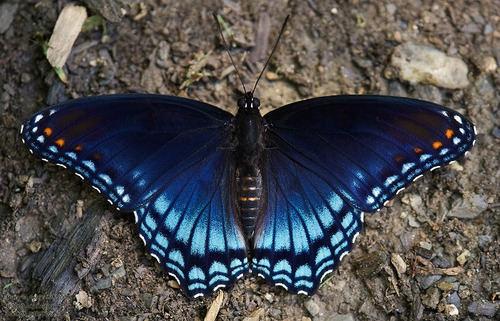
Great Spangled Fritillary

Great Spangled Fritillary

Speyeria cybele

Daily sighting probability <5% · Rare
at New York City

In 3 days ~10% in a week ~20%

31 Verified sightings at New York City
955 In all 6 parks From 2019 to 2026
July Best month
☀️ Diurnal When it's spotted

About the Great Spangled Fritillary

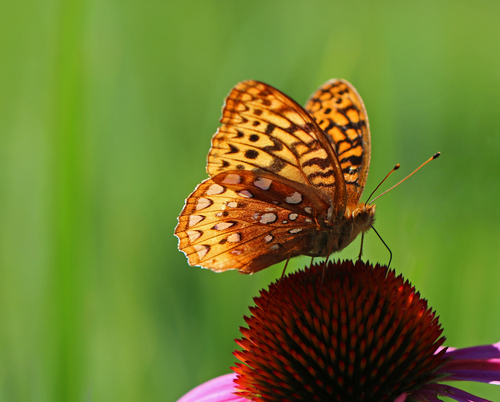
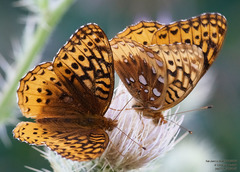
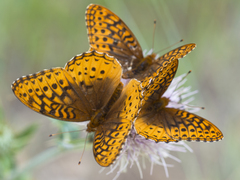
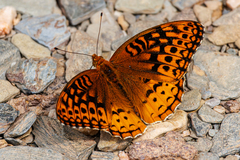
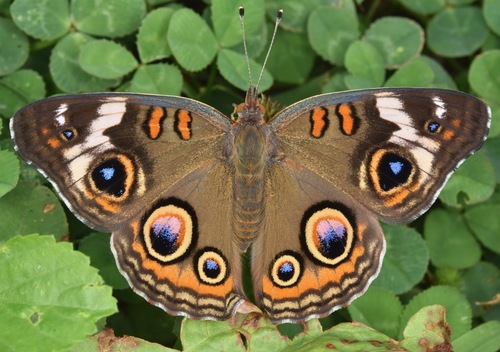
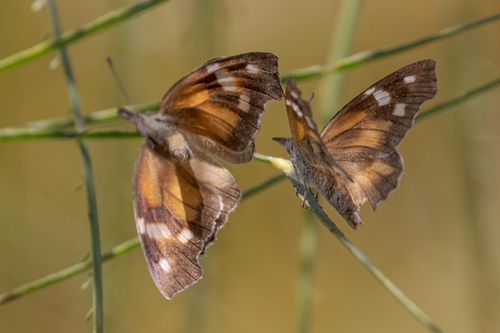
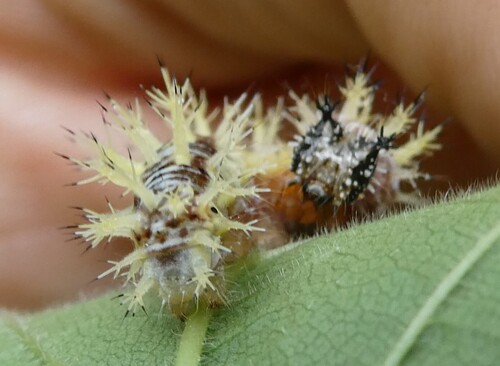
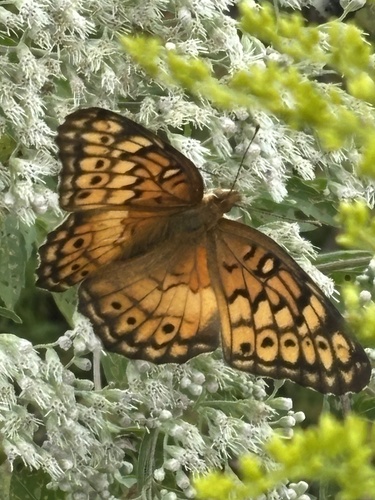
The great spangled fritillary (Speyeria cybele) is a North American butterfly of the family Nymphalidae. Its wingspan ranges from 62 to 88 mm (2.4 to 3.5 in). It is characterized by its orange colour above with five black dashes near forewing base and several irregular black dashes at the base of the hindwing. In addition, two rows of black crescents run along the edges of the wings. Below, the forewing is yellowish orange with black marks similar to the upperside, with a few silver spots on the tip of the wing. The hindwing is reddish brown with silver spots on the base and middle of the wing. A broad yellow band and silver triangles are the most notable qualities on the wing, next to the brown margin. Females tend to be darker than males and individuals from the western reaches of this species range tend to be brighter orange. Similar species include the Aphrodite fritillary (Speyeria aphrodite), the Atlantis fritillary (Speyeria atlantis) and the northwestern fritillary (Speyeria hesperis). It is distinguished from the Aphrodite and Atlantis fritillaries by a wide light submarginal band on the hindwing and instead of black spots, black dashes form on the margins... Wikipedia →

Global Distribution

Parks Where Found

# Park Country Daily sighting probability
1 Shenandoah National Park 🇺🇸 United States
~30%
2 Great Smoky Mountains National Park 🇺🇸 United States
~30%
3 Elk Island National Park 🇨🇦 Canada
~20%
4 Acadia National Park 🇺🇸 United States
~10%
5 Riding Mountain National Park 🇨🇦 Canada
~10%
6 Yosemite National Park 🇺🇸 United States
~10%

Cities Where Found

# City Country Daily sighting probability
1 Edmonton 🇨🇦 Canada
~10%
2 Minneapolis [Saint Paul] 🇺🇸 United States
~10%
3 Washington 🇺🇸 United States
~10%
4 Toronto 🇨🇦 Canada
<5%
5 Calgary 🇨🇦 Canada
<5%
6 Chicago 🇺🇸 United States
<5%
7 Montreal 🇨🇦 Canada
<5%
8 New York City 🇺🇸 United States
<5%

Before you go

What are the chances of seeing a Great Spangled Fritillary in New York City?

Rare

Under 5% of wildlife watchers report a Great Spangled Fritillary sighting in New York City on a given day, based on 31 verified sightings from GBIF citizen-science data. It is the 485th most-seen of the 1623 insects we can rate there. Over three days the chance rises to about 10%, and over a week to about 20%, if each day is a fresh chance.

When is the best time to see a Great Spangled Fritillary in New York City?

Any time of year

In every month with enough records, under 5% of wildlife watchers report a Great Spangled Fritillary in New York City on a given day, so our monthly data shows no clear season.

What time of day is best to see a Great Spangled Fritillary?

Between 11 am and 2 pm

Across all the parks we cover, that three-hour window holds the most Great Spangled Fritillary sightings with a recorded time, and nearly all of them come between 6 am and 6 pm: it is a daytime animal.

Is New York City the best place to see a Great Spangled Fritillary?

8th of 8

Of the 8 cities where we can rate Great Spangled Fritillary sightings, New York City ranks 8th at under 5%. The best odds are in Edmonton (Canada, about 10%), Minneapolis [Saint Paul] (United States, about 10%) and Washington (United States, about 10%).

Which relatives of the Great Spangled Fritillary live in New York City?

Same family: Nymphalidae

The closest relatives of the Great Spangled Fritillary that you can see in New York City (family Nymphalidae, Brush-footed Butterflies) are Monarch (about 30%), Red Admiral (about 20%) and American Lady (about 10%), with each one's daily chance of a sighting.

Where does the Great Spangled Fritillary sighting chance come from?

GBIF citizen-science records

It is estimated from how often the Great Spangled Fritillary is recorded against all the insects logged in New York City (31 verified sightings), calibrated against known sighting rates. Figures are rounded to the nearest 10% because citizen-science data supports honest approximations, not decimals, and months with records from fewer than five people show "—". How it works.

← Back to New York City