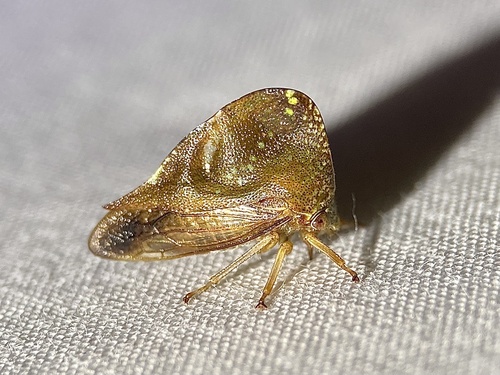
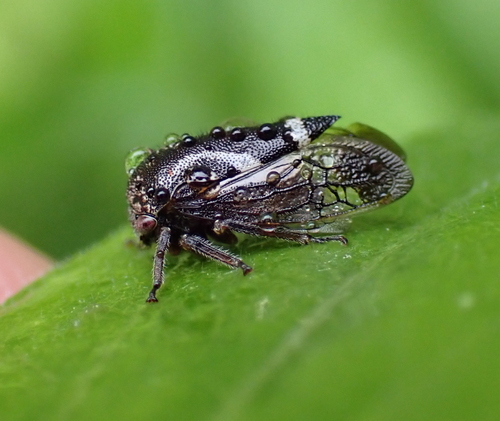
About the Keeled Treehopper
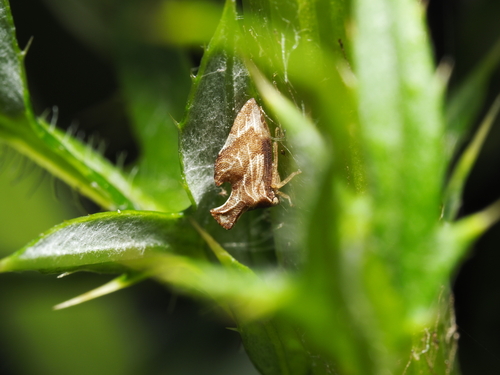
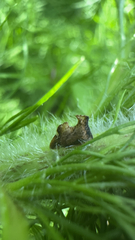
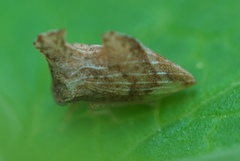
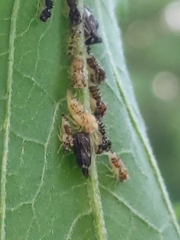
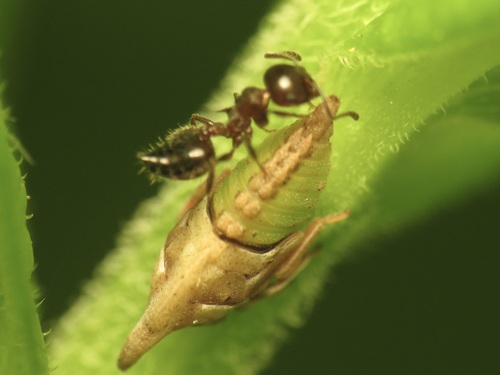
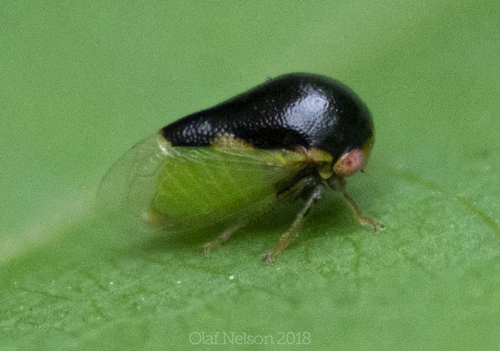
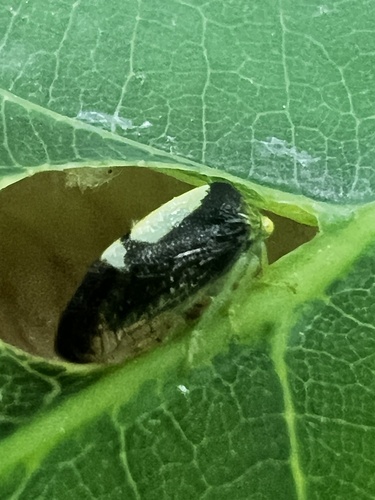
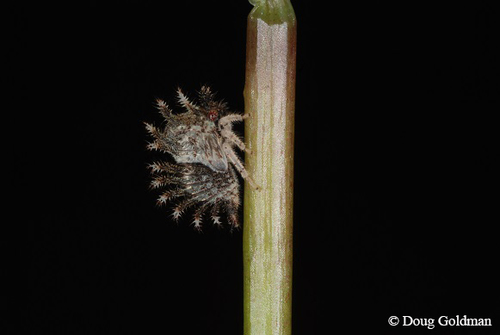
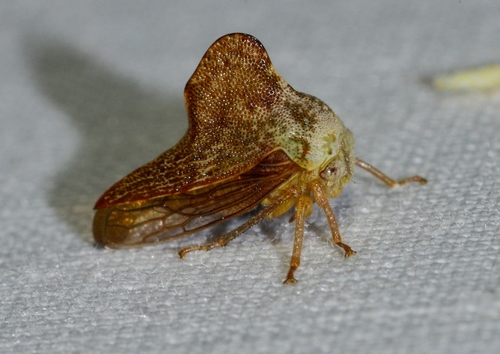
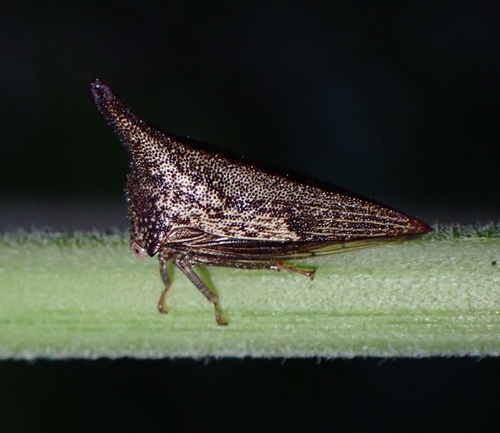
Entylia carinata, commonly known as the keeled treehopper, is a species of treehopper in the family Membracidae. They can be found in Brazil, Panama, Mexico, the United States, and Canada. Keeled treehoppers are often attended by ants which feed on the honeydew they excrete. In return, the ants offer protection from predators. Keeled treehoppers typically feed on plants in the aster family and they are not known to transmit plant diseases and are not considered significant plant pests.
As adults, keeled treehoppers spend the winter months in leaf litter and debris, finally emerging in March. They begin to reproduce and implant their eggs on aster leafs. During this time of year plants produce vulnerable growth and soft tissues which make it an optimal time to embed their eggs. Occasionally the laid eggs cause the leaf to fold over, forming a protected environment for the nymphs to develop in once they hatch.
Keeled treehoppers mothers exhibit parental care and spend time protecting their egg masses. They are phloem feeders, and their diet consists of liquids extracted from plants. Plant sap, while a convenient material to feed on, is lacking... Wikipedia →