About the Buffalo Treehopper
The buffalo treehopper (Stictocephala bisonia) is a species of treehopper belonging to the subfamily Smiliinae. It is sometimes classified as Ceresa bisonia. This species is native to North America, but now it is widespread throughout southern Europe and it is also present in the Near East and in North Africa. Also recently reported from vineyards of Kashmir, India
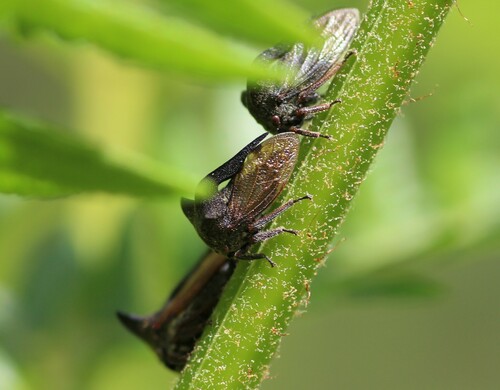
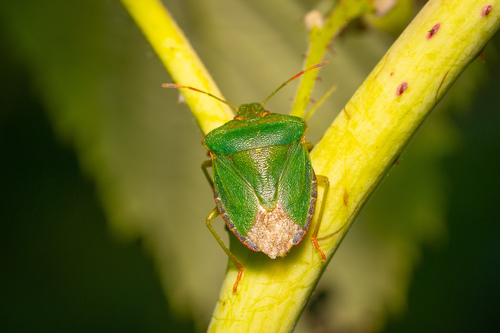
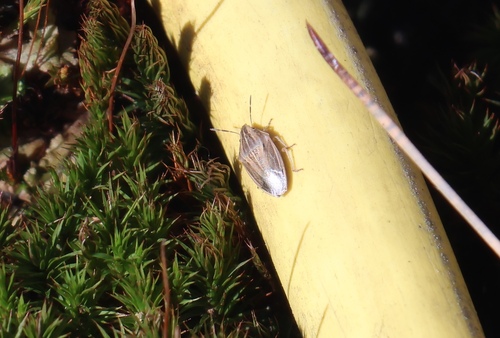
Buffalo treehoppers are a bright green color and have a somewhat triangular shape that helps camouflage them so as to resemble thorns or a twiggy protuberance. It gets its name from the vague resemblance of its profile to that of an American bison. They grow to 6 to 8 millimeters (0.24 to 0.31 in) long and have transparent wings.
S. bisonia mates during the summer months. Males attract females with a song that, unlike similar songs used by cicada and crickets, is perceived by the female not as sound waves but as vibrations through the host plant. Females lay eggs from July to October using a blade-like ovipositor. Up to a dozen eggs are laid in each slit made by the female.
Nymphs emerge from the eggs the following May or June. The nymphs, which resemble wingless adults... Wikipedia →