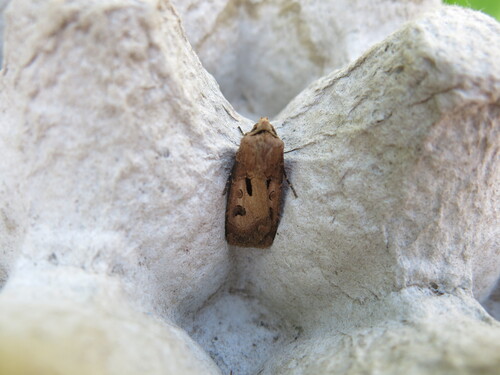
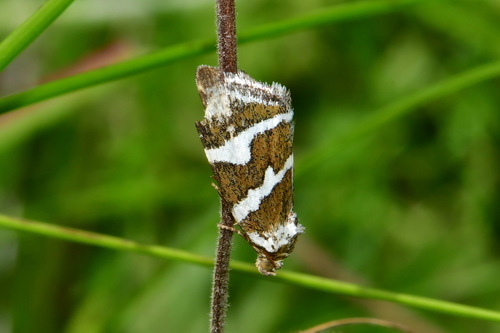
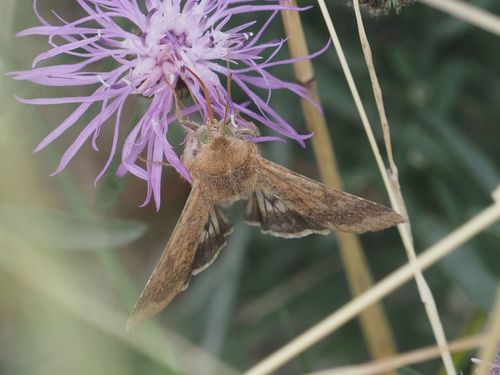
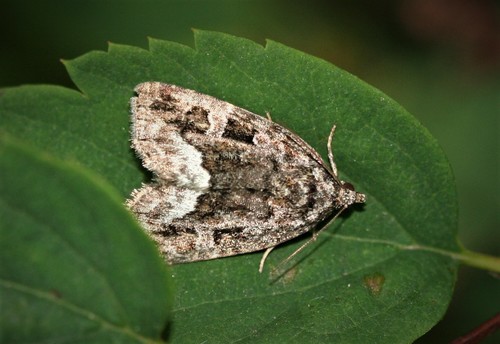
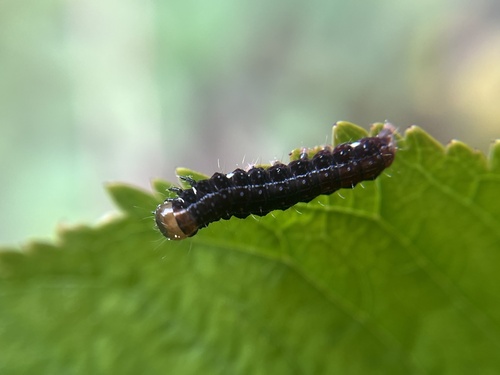
Eurasian Copper Underwing

Eurasian Copper Underwing

Amphipyra pyramidea

Daily sighting probability <5% · Rare
at Nizhny Novgorod

In 3 days ~10% in a week ~30%

10 Verified sightings at Nizhny Novgorod
47 In all 3 parks From 2019 to 2026
August Best month
☀️🌙 Day & Night When it's spotted

About the Eurasian Copper Underwing

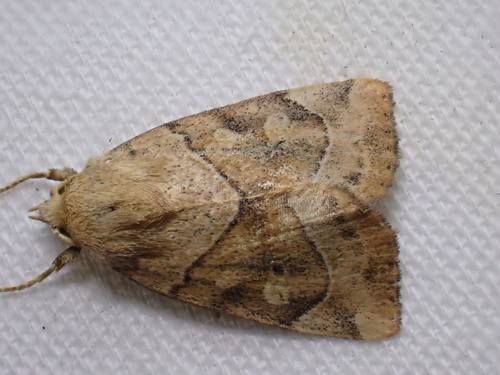
The copper underwing, humped green fruitworm or pyramidal green fruitworm (Amphipyra pyramidea) is a moth of the family Noctuidae. The species was first described by Carl Linnaeus in his 1758 10th edition of Systema Naturae.

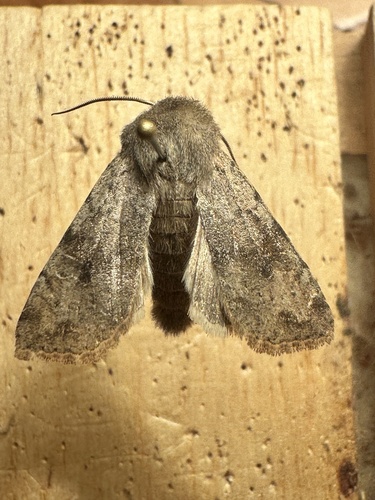
This species can be found across the Palaearctic region including Europe, North Africa, the Near East, Iran, southern Siberia, northern India, Korea and Japan. It is rather common over the southern half of Britain. This species has a wingspan of 47–54 mm, the female usually slightly larger than the male. The forewings are brown marked with paler fascia and a pale, dark-centred stigma. The hindwings are a rich bright copper colour (hence the common name of "copper underwing").

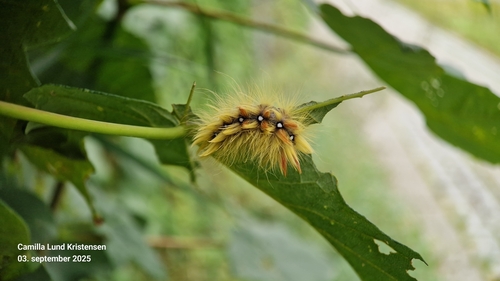
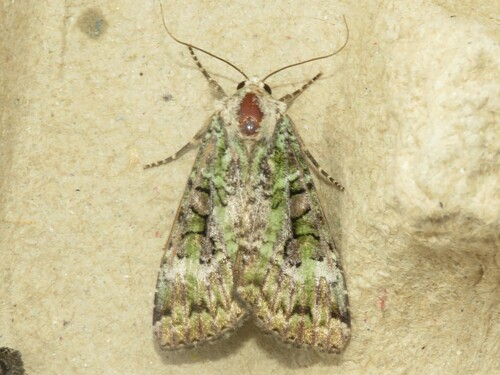
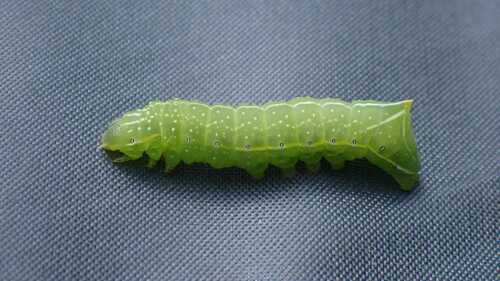
It is very similar to Svensson's copper underwing (Amphipyra berbera) but identification is usually fairly straightforward by looking at some markings on the forewings, the detail of the labial palps and at the underside of the hindwings. This species has a pale area in the centre of the hindwings, contrasting with much darker marginal areas, while in A. berbera the whole underwing is more or less uniform in colour. See Townsend et al. The larva is green... Wikipedia →
Global Distribution

Parks Where Found

# Park Country Daily sighting probability
1 Bavarian Forest National Park 🇩🇪 Germany
~10%
2 Wadden Sea National Park 🇩🇪 Germany
<5%
3 Pyrénées National Park 🇫🇷 France
<5%

Cities Where Found

# City Country Daily sighting probability
1 Liverpool 🇬🇧 United Kingdom
~10%
2 Copenhagen 🇩🇰 Denmark
~10%
3 Birmingham 🇬🇧 United Kingdom
~10%
4 Helsinki 🇫🇮 Finland
~10%
5 Manchester 🇬🇧 United Kingdom
~10%
6 London 🇬🇧 United Kingdom
~10%
7 Hamburg 🇩🇪 Germany
~10%
8 Prague 🇨🇿 Czechia
~10%
9 Berlin 🇩🇪 Germany
~10%
10 Vienna 🇦🇹 Austria
~10%

Before you go

What are the chances of seeing a Eurasian Copper Underwing in Nizhny Novgorod?

Rare

Under 5% of wildlife watchers report a Eurasian Copper Underwing sighting in Nizhny Novgorod on a given day, based on 10 verified sightings from GBIF citizen-science data. It is the 169th most-seen of the 405 insects we can rate there. Over three days the chance rises to about 10%, and over a week to about 30%, if each day is a fresh chance.

When is the best time to see a Eurasian Copper Underwing in Nizhny Novgorod?

July to September

In those months about 10% of wildlife watchers report a Eurasian Copper Underwing in Nizhny Novgorod on a given day, against under 5% in October to June, the lowest months.

What time of day is best to see a Eurasian Copper Underwing?

Between 10 pm and 1 am

Across all the parks we cover, that three-hour window holds the most Eurasian Copper Underwing sightings with a recorded time, and about 6 in 10 of them come between 6 pm and 6 am: it is seen both by day and at night.

Is Nizhny Novgorod the best place to see a Eurasian Copper Underwing?

15th of 19

Of the 19 cities where we can rate Eurasian Copper Underwing sightings, Nizhny Novgorod ranks 15th at under 5%. The best odds are in Liverpool (United Kingdom, about 10%), Copenhagen (Denmark, about 10%) and Birmingham (United Kingdom, about 10%).

Which relatives of the Eurasian Copper Underwing live in Nizhny Novgorod?

Same family: Noctuidae

The closest relatives of the Eurasian Copper Underwing that you can see in Nizhny Novgorod (family Noctuidae, Cutworm Moths and Allies) are Knot Grass Moth (about 10%), Heart And Dart (about 10%) and Silver Υ (about 10%), with each one's daily chance of a sighting.

Where does the Eurasian Copper Underwing sighting chance come from?

GBIF citizen-science records

It is estimated from how often the Eurasian Copper Underwing is recorded against all the insects logged in Nizhny Novgorod (10 verified sightings), calibrated against known sighting rates. Figures are rounded to the nearest 10% because citizen-science data supports honest approximations, not decimals, and months with records from fewer than five people show "—". How it works.

← Back to Nizhny Novgorod