

Eurasian Bee Beetle

Eurasian Bee Beetle

Trichius fasciatus

Daily sighting probability ~10% · With luck
at Novosibirsk

In 3 days ~20% in a week ~40%

13 Verified sightings at Novosibirsk
324 In all 12 parks From 2019 to 2026
July Best month
☀️ Diurnal When it's spotted

About the Eurasian Bee Beetle

Trichius fasciatus, the Eurasian bee beetle, is a beetle species belonging to the family Scarabaeidae, subfamily Cetoniinae. Varieties include: Trichius fasciatus var. dubius Mulsant Trichius fasciatus var. interruptus Mulsant

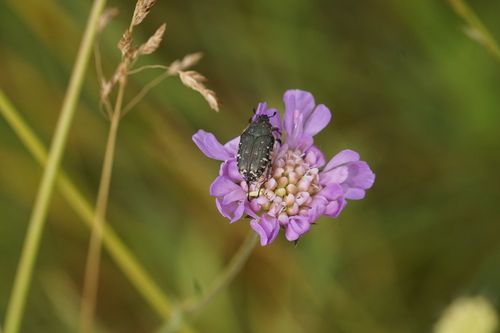
This beetle is present in most of Europe and in the eastern Palearctic realm. It is often found in forest clearings in mountainous areas, but rarely in the lowlands. It lives mostly on flowers on forest meadows and forest edges.

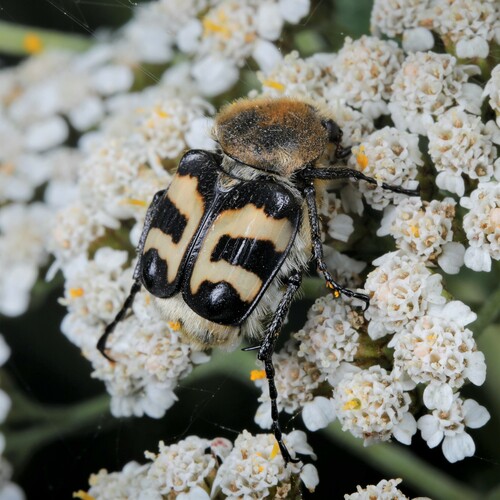
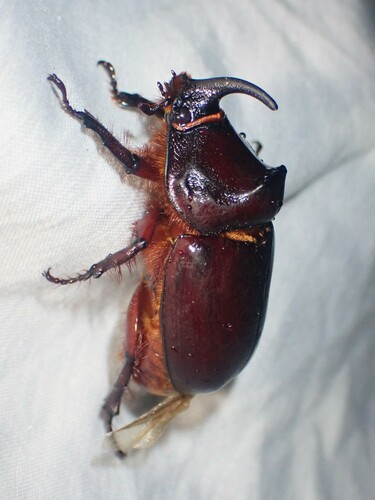
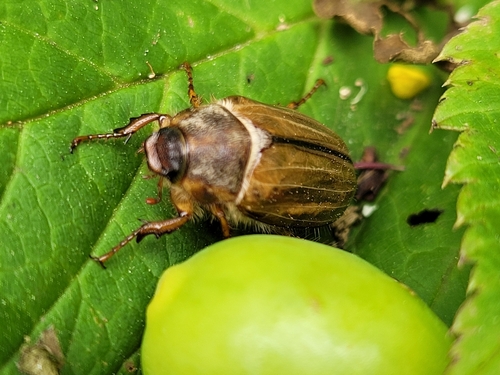
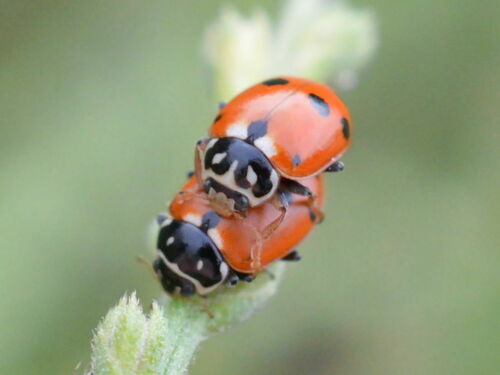
Trichius fasciatus can reach a length of 9–12 millimetres (0.35–0.47 in). Head and pronotum are black, while the elytrae vary from light yellow to deep orange. They are crossed by a few black bands. The first black band reaches the scutellum.The sides of the chest and the back of the abdomen are covered with a yellow-orange or white pubescence. This makes it look a bit like a Bumblebee, giving it better protection from predators. Hence the popular name of "Bee beetle" for their genus.

In this species males and females can be easily distinguished based on the front legs. In the female (Encl. 3) the outer teeth are strong, typical for the digging legs. The first tarsus... Wikipedia →

Global Distribution

Parks Where Found

# Park Country Daily sighting probability
1 Aigüestortes National Park 🇪🇸 Spain
~30%
2 Triglav National Park 🇸🇮 Slovenia
~30%
3 Ecrins National Park 🇫🇷 France
~20%
4 Ordesa y Monte Perdido National Park 🇪🇸 Spain
~20%
5 Cairngorms National Park 🇬🇧 United Kingdom
~20%
6 Vanoise National Park 🇫🇷 France
~20%
7 Pyrénées National Park 🇫🇷 France
~10%
8 Hohe Tauern National Park 🇦🇹 Austria
~10%
9 Tatra National Park 🇸🇰 Slovakia
~10%
10 Bavarian Forest National Park 🇩🇪 Germany
~10%
11 Mercantour National Park 🇫🇷 France
~10%
12 Cévennes National Park 🇫🇷 France
<5%

Cities Where Found

# City Country Daily sighting probability
1 Helsinki 🇫🇮 Finland
~10%
2 Nizhny Novgorod 🇷🇺 Russia
~10%
3 Novosibirsk 🇷🇺 Russia
~10%
4 Stockholm 🇸🇪 Sweden
~10%
5 Moscow 🇷🇺 Russia
<5%
6 Kazan 🇷🇺 Russia
<5%
7 Yekaterinburg 🇷🇺 Russia
<5%
8 Saint Petersburg 🇷🇺 Russia
<5%

Before you go

What are the chances of seeing a Eurasian Bee Beetle in Novosibirsk?

With luck

About 10% of wildlife watchers report a Eurasian Bee Beetle sighting in Novosibirsk on a given day, based on 13 verified sightings from GBIF citizen-science data. It is the 78th most-seen of the 216 insects we can rate there. Over three days the chance rises to about 20%, and over a week to about 40%, if each day is a fresh chance.

When is the best time to see a Eurasian Bee Beetle in Novosibirsk?

June and July

In those months about 10% of wildlife watchers report a Eurasian Bee Beetle in Novosibirsk on a given day, against under 5% in August to May, the lowest months. Those are among Novosibirsk's wettest months, with about 65 mm of rain a month against 25 mm in February.

What time of day is best to see a Eurasian Bee Beetle?

Between 10 am and 1 pm

Across all the parks we cover, that three-hour window holds the most Eurasian Bee Beetle sightings with a recorded time, and about 9 in 10 of them come between 6 am and 6 pm: it is a daytime animal.

Is Novosibirsk the best place to see a Eurasian Bee Beetle?

Among the best

Of the 8 cities where we can rate Eurasian Bee Beetle sightings, Novosibirsk ranks 3rd at about 10%, level with the leaders once rounded. The best odds are in Helsinki (Finland, about 10%) and Nizhny Novgorod (Russia, about 10%).

Where does the Eurasian Bee Beetle sighting chance come from?

GBIF citizen-science records

It is estimated from how often the Eurasian Bee Beetle is recorded against all the insects logged in Novosibirsk (13 verified sightings), calibrated against known sighting rates. Figures are rounded to the nearest 10% because citizen-science data supports honest approximations, not decimals, and months with records from fewer than five people show "—". How it works.

← Back to Novosibirsk