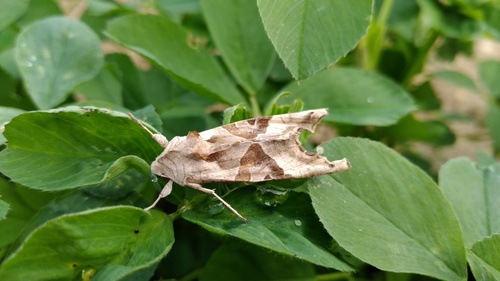
Red Chestnut

Red Chestnut

Cerastis rubricosa

Daily sighting probability <5% · Rare
at Prague

In 3 days ~10% in a week ~20%

7 Verified sightings at Prague
81 In all 5 parks From 2019 to 2026
April Best month
🌅 Crepuscular When it's spotted

About the Red Chestnut

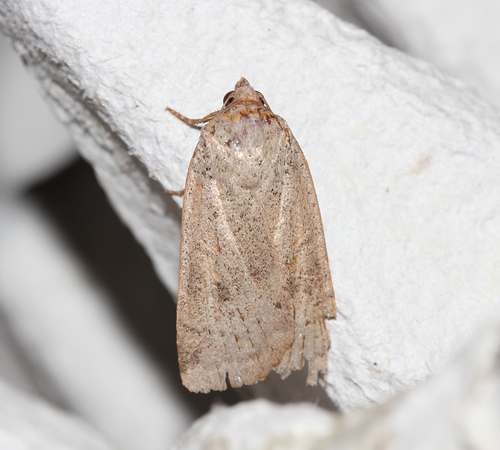
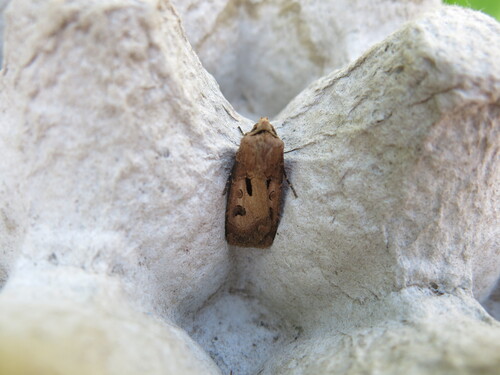
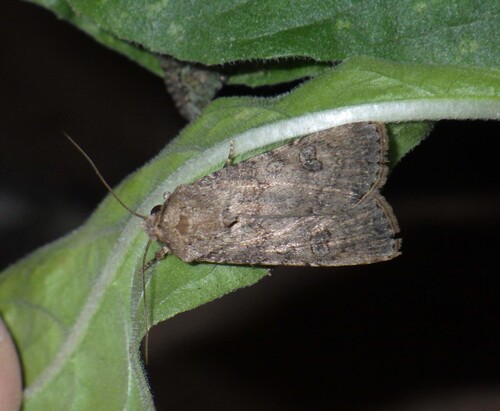
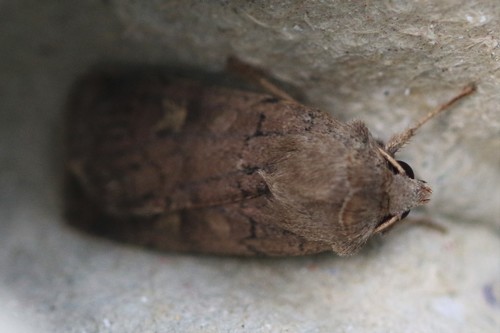
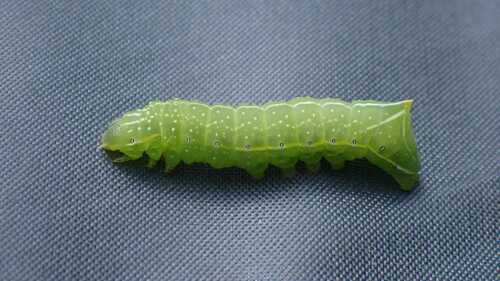
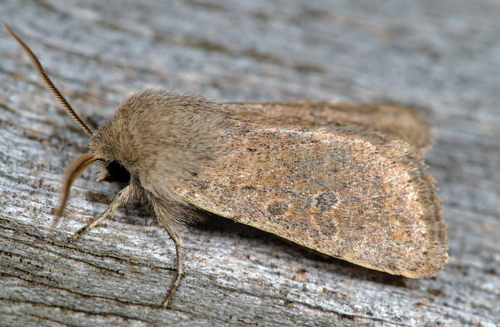
Cerastis rubricosa, the red chestnut, is a moth of the family Noctuidae. The species was first described by Michael Denis and Ignaz Schiffermüller in 1775. It is found in most of Europe, east through the temperate regions of the Palearctic east to Japan. In the north it is found just north of the Arctic Circle. Southward it is found up to the Mediterranean Basin and Turkey.

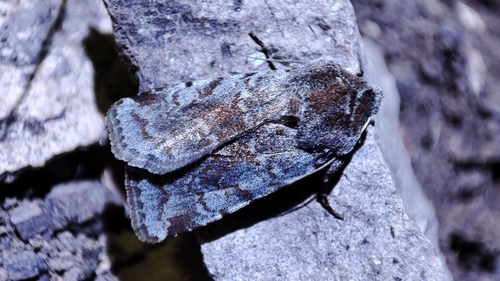
The wingspan is 32–38 millimetres (1.3–1.5 in), the forewings are red brown, varied with grey, sometimes with a purplish-brown tinge; stigmata grey with fine dark outlines; a broad angled median shade; lines all starting from black costal spots; hindwing fuscous grey; fringe grey. Generally distributed in Europe, except Spain, and found in western Siberia and western Turkestan. The form rufa Haw., the usual British form, is almost wholly rufous, and the fringe pink. - mucida Esp. is dark purplish red with the costa and subterminal shade slaty grey; - pilicornis Brahm has the red ground almost obliterated by grey suffusion, the crosslines brownish; of this pallida Tutt is merely an extreme pale form; finally, mista Hbn. is brick red with costa, crosslines, and outer margin grey.

Adults... Wikipedia →
Global Distribution

Parks Where Found

# Park Country Daily sighting probability
1 Snowdonia National Park 🇬🇧 United Kingdom
~10%
2 Wadden Sea National Park 🇩🇪 Germany
~10%
3 Cairngorms National Park 🇬🇧 United Kingdom
~10%
4 Bavarian Forest National Park 🇩🇪 Germany
<5%
5 Pyrénées National Park 🇫🇷 France
<5%

Cities Where Found

# City Country Daily sighting probability
1 Prague 🇨🇿 Czechia
<5%
2 Vienna 🇦🇹 Austria
<5%

Before you go

What are the chances of seeing a Red Chestnut in Prague?

Rare

Under 5% of wildlife watchers report a Red Chestnut sighting in Prague on a given day, based on 7 verified sightings from GBIF citizen-science data. It is the 594th most-seen of the 724 insects we can rate there. Over three days the chance rises to about 10%, and over a week to about 20%, if each day is a fresh chance.

When is the best time to see a Red Chestnut in Prague?

April

In that month about 10% of wildlife watchers report a Red Chestnut in Prague on a given day, against under 5% in May to March, the lowest months.

What time of day is best to see a Red Chestnut?

Between 6 and 9 am

Across all the parks we cover, that three-hour window holds the most Red Chestnut sightings with a recorded time, and about 7 in 10 of them come between 6 am and 6 pm: it is most active around dawn and dusk.

Is Prague the best place to see a Red Chestnut?

Yes

Of the 2 cities where we can rate Red Chestnut sightings, Prague has the highest daily chance: under 5%. Next come Vienna (Austria, under 5%).

Which relatives of the Red Chestnut live in Prague?

Same family: Noctuidae

The closest relatives of the Red Chestnut that you can see in Prague (family Noctuidae, Cutworm Moths and Allies) are Silver Υ (about 10%), Large Yellow Underwing (about 10%) and Knot Grass Moth (about 10%), with each one's daily chance of a sighting.

Where does the Red Chestnut sighting chance come from?

GBIF citizen-science records

It is estimated from how often the Red Chestnut is recorded against all the insects logged in Prague (7 verified sightings), calibrated against known sighting rates. Figures are rounded to the nearest 10% because citizen-science data supports honest approximations, not decimals, and months with records from fewer than five people show "—". How it works.

← Back to Prague