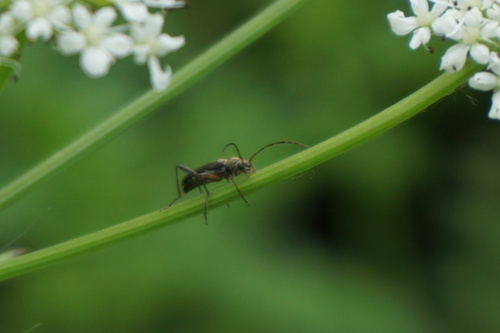
Tanbark Borer

Tanbark Borer

Phymatodes testaceus

Daily sighting probability <5% · Rare
at Prague

In 3 days ~10% in a week ~20%

7 Verified sightings at Prague
29 In all 3 parks From 2019 to 2026
June Best month
🌙 Nocturnal When it's spotted

About the Tanbark Borer

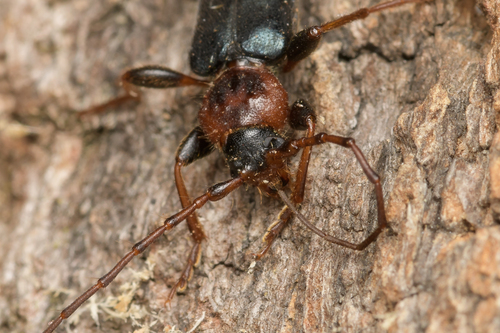
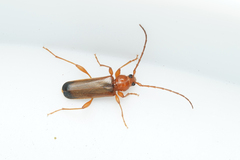
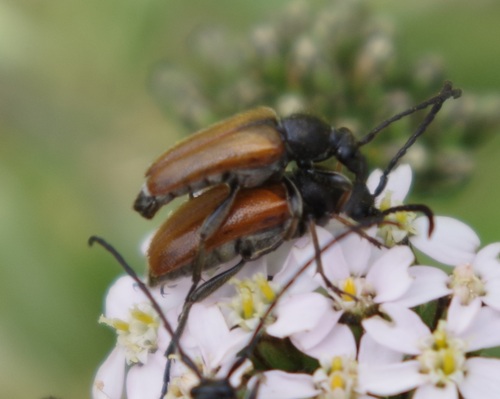
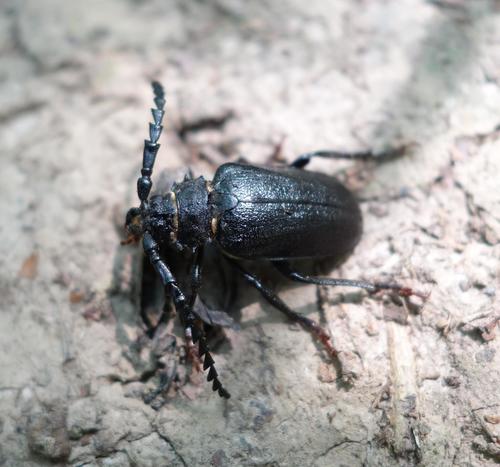
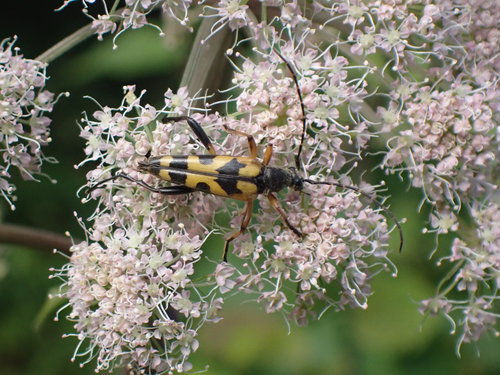
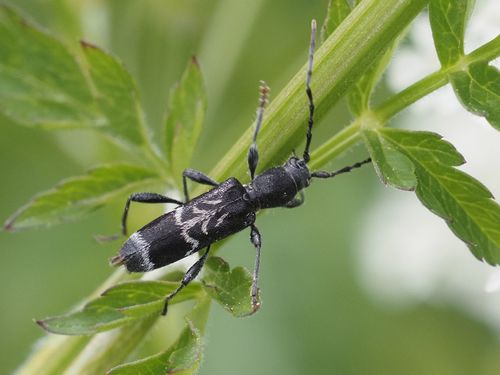
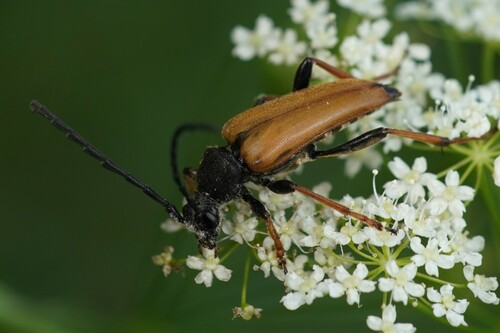
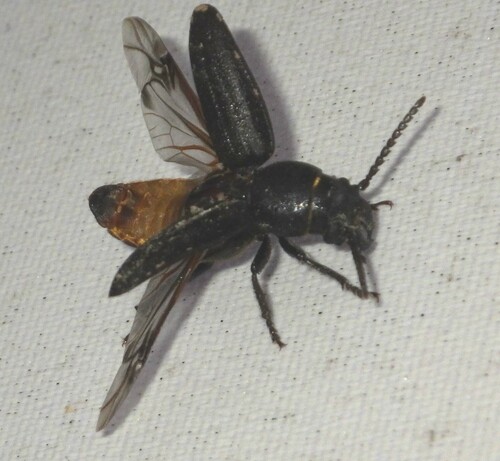
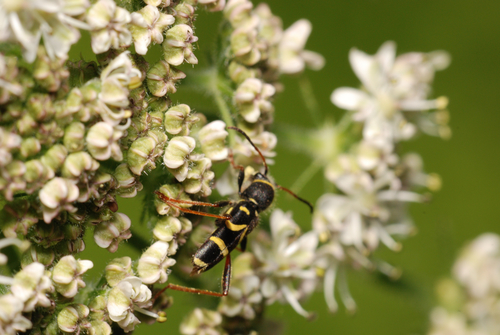
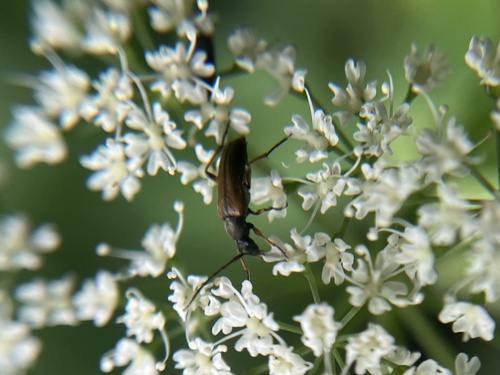
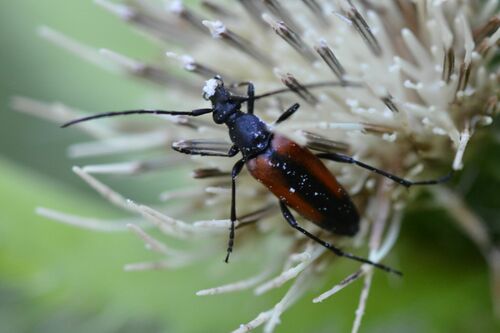
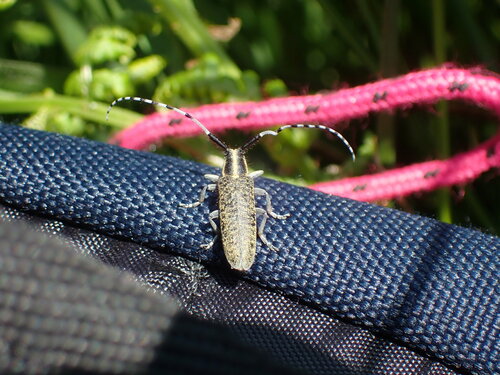
Phymatodes testaceus (commonly known as the tanbark borer, or the violet tanbark beetle) is a transpalearctic polymorphic species of beetle in the subfamily Cerambycinae in the longhorn beetle family. The P. testaceus imago is typically 6–16 mm in length. Their eggs are 1 mm long, and in athwart 0.5 mm. Larvae of the species are 10–18 mm long and 2.1 mm wide. Pupa are 9 mm long, and the abdomen is 2.8 mm wide.

Distribution of these beetle extends from the European Atlantic coastline to the Southern Ural Mountains, from southern Sweden and Norway to North Africa and Syria. It is also distributed throughout Japan and North America.

Larvae develop in and under the bark of various deciduous tree species, causing damage. Larvae pupate in the spring. The beetle's life cycle lasts one year in central and southern parts, and two years in northern climes. Wikipedia →

Global Distribution

Parks Where Found

# Park Country Daily sighting probability
1 Wadden Sea National Park 🇩🇪 Germany
~10%
2 Cévennes National Park 🇫🇷 France
<5%
3 Pyrénées National Park 🇫🇷 France
<5%

Cities Where Found

# City Country Daily sighting probability
1 Kyiv 🇺🇦 Ukraine
~10%
2 Copenhagen 🇩🇰 Denmark
~10%
3 Essen 🇩🇪 Germany
~10%
4 Vienna 🇦🇹 Austria
~10%
5 Paris 🇫🇷 France
<5%
6 Amsterdam 🇳🇱 Netherlands
<5%
7 Lyon 🇫🇷 France
<5%
8 Porto 🇵🇹 Portugal
<5%
9 Birmingham 🇬🇧 United Kingdom
<5%
10 Munich 🇩🇪 Germany
<5%

Before you go

What are the chances of seeing a Tanbark Borer in Prague?

Rare

Under 5% of wildlife watchers report a Tanbark Borer sighting in Prague on a given day, based on 7 verified sightings from GBIF citizen-science data. It is the 543rd most-seen of the 724 insects we can rate there. Over three days the chance rises to about 10%, and over a week to about 20%, if each day is a fresh chance.

When is the best time to see a Tanbark Borer in Prague?

June

In that month about 10% of wildlife watchers report a Tanbark Borer in Prague on a given day, against under 5% in July to May, the lowest months. That is one of Prague's wettest months, with about 80 mm of rain against 30 mm in February.

What time of day is best to see a Tanbark Borer?

Between 6 and 9 pm

Across all the parks we cover, that three-hour window holds the most Tanbark Borer sightings with a recorded time, and about 9 in 10 of them come between 6 pm and 6 am: it is mostly seen at night.

Is Prague the best place to see a Tanbark Borer?

11th of 14

Of the 14 cities where we can rate Tanbark Borer sightings, Prague ranks 11th at under 5%. The best odds are in Kyiv (Ukraine, about 10%), Copenhagen (Denmark, about 10%) and Essen (Germany, about 10%).

Where does the Tanbark Borer sighting chance come from?

GBIF citizen-science records

It is estimated from how often the Tanbark Borer is recorded against all the insects logged in Prague (7 verified sightings), calibrated against known sighting rates. Figures are rounded to the nearest 10% because citizen-science data supports honest approximations, not decimals, and months with records from fewer than five people show "—". How it works.

← Back to Prague