The Chestnut

The Chestnut

Conistra vaccinii

Daily sighting probability <5% · Rare
at Prague

In 3 days ~10% in a week ~30%

16 Verified sightings at Prague
31 In all 2 parks From 2019 to 2026
September Best month
☀️🌙 Day & Night When it's spotted

About the The Chestnut

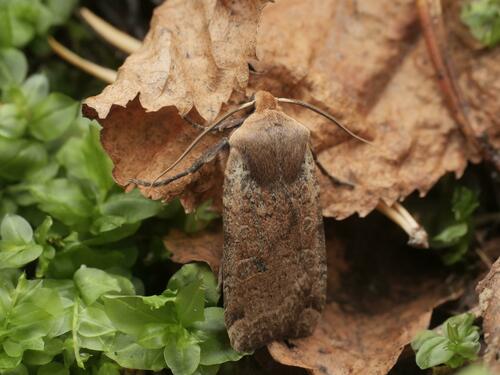
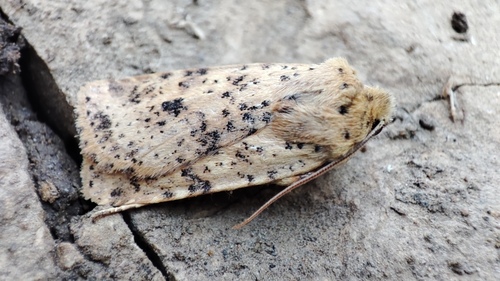
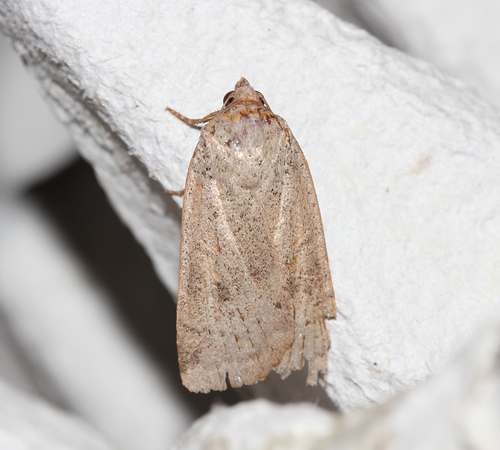
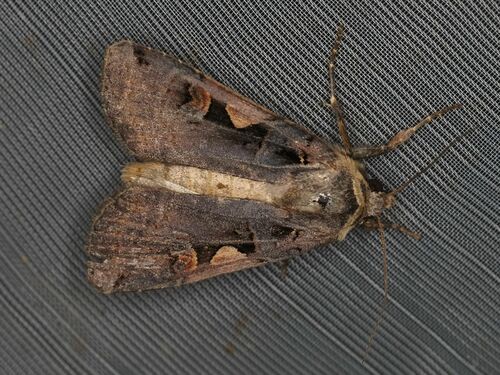
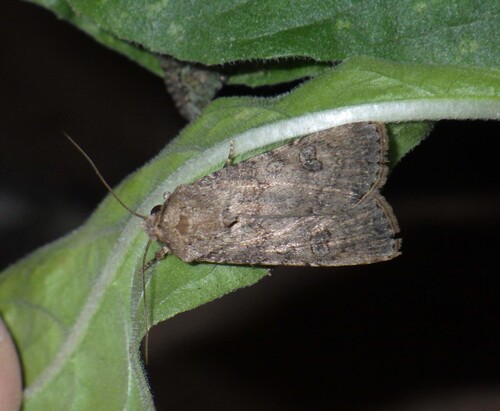
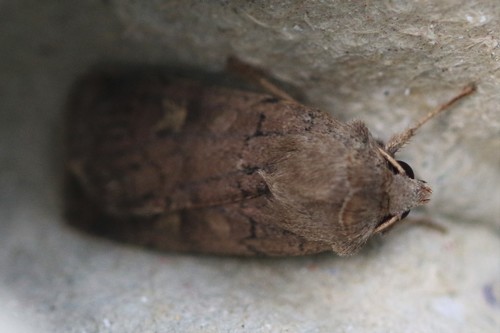
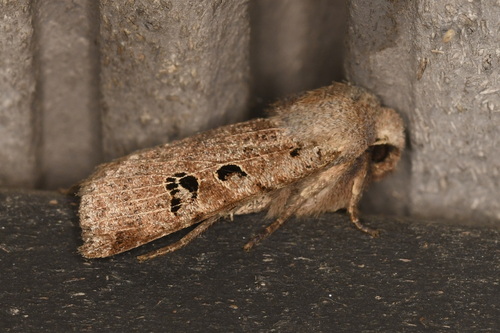
Conistra vaccinii, the chestnut, is a moth of the family Noctuidae. The species was first described by Carl Linnaeus in 1761. It is distributed throughout Europe, North Africa and east through the Palearctic to Siberia. The species occurs on some Mediterranean islands (Balearics, Corsica, and Sardinia), in Northern Fennoscandia, and most of Europe except for southern Spain. The range extends south from Morocco in the west to Mediterranean North Africa, through Anatolia to Turkestan and Western and Central Siberia. In the German central uplands, it rises to about 1200 meters.

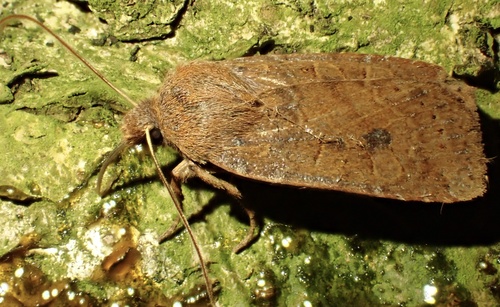
The wingspan is 28–36 mm. Pattern and colouring are extremely variable. The colour varies from dove grey to dark grey brown, with light brown, light red, reddish-brown to black-brown markings. This has led to the distinction of formae (forms). The apex of the front wing is slightly concave. The head and thorax are coloured mostly according to the wing colour; the abdomen is partially or completely reddish brown. The inner and outer, serrated crossbars are usually darker than the colour and more or less clearly defined. These are often white lined specimens with much darker crossbars... Wikipedia →
Global Distribution

Parks Where Found

# Park Country Daily sighting probability
1 Snowdonia National Park 🇬🇧 United Kingdom
~10%
2 Bavarian Forest National Park 🇩🇪 Germany
~10%

Cities Where Found

# City Country Daily sighting probability
1 London 🇬🇧 United Kingdom
~10%
2 Helsinki 🇫🇮 Finland
<5%
3 Prague 🇨🇿 Czechia
<5%
4 Liverpool 🇬🇧 United Kingdom
<5%
5 Hamburg 🇩🇪 Germany
<5%
6 Vienna 🇦🇹 Austria
<5%
7 Birmingham 🇬🇧 United Kingdom
<5%
8 Paris 🇫🇷 France
<5%
9 Moscow 🇷🇺 Russia
<5%

Before you go

What are the chances of seeing a The Chestnut in Prague?

Rare

Under 5% of wildlife watchers report a The Chestnut sighting in Prague on a given day, based on 16 verified sightings from GBIF citizen-science data. It is the 330th most-seen of the 724 insects we can rate there. Over three days the chance rises to about 10%, and over a week to about 30%, if each day is a fresh chance.

When is the best time to see a The Chestnut in Prague?

March and September–November

In those months about 10% of wildlife watchers report a The Chestnut in Prague on a given day, against under 5% in April–August and December–February, the lowest months.

What time of day is best to see a The Chestnut?

Between 7 and 10 am

Across all the parks we cover, that three-hour window holds the most The Chestnut sightings with a recorded time, and about 6 in 10 of them come between 6 am and 6 pm: it is seen both by day and at night.

Is Prague the best place to see a The Chestnut?

3rd of 9

Of the 9 cities where we can rate The Chestnut sightings, Prague ranks 3rd at under 5%. The best odds are in London (United Kingdom, about 10%) and Helsinki (Finland, under 5%).

Where does the The Chestnut sighting chance come from?

GBIF citizen-science records

It is estimated from how often the The Chestnut is recorded against all the insects logged in Prague (16 verified sightings), calibrated against known sighting rates. Figures are rounded to the nearest 10% because citizen-science data supports honest approximations, not decimals, and months with records from fewer than five people show "—". How it works.

← Back to Prague