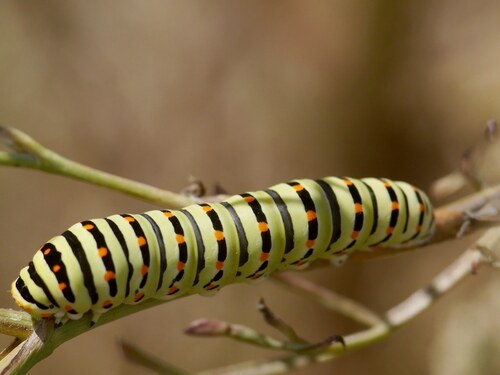
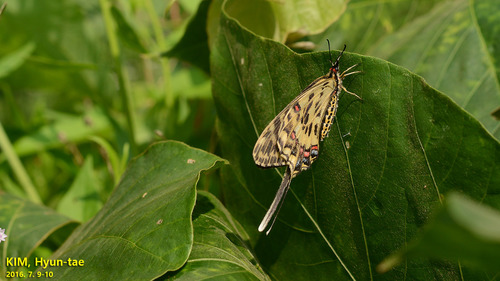
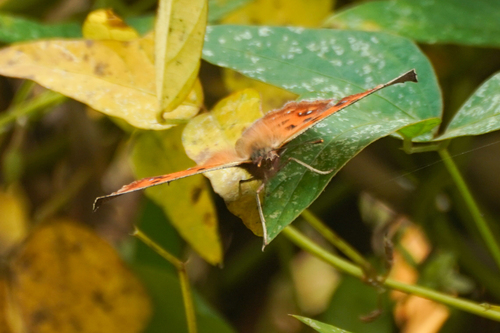
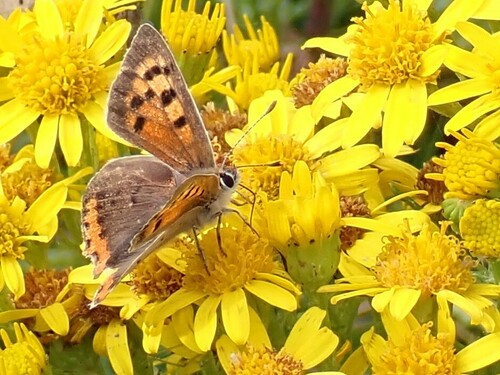
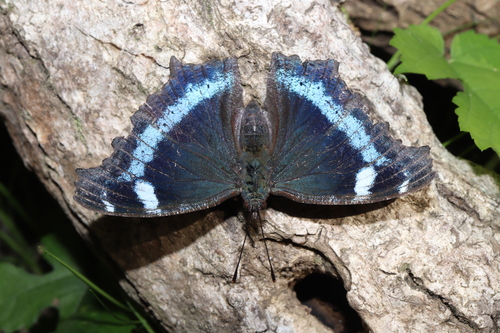
Chinese Yellow Swallowtail

Chinese Yellow Swallowtail

Papilio xuthus

Daily sighting probability ~20% · Possible
at Qingdao

In 3 days ~50% in a week ~80%

24 Verified sightings at Qingdao
5 In 1 park From 2019 to 2026
August Best month
☀️ Diurnal When it's spotted

About the Chinese Yellow Swallowtail

Papilio xuthus, the Asian swallowtail, Chinese yellow swallowtail, Japanese swallowtail, Korean swallowtail or Xuthus swallowtail, is a yellow-colored, medium to large sized swallowtail butterfly found in northeast Asia, northern Myanmar, southern China, Taiwan, the Korean Peninsula, Japan (from Hokkaidō to the Yaeyama Islands), Siberia and the Hawaiian Islands. The butterfly has been observed thrice in New Zealand. Once in Dunedin in 1996 emerging from a chrysalis in a car yard specializing in Japanese used cars; it is thought the chrysalis arrived through one of the cars. and later in Auckland in 2011 and 2016. It was also recorded in the state of Arunachal Pradesh, India, in 2014.

It mates multiple times in its life, leading to an increased genetic diversity in its young. It is preyed upon by a host of organisms, including the tree cricket Oecanthus longicauda, ant Lasius niger, and wasps (Polistes and Trogus mactator). P. xuthus utilizes color vision and color constancy while foraging for plants of the family Rutaceae.

It is common and not threatened. Papilio xuthus is common in urban, suburban, woods and orange orchards. The flight period is from May to August. Males use both physical and visual cues to attract mates during the breeding season. Females of the species regularly mate with multiple partners. After mating, females use habitat and food quality to determine where they will oviposit their eggs. Wikipedia →
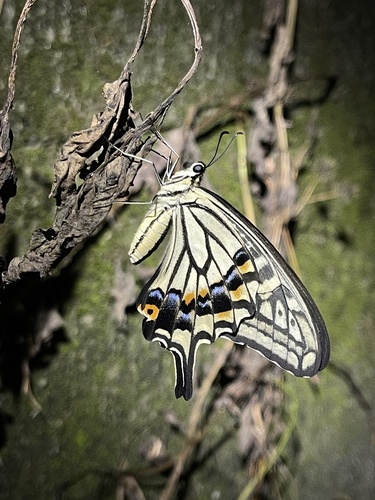
Global Distribution

Parks Where Found

# Park Country Daily sighting probability
1 Jiuzhaigou National Park 🇨🇳 China
~20%

More parks will be added in future updates.

Cities Where Found

# City Country Daily sighting probability
1 Luoyang 🇨🇳 China
~40%
2 Nagoya 🇯🇵 Japan
~40%
3 Changzhou 🇨🇳 China
~30%
4 Hiroshima 🇯🇵 Japan
~30%
5 Hefei 🇨🇳 China
~30%
6 Osaka 🇯🇵 Japan
~30%
7 Dalian 🇨🇳 China
~30%
8 Fukuoka 🇯🇵 Japan
~30%
9 Wuhan 🇨🇳 China
~20%
10 Tokyo 🇯🇵 Japan
~20%

Before you go

What are the chances of seeing a Chinese Yellow Swallowtail in Qingdao?

Possible

About 20% of wildlife watchers report a Chinese Yellow Swallowtail sighting in Qingdao on a given day, based on 24 verified sightings from GBIF citizen-science data. It is the 3rd most-seen of the 64 insects we can rate there. Over three days the chance rises to about 50%, and over a week to about 80%, if each day is a fresh chance.

When is the best time to see a Chinese Yellow Swallowtail in Qingdao?

August

In that month about 40% of wildlife watchers report a Chinese Yellow Swallowtail in Qingdao on a given day, against under 5% in June and October–March, the lowest months. That is one of Qingdao's wettest months, with about 170 mm of rain against 10 mm in January.

What time of day is best to see a Chinese Yellow Swallowtail?

Between 10 am and 1 pm

Across all the parks we cover, that three-hour window holds the most Chinese Yellow Swallowtail sightings with a recorded time, and nearly all of them come between 6 am and 6 pm: it is a daytime animal.

Is Qingdao the best place to see a Chinese Yellow Swallowtail?

13th of 27

Of the 27 cities where we can rate Chinese Yellow Swallowtail sightings, Qingdao ranks 13th at about 20%. The best odds are in Luoyang (China, about 40%), Nagoya (Japan, about 40%) and Changzhou (China, about 30%).

Which relatives of the Chinese Yellow Swallowtail live in Qingdao?

Same genus: Papilio

The closest relatives of the Chinese Yellow Swallowtail that you can see in Qingdao (genus Papilio, Common Swallowtails) are Japanese Peacock Swallowtail (about 10%) and Old World Swallowtail (about 10%), with each one's daily chance of a sighting.

Where does the Chinese Yellow Swallowtail sighting chance come from?

GBIF citizen-science records

It is estimated from how often the Chinese Yellow Swallowtail is recorded against all the insects logged in Qingdao (24 verified sightings), calibrated against known sighting rates. Figures are rounded to the nearest 10% because citizen-science data supports honest approximations, not decimals, and months with records from fewer than five people show "—". How it works.

← Back to Qingdao