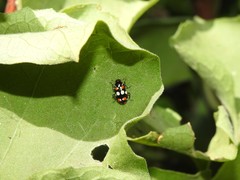
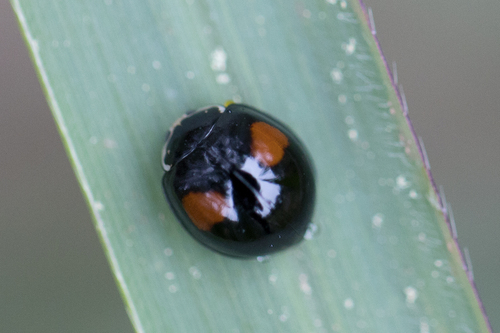
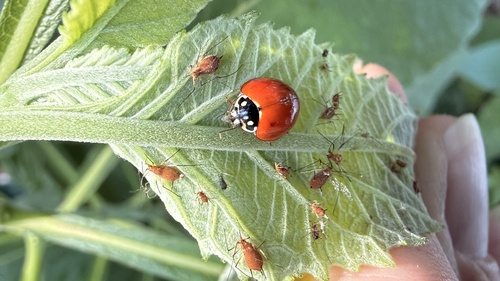

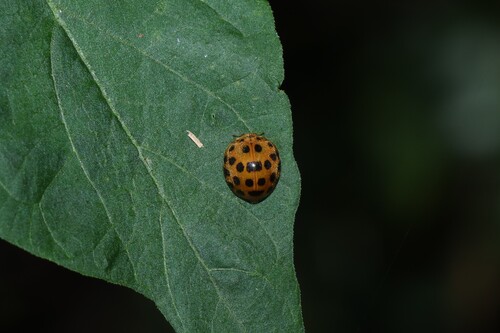
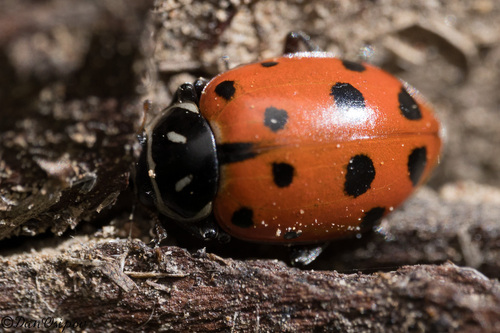
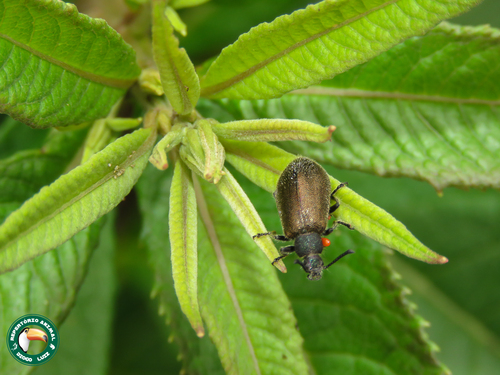
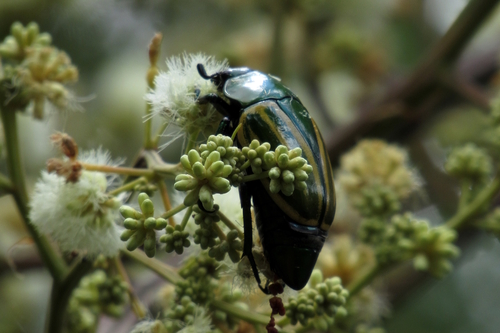
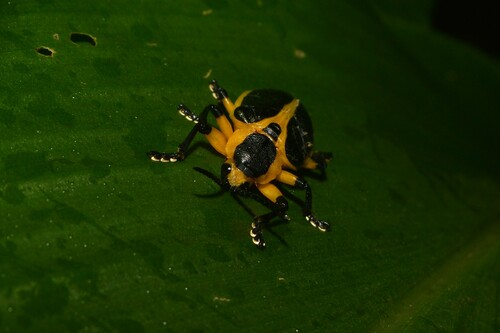
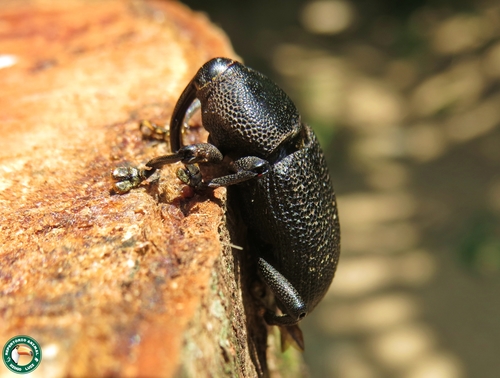
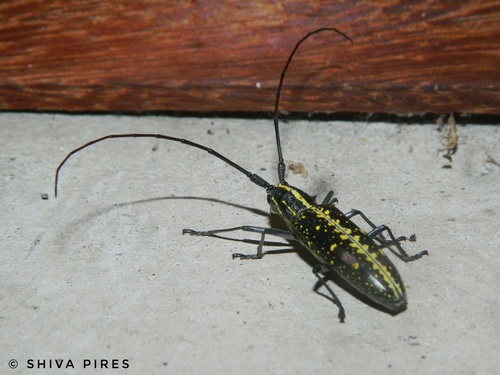
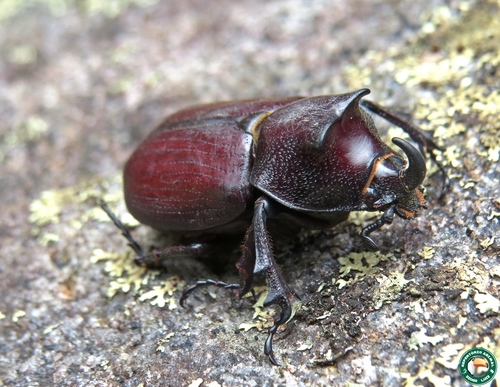
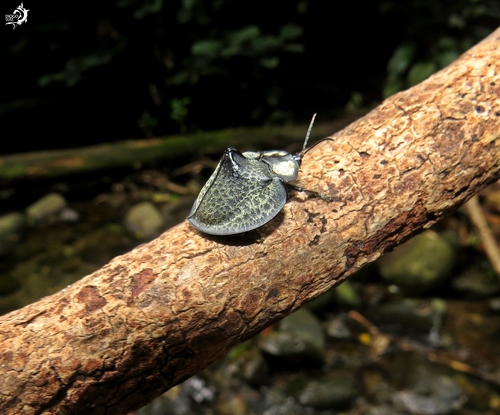
Eriopis connexa

Eriopis connexa

Eriopis connexa

Daily sighting probability <5% · Rare
at Rio de Janeiro

In 3 days ~10% in a week ~30%

9 Verified sightings at Rio de Janeiro
September Best month

About the Eriopis connexa

Eriopis connexa is a species of ladybird beetle that is native to South America. Both males and females mate multiple times with different individuals of the opposite sex, like most members of the family Coccinellidae. This promiscuous behavior leads to unique reproductive adaptations, such as sperm mixing. Females lay unfertilized eggs which their offspring consume upon hatching, thereby boosting offspring nutrition and reducing sibling cannibalism,. This predatory beetle species feeds primarily on aphids and is widespread throughout many agroecosystems, such as cotton, maize, sorghum, soybean, and wheat. Due to aphids being extremely damaging agricultural pests, E. connexa has been introduced to the United States for biological pest management. Recent studies on pyrethroid insecticide resistance in E. connexa have led to research by applied entomologists on the species' potential role in integrated pest management schemes in crop fields that rely on lambda-cyhalothrin (LCT), a common pyrethroid insecticide that is ineffective against aphid population control. The potential efficacy and success of the utilization of E. connexa in these programs is widely debated and is the focus of much recent research due to the lack of understanding regarding the effects of pyrethroid resistance on the behavior of this species. Wikipedia →

Global Distribution

Parks Where Found

# Park Country Daily sighting probability

More parks will be added in future updates.

Cities Where Found

# City Country Daily sighting probability
1 Mendoza 🇦🇷 Argentina
~30%
2 Buenos Aires 🇦🇷 Argentina
~20%
3 Montevideo 🇺🇾 Uruguay
~20%
4 Rosario 🇦🇷 Argentina
~20%
5 Santa Cruz de la Sierra 🇧🇴 Bolivia
~20%
6 Curitiba 🇧🇷 Brazil
~20%
7 La Paz 🇧🇴 Bolivia
~10%
8 Santos 🇧🇷 Brazil
~10%
9 Cordoba 🇦🇷 Argentina
~10%
10 Porto Alegre 🇧🇷 Brazil
~10%

Before you go

What are the chances of seeing an Eriopis connexa in Rio de Janeiro?

Rare

Under 5% of wildlife watchers report an Eriopis connexa sighting in Rio de Janeiro on a given day, based on 9 verified sightings from GBIF citizen-science data. It is the 97th most-seen of the 169 insects we can rate there. Over three days the chance rises to about 10%, and over a week to about 30%, if each day is a fresh chance.

When is the best time to see an Eriopis connexa in Rio de Janeiro?

February, June and August–October

In those months about 10% of wildlife watchers report an Eriopis connexa in Rio de Janeiro on a given day, against under 5% in March–May, July and November–January, the lowest months.

Is Rio de Janeiro the best place to see an Eriopis connexa?

15th of 15

Of the 15 cities where we can rate Eriopis connexa sightings, Rio de Janeiro ranks 15th at under 5%. The best odds are in Mendoza (Argentina, about 30%), Buenos Aires (Argentina, about 20%) and Montevideo (Uruguay, about 20%).

Which relatives of the Eriopis connexa live in Rio de Janeiro?

Same family: Coccinellidae

The closest relatives of the Eriopis connexa that you can see in Rio de Janeiro (family Coccinellidae, Lady Beetles) are Ashy Gray Lady Beetle (about 10%), Spotless Lady Beetle (about 10%) and Asian Lady Beetle (about 10%), with each one's daily chance of a sighting.

Where does the Eriopis connexa sighting chance come from?

GBIF citizen-science records

It is estimated from how often the Eriopis connexa is recorded against all the insects logged in Rio de Janeiro (9 verified sightings), calibrated against known sighting rates. Figures are rounded to the nearest 10% because citizen-science data supports honest approximations, not decimals, and months with records from fewer than five people show "—". How it works.

← Back to Rio de Janeiro