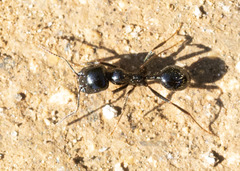
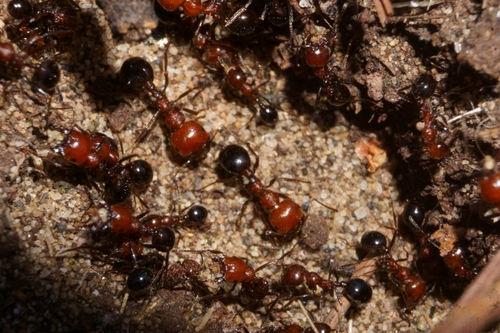
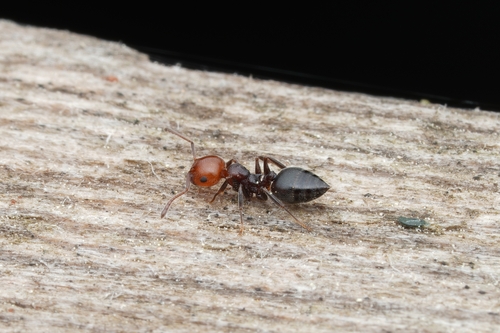

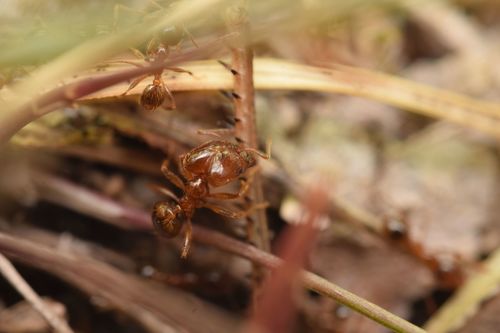
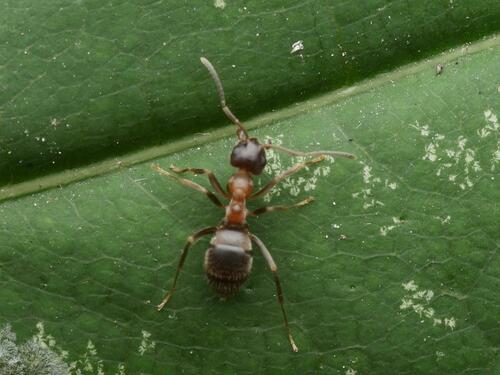
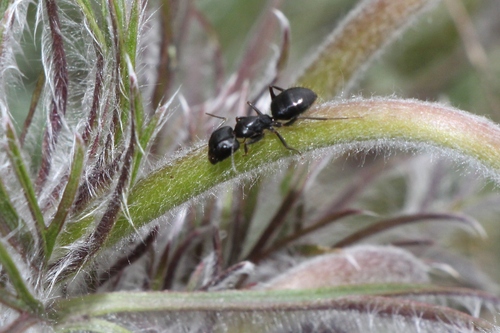
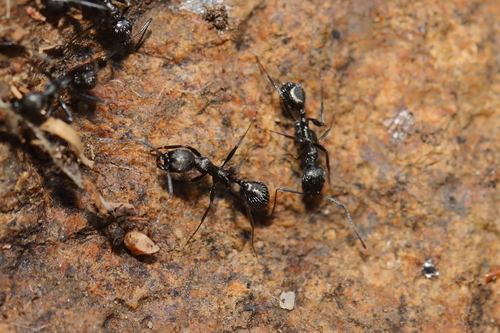

Messor capitatus
Daily sighting probability ~10% · With luck
at Rome

In 3 days ~20% in a week ~30%

7 Verified sightings at Rome
20 In all 2 parks From 2019 to 2026
May Best month
☀️ Diurnal When it's spotted

About the Messor capitatus

Messor capitatus is an ant species part of the genus Messor. This genus includes about 40 specialized species that are found in dry areas of Mediterranean countries such as Africa, Southern Europe, and Asia. Messor capitatus are known as an Old World species because they release trail pheromones from the Dufour gland instead of from poison glands. Messor capitatus are known as individual foragers that collect food independently of one another but sometimes will also use group foraging to form irregular, broad columns. Messor capitatus main food source is seeds but they also will eat remains of plants and animals.

Messor capitatus are seed-harvesting ants that when they find a food source will go back to the nest to recruit other foragers if the food is too large for them to carry. The ants will lay a trail of chemicals from the food to the nest using their gasters. Once they are inside the nest they will perform a motor display that includes running, body vibrations, contact with nestmates, and food transmission. The nestmates will then get excited and follow the trail laid by the scout to the food source and if they want to recruit more to the patch then... Wikipedia →

Global Distribution

Parks Where Found

# Park Country Daily sighting probability
1 Cévennes National Park 🇫🇷 France
~10%
2 Sierra de Guadarrama National Park 🇪🇸 Spain
<5%

Cities Where Found

# City Country Daily sighting probability
1 Rome 🇮🇹 Italy
~10%
2 Tel Aviv 🇮🇱 Israel
<5%

Before you go

What are the chances of seeing a Messor capitatus in Rome?

With luck

About 10% of wildlife watchers report a Messor capitatus sighting in Rome on a given day, based on 7 verified sightings from GBIF citizen-science data. It is the 187th most-seen of the 289 insects we can rate there. Over three days the chance rises to about 20%, and over a week to about 30%, if each day is a fresh chance.

When is the best time to see a Messor capitatus in Rome?

April–May and July–September

In those months about 10% of wildlife watchers report a Messor capitatus in Rome on a given day, against under 5% in June and October–March, the lowest months.

What time of day is best to see a Messor capitatus?

Between 1 and 4 pm

Across all the parks we cover, that three-hour window holds the most Messor capitatus sightings with a recorded time, and about 9 in 10 of them come between 6 am and 6 pm: it is a daytime animal.

Is Rome the best place to see a Messor capitatus?

Yes

Of the 2 cities where we can rate Messor capitatus sightings, Rome has the highest daily chance: about 10%. Next come Tel Aviv (Israel, under 5%).

Which relatives of the Messor capitatus live in Rome?

Same genus: Messor

The closest relatives of the Messor capitatus that you can see in Rome (genus Messor, Messor Harvester Ants) are Canary Islands Harvester Ant (about 10%) and Wasmann's Harvester Ant (about 10%), with each one's daily chance of a sighting.

Where does the Messor capitatus sighting chance come from?

GBIF citizen-science records

It is estimated from how often the Messor capitatus is recorded against all the insects logged in Rome (7 verified sightings), calibrated against known sighting rates. Figures are rounded to the nearest 10% because citizen-science data supports honest approximations, not decimals, and months with records from fewer than five people show "—". How it works.

← Back to Rome