Garden Bumble Bee

Garden Bumble Bee

Bombus hortorum

Daily sighting probability <5% · Rare
at Saint Petersburg

In 3 days ~10% in a week ~20%

11 Verified sightings at Saint Petersburg
78 In all 6 parks From 2019 to 2026
July Best month
☀️ Diurnal When it's spotted

About the Garden Bumble Bee

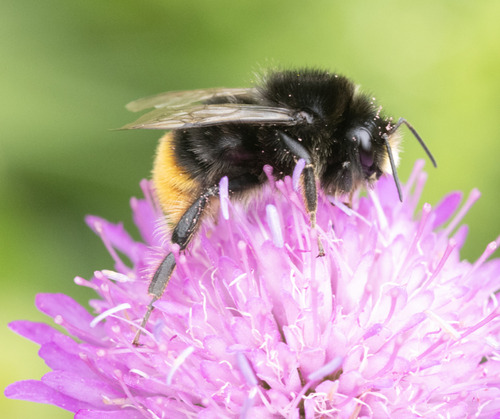
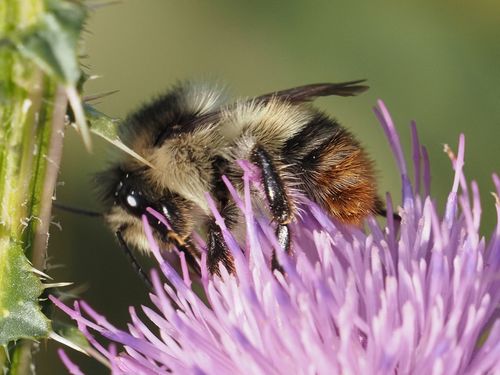
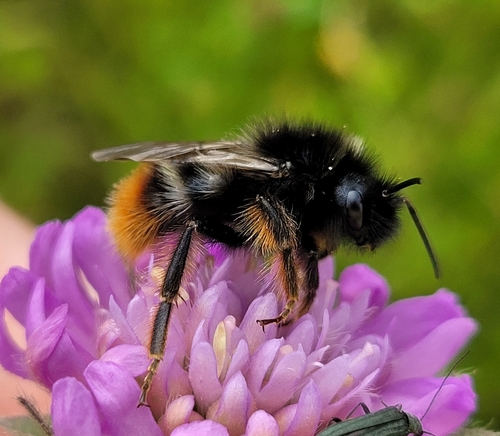
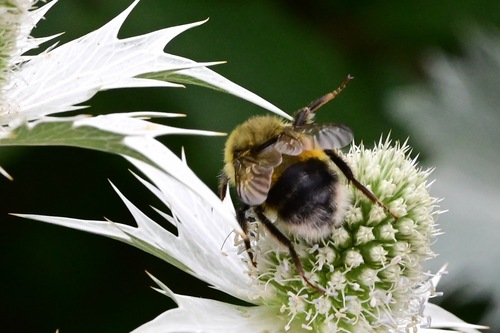
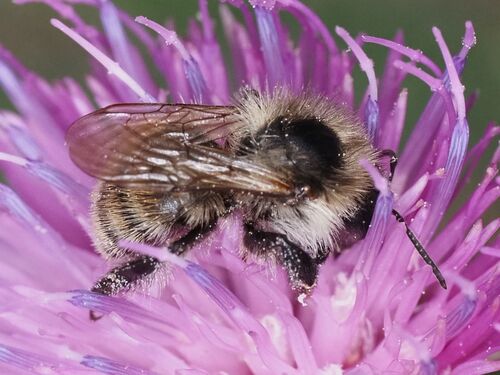
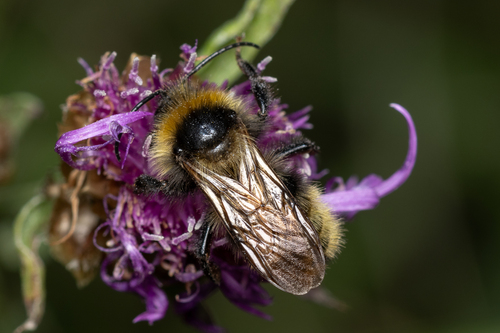
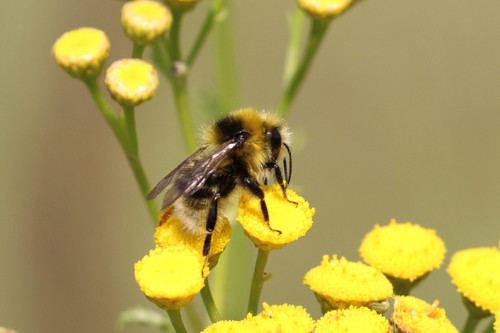
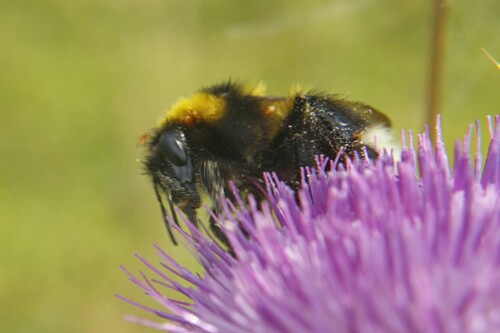
Bombus hortorum, the garden bumblebee or small garden bumblebee, is a species of bumblebee found in most of Europe north to 70°N, as well as parts of Asia and New Zealand. It is distinguished from most other bumblebees by its long tongue used for feeding on pollen in deep-flowered plants. Accordingly, this bumblebee mainly visits flowers with deep corollae, such as deadnettles, ground ivy, vetches, clovers, comfrey, foxglove, and thistles. They have a good visual memory, which aids them in navigating the territory close to their habitat and seeking out food sources.

Bombus hortorum belongs to the Bombus, or bumblebee, genus. It is one of the six most common bumblebees throughout Europe. Of the six commonest species, only two are long-tongued: B. hortorum and B. pascuorum. Its close relative Bombus ruderatus also has a long tongue, but is much less common. Bombus hortorum and Bombus ruderatus are nearly identical in appearance, but DNA sequence data distinguishes them as clearly-separate species.

This bumblebee has an oblong head and a very long tongue, about 15 mm (0.59 in), and in some cases even 20 mm (0.79 in). The tongue is so long... Wikipedia →
Global Distribution

Parks Where Found

# Park Country Daily sighting probability
1 Hohe Tauern National Park 🇦🇹 Austria
~10%
2 Cairngorms National Park 🇬🇧 United Kingdom
~10%
3 Snowdonia National Park 🇬🇧 United Kingdom
~10%
4 Bavarian Forest National Park 🇩🇪 Germany
~10%
5 Wadden Sea National Park 🇩🇪 Germany
<5%
6 Pyrénées National Park 🇫🇷 France
<5%

Cities Where Found

# City Country Daily sighting probability
1 Warsaw 🇵🇱 Poland
~10%
2 Birmingham 🇬🇧 United Kingdom
~10%
3 Manchester 🇬🇧 United Kingdom
~10%
4 Liverpool 🇬🇧 United Kingdom
~10%
5 Munich 🇩🇪 Germany
~10%
6 London 🇬🇧 United Kingdom
~10%
7 Copenhagen 🇩🇰 Denmark
~10%
8 Kyiv 🇺🇦 Ukraine
~10%
9 Essen 🇩🇪 Germany
~10%
10 Rotterdam [The Hague] 🇳🇱 Netherlands
~10%

Before you go

What are the chances of seeing a Garden Bumble Bee in Saint Petersburg?

Rare

Under 5% of wildlife watchers report a Garden Bumble Bee sighting in Saint Petersburg on a given day, based on 11 verified sightings from GBIF citizen-science data. It is the 248th most-seen of the 448 insects we can rate there. Over three days the chance rises to about 10%, and over a week to about 20%, if each day is a fresh chance.

When is the best time to see a Garden Bumble Bee in Saint Petersburg?

Any time of year

In every month with enough records, under 5% of wildlife watchers report a Garden Bumble Bee in Saint Petersburg on a given day, so our monthly data shows no clear season.

What time of day is best to see a Garden Bumble Bee?

Between 11 am and 2 pm

Across all the parks we cover, that three-hour window holds the most Garden Bumble Bee sightings with a recorded time, and about 9 in 10 of them come between 6 am and 6 pm: it is a daytime animal.

Is Saint Petersburg the best place to see a Garden Bumble Bee?

24th of 24

Of the 24 cities where we can rate Garden Bumble Bee sightings, Saint Petersburg ranks 24th at under 5%. The best odds are in Warsaw (Poland, about 10%), Birmingham (United Kingdom, about 10%) and Manchester (United Kingdom, about 10%).

Which relatives of the Garden Bumble Bee live in Saint Petersburg?

Same genus: Bombus

The closest relatives of the Garden Bumble Bee that you can see in Saint Petersburg (genus Bombus, Bumble Bees) are Tree Bumble Bee (about 10%) and Red-Tailed Bumble Bee (about 10%), with each one's daily chance of a sighting.

Where does the Garden Bumble Bee sighting chance come from?

GBIF citizen-science records

It is estimated from how often the Garden Bumble Bee is recorded against all the insects logged in Saint Petersburg (11 verified sightings), calibrated against known sighting rates. Figures are rounded to the nearest 10% because citizen-science data supports honest approximations, not decimals, and months with records from fewer than five people show "—". How it works.

← Back to Saint Petersburg