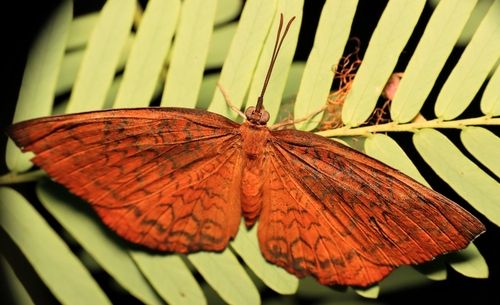
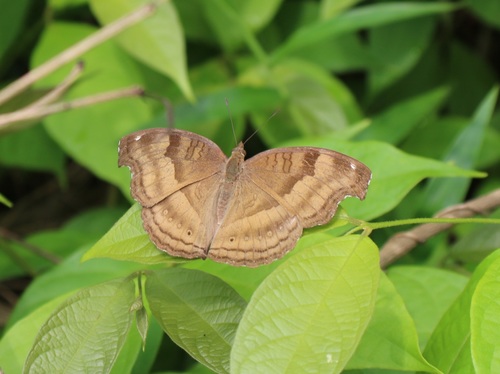
Sandalwood Defoliator

Sandalwood Defoliator

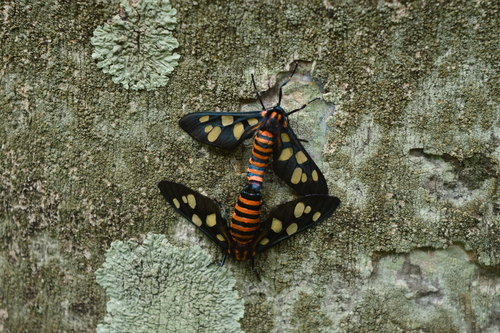
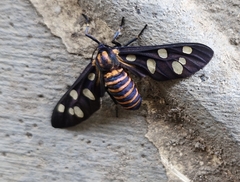
Amata passalis

Daily sighting probability ~30% · Possible
at Salem

In 3 days ~60% in a week ~90%

31 Verified sightings at Salem
22 In all 2 parks From 2019 to 2026
April Best month
☀️ Diurnal When it's spotted

About the Sandalwood Defoliator

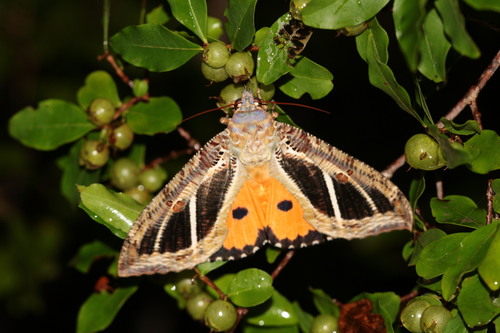
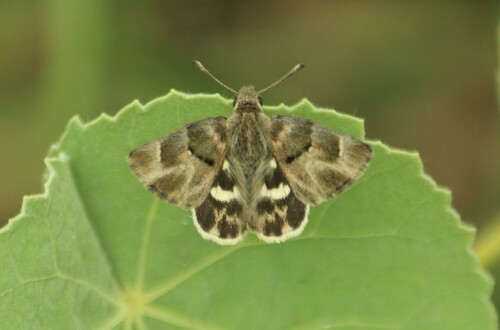
Amata passalis, the sandalwood defoliator, is a moth of the family Erebidae first described by Johan Christian Fabricius in 1781. It is found in Sri Lanka and India. The average life cycle of the species in captivity is 62 days. After mating, the adult female lays about 305 eggs in a lifespan of 3.87 days. It is known to breed all year around and passes through 6-11 generations a year. There are eight larval instars. First and last instar larvae are about 1.97 mm and 29.29 mm in length, respectively. Adults usually emerge within 1 to 2 hours of sunrise. After a day, they are ready for mating.

It is known mainly as a defoliator of sandalwood (Santalum album) in India. It is also recorded on various alternate food plants, mainly cowpeas, various other pulses, and ornamental plants. The larval stage of Apanteles nepitae can be used as a parasite to control the moth.

Phaseolus vulgaris Santalum album Trichosanthes anguina Vigna unguiculata Capsicum annuum Brassica caulorapa Capsicum annuum Phaseolus vulgaris Wikipedia →
Global Distribution

Parks Where Found

# Park Country Daily sighting probability
1 Sundarbans National Park 🇮🇳 India
~40%
2 Minneriya National Park 🇱🇰 Sri Lanka
~20%

Cities Where Found

# City Country Daily sighting probability
1 Thiruvananthapuram 🇮🇳 India
~40%
2 Coimbatore 🇮🇳 India
~40%
3 Prayagraj 🇮🇳 India
~40%
4 Kollam 🇮🇳 India
~30%
5 Surat 🇮🇳 India
~30%
6 Chennai 🇮🇳 India
~30%
7 Colombo [Sri Jayawardenepura Kotte] 🇱🇰 Sri Lanka
~30%
8 Ponnani 🇮🇳 India
~30%
9 Bhubaneshwar 🇮🇳 India
~30%
10 Madurai 🇮🇳 India
~30%

Before you go

What are the chances of seeing a Sandalwood Defoliator in Salem?

Possible

About 30% of wildlife watchers report a Sandalwood Defoliator sighting in Salem on a given day, based on 31 verified sightings from GBIF citizen-science data. It is the 31st most-seen of the 99 insects we can rate there. Over three days the chance rises to about 60%, and over a week to about 90%, if each day is a fresh chance.

When is the best time to see a Sandalwood Defoliator in Salem?

April and June

In those months about 40% of wildlife watchers report a Sandalwood Defoliator in Salem on a given day, against under 5% in October to January, the lowest months.

What time of day is best to see a Sandalwood Defoliator?

Between 11 am and 2 pm

Across all the parks we cover, that three-hour window holds the most Sandalwood Defoliator sightings with a recorded time, and nearly all of them come between 6 am and 6 pm: it is a daytime animal.

Is Salem the best place to see a Sandalwood Defoliator?

13th of 23

Of the 23 cities where we can rate Sandalwood Defoliator sightings, Salem ranks 13th at about 30%. The best odds are in Thiruvananthapuram (India, about 40%), Coimbatore (India, about 40%) and Prayagraj (India, about 40%).

Where does the Sandalwood Defoliator sighting chance come from?

GBIF citizen-science records

It is estimated from how often the Sandalwood Defoliator is recorded against all the insects logged in Salem (31 verified sightings), calibrated against known sighting rates. Figures are rounded to the nearest 10% because citizen-science data supports honest approximations, not decimals, and months with records from fewer than five people show "—". How it works.

← Back to Salem