Pale Swallowtail

Pale Swallowtail

Papilio eurymedon

Daily sighting probability <5% · Rare
at San Diego

In 3 days ~10% in a week ~20%

49 Verified sightings at San Diego
513 In all 11 parks From 2019 to 2026
May Best month
☀️ Diurnal When it's spotted

About the Pale Swallowtail

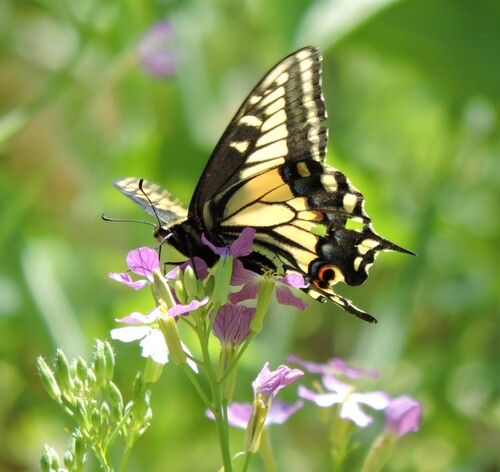
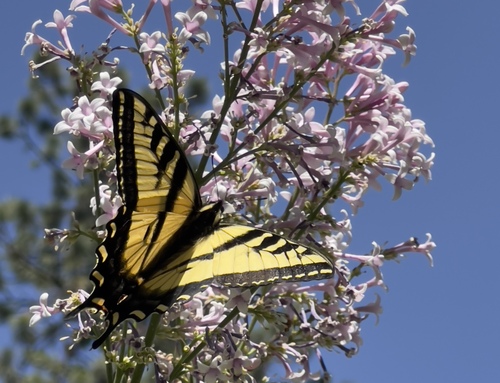
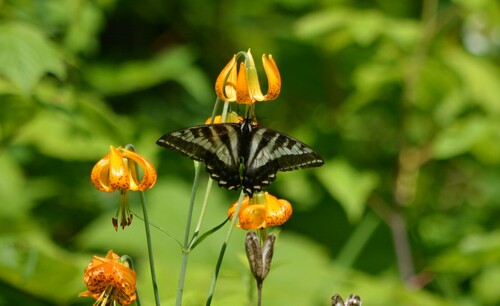
Papilio eurymedon, the pale swallowtail or pallid swallowtail, is a relatively common swallowtail butterfly found throughout much of the western North America. The species was first described by Hippolyte Lucas in 1852. It is found on the Pacific coast from northern Baja California to southernmost British Columbia, and inland to New Mexico and the Black Hills of South Dakota. It is present from the coast to western Montana, and from Wyoming to northern New Mexico. It is absent from most of Nevada and western Utah. It prefers open woodlands and forest clearings, especially near permanent bodies of water such as ponds, but also urban parks and is occasionally seen in suburban areas. Though not as common as the western tiger swallowtail, the pale swallowtail can be seen in large numbers at puddling parties where up to a dozen or more males may be gathered. There they join other species to sip water from damp soil to obtain nutrients for mating. Their appearance is quite similar to that of the western tiger swallowtail, except they are a white-cream colour or very pale yellow. Some pale swallowtails also have differing amounts of red-orange patches on the top of the wings just above the tail. There is a submarginal band on the bottom of the hindwings. Tiger stripes and borders are thicker than those of western tiger swallowtails. The wingspan is typically 3.5 to 4.5 inches (8.9 to 11.4 cm).

The pale swallowtail has a single brood throughout most of its range, but two or more along the Pacific Coast. Adults fly from April to October and are most common in May and July. Caterpillars enter their pupal stage in the fall and overwinter before emerging as adults. Eggs are laid singly on host plants which include members of the genus Ceanothus, including buckbrush, mountain balm, and mountain lilac, as well as red alder, ocean spray, bitter cherry, and serviceberry species. Caterpillars are plump green with a single yellow band behind the thorax. They have two eye-shaped spots on the upper thorax, which may help frighten predators. Like most swallowtails, they have a red wishbone-shaped organ called the osmeterium, which pops out from behind the head and releases a foul odour to warn off predators. Caterpillars turn brown just before the fifth moult. The pupa is brown and looks like a piece of bark. As they pupate, they face upright, secure the tip of the abdomen to a branch with a silk thread, and hang freely.

Males perch and patrol for receptive females. Females lay eggs singly on host plant leaves. Wikipedia →
Global Distribution

Parks Where Found

# Park Country Daily sighting probability
1 Sequoia and Kings Canyon National Parks 🇺🇸 United States
~30%
2 Yosemite National Park 🇺🇸 United States
~30%
3 Glacier National Park 🇺🇸 United States
~20%
4 Rocky Mountain National Park 🇺🇸 United States
~10%
5 Great Bear Rainforest 🇨🇦 Canada
~10%
6 Grand Teton National Park 🇺🇸 United States
~10%
7 Redwood National Park 🇺🇸 United States
~10%
8 Pacific Rim National Park Reserve 🇨🇦 Canada
~10%
9 Olympic National Park 🇺🇸 United States
~10%
10 Channel Islands National Park 🇺🇸 United States
~10%
11 Yellowstone National Park 🇺🇸 United States
<5%

Cities Where Found

# City Country Daily sighting probability
1 Vancouver 🇨🇦 Canada
<5%
2 Los Angeles 🇺🇸 United States
<5%
3 San Diego 🇺🇸 United States
<5%
4 Portland 🇺🇸 United States
<5%
5 San Francisco 🇺🇸 United States
<5%
6 Seattle 🇺🇸 United States
<5%

Before you go

What are the chances of seeing a Pale Swallowtail in San Diego?

Rare

Under 5% of wildlife watchers report a Pale Swallowtail sighting in San Diego on a given day, based on 49 verified sightings from GBIF citizen-science data. It is the 167th most-seen of the 693 insects we can rate there. Over three days the chance rises to about 10%, and over a week to about 20%, if each day is a fresh chance.

When is the best time to see a Pale Swallowtail in San Diego?

May

In that month about 10% of wildlife watchers report a Pale Swallowtail in San Diego on a given day, against under 5% in June to April, the lowest months. That is one of San Diego's driest months, with about 5 mm of rain against 55 mm in February.

What time of day is best to see a Pale Swallowtail?

Between 11 am and 2 pm

Across all the parks we cover, that three-hour window holds the most Pale Swallowtail sightings with a recorded time, and about 9 in 10 of them come between 6 am and 6 pm: it is a daytime animal.

Is San Diego the best place to see a Pale Swallowtail?

Among the best

Of the 6 cities where we can rate Pale Swallowtail sightings, San Diego ranks 3rd at under 5%, level with the leaders once rounded. The best odds are in Vancouver (Canada, under 5%) and Los Angeles (United States, under 5%).

Where does the Pale Swallowtail sighting chance come from?

GBIF citizen-science records

It is estimated from how often the Pale Swallowtail is recorded against all the insects logged in San Diego (49 verified sightings), calibrated against known sighting rates. Figures are rounded to the nearest 10% because citizen-science data supports honest approximations, not decimals, and months with records from fewer than five people show "—". How it works.

← Back to San Diego