European Vine Moth

European Vine Moth

Lobesia botrana

Daily sighting probability ~10% · With luck
at Santiago

In 3 days ~20% in a week ~30%

11 Verified sightings at Santiago
December Best month

About the European Vine Moth

Lobesia botrana, the European grapevine moth or European grape worm, is a moth of the family Tortricidae. This species is native to Southern Italy. It can be found in Southern Europe, North Africa, Anatolia and the Caucasus. Recently it has been introduced into Japan, Chile and Argentina, however on July 5, 2021, Senasa Argentina (the National Food Safety and Quality Service) declared the Departments of Cafayate and Concordia successfully eradicated.

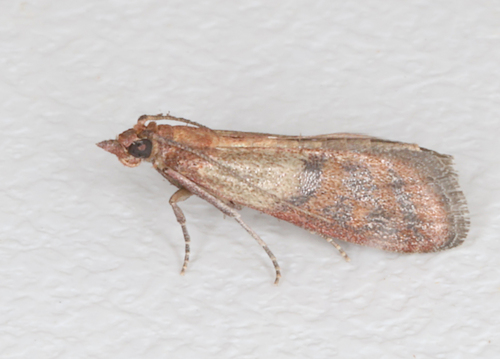
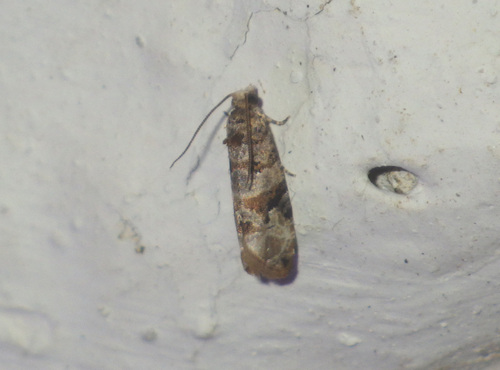
Lobesia botrana can reach a length of 6–8 millimetres (0.24–0.31 in), with a wingspan of 12–13 mm. The females are slightly larger. The external surface of the forewings is mottled with tan-brown, greyish and dark-brown blotches. The rear wings are gray with a fringed border. Larvae can reach a length of 8–9 millimetres (0.31–0.35 in). They are yellowish green to light brown with a light yellow head.

The larvae mainly feed on the flowers and fruit of grape (Vitis vinifera) and spurge laurel (Daphne gnidium), but it has also been reported on several other plants (Rubus fruticosus, Ribes sp., Olea europaea, Prunus avium, Prunus domestica, Actinidia chinensis, Punica granatum, etc.). Lobesia... Wikipedia →

Global Distribution

Parks Where Found

# Park Country Daily sighting probability

More parks will be added in future updates.

Cities Where Found

# City Country Daily sighting probability
1 Santiago 🇨🇱 Chile
~10%
2 Tel Aviv 🇮🇱 Israel
<5%
3 Bucharest 🇷🇴 Romania
<5%

Before you go

What are the chances of seeing a European Vine Moth in Santiago?

With luck

About 10% of wildlife watchers report a European Vine Moth sighting in Santiago on a given day, based on 11 verified sightings from GBIF citizen-science data. It is the 101st most-seen of the 173 insects we can rate there. Over three days the chance rises to about 20%, and over a week to about 30%, if each day is a fresh chance.

When is the best time to see a European Vine Moth in Santiago?

September to February

In those months about 10% of wildlife watchers report a European Vine Moth in Santiago on a given day, against under 5% in March to August, the lowest months. Those are among Santiago's driest months, with about 10 mm of rain a month against 65 mm in June.

Is Santiago the best place to see a European Vine Moth?

Yes

Of the 3 cities where we can rate European Vine Moth sightings, Santiago has the highest daily chance: about 10%. Next come Tel Aviv (Israel, under 5%) and Bucharest (Romania, under 5%).

Which relatives of the European Vine Moth live in Santiago?

Same order: Lepidoptera

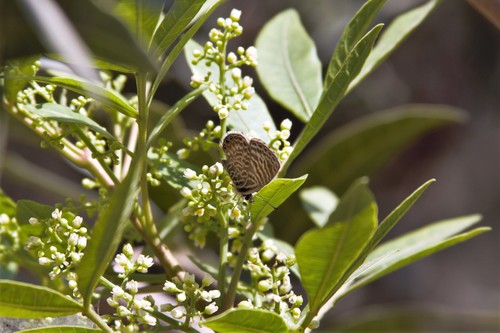
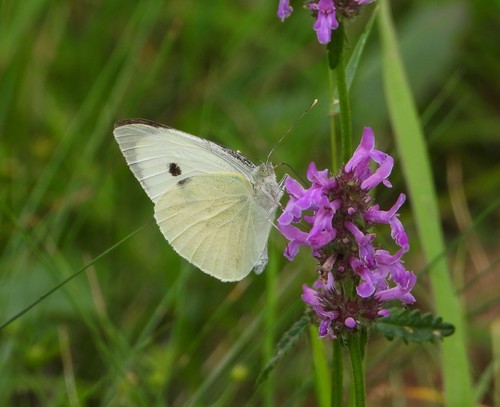
The closest relatives of the European Vine Moth that you can see in Santiago (order Lepidoptera, Butterflies and Moths) are Subtropical Lady (about 40%), Leptotes trigemmatus (about 20%) and Large White (about 20%), with each one's daily chance of a sighting.

Where does the European Vine Moth sighting chance come from?

GBIF citizen-science records

It is estimated from how often the European Vine Moth is recorded against all the insects logged in Santiago (11 verified sightings), calibrated against known sighting rates. Figures are rounded to the nearest 10% because citizen-science data supports honest approximations, not decimals, and months with records from fewer than five people show "—". How it works.

← Back to Santiago