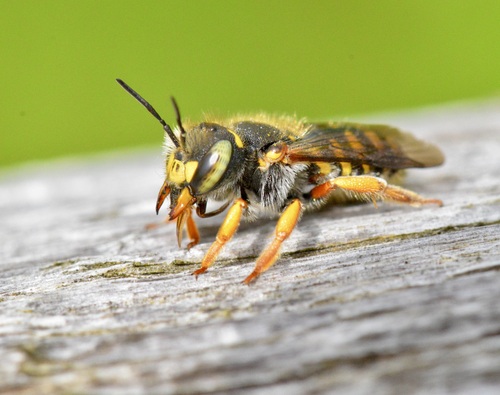
Oblong Woolcarder Bee

Oblong Woolcarder Bee

Anthidium oblongatum

Daily sighting probability ~10% · With luck
at Santiago

In 3 days ~20% in a week ~30%

14 Verified sightings at Santiago
March Best month

About the Oblong Woolcarder Bee

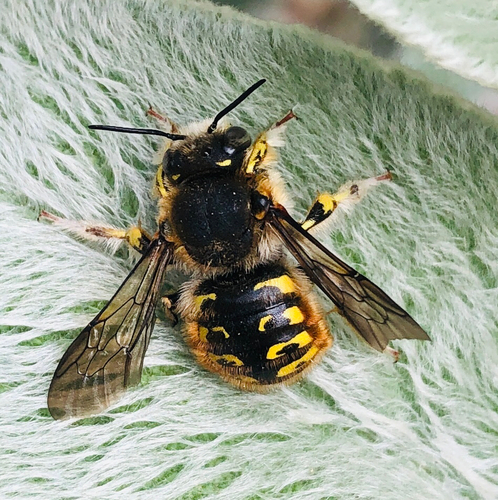
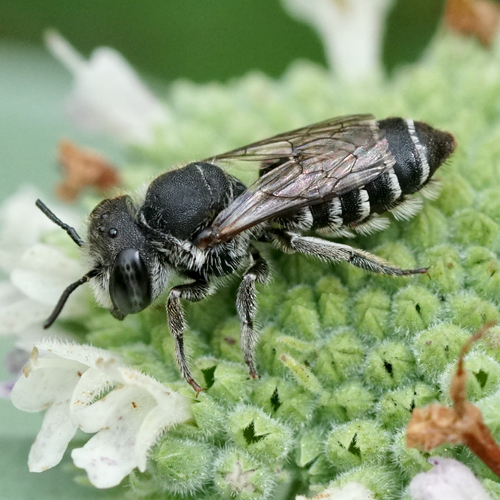
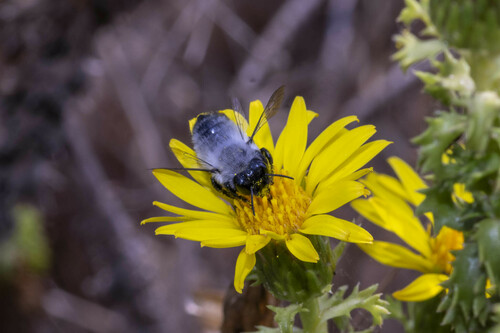
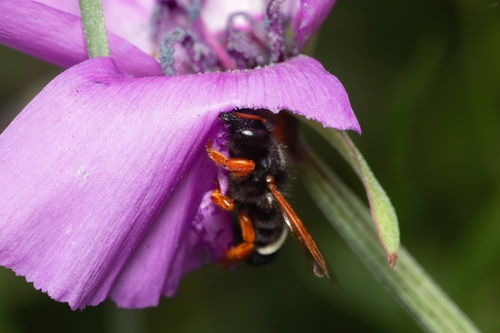
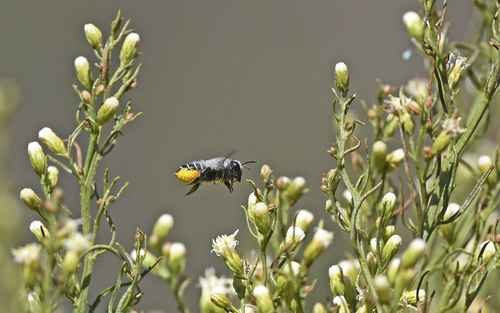
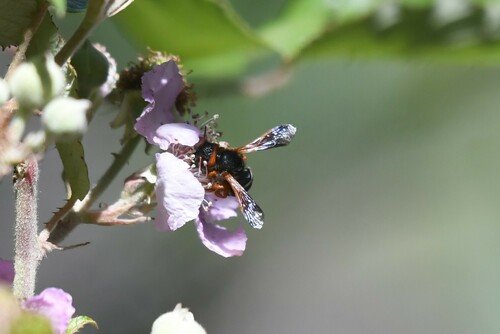
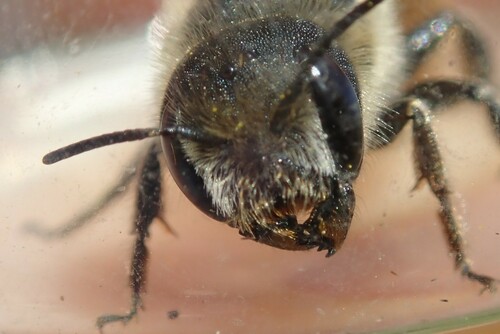
Anthidium oblongatum, the oblong woolcarder bee, is a species of bee in the family Megachilidae, the leaf-cutter, carder, or mason bees. It is native to Eurasia and north Africa, and has also been introduced to North America.

This species is found in Eurasia from Portugal via southern, central and eastern Europe, Ukraine, southern Russia and Siberia (east to Tuva) as well as via Asia Minor, the Caucasus to the Central Asian mountains and, if the information from Wu (2006) applies, to Inner Mongolia. In Europe, it is found northwards to the Netherlands, Brandenburg, central Poland and Belarus; south to Sicily (not in Corsica and Sardinia), Thessaly (not in Crete and Cyprus), Iran and Afghanistan. It has also been reported in Morocco. It was found introduced to the eastern United States in 1995, and can now be found throughout northeastern North America, Colorado, Utah, and the Pacific Northwest of North America.

A. oblongatum prefers warm and dry locations such as flowering grasslands, hedges, and dry stone walls. It can also be found in ruderal sites such as weathering heaps, road embankments, railway embankments, flood dams, also in the settlement area... Wikipedia →
Global Distribution

Parks Where Found

# Park Country Daily sighting probability

More parks will be added in future updates.

Cities Where Found

# City Country Daily sighting probability
1 Minneapolis [Saint Paul] 🇺🇸 United States
~10%
2 Toronto 🇨🇦 Canada
~10%
3 Seattle 🇺🇸 United States
~10%
4 Vancouver 🇨🇦 Canada
~10%
5 Detroit 🇺🇸 United States
~10%
6 Philadelphia 🇺🇸 United States
~10%
7 Boston 🇺🇸 United States
~10%
8 Warsaw 🇵🇱 Poland
~10%
9 Montreal 🇨🇦 Canada
~10%
10 Santiago 🇨🇱 Chile
~10%

Before you go

What are the chances of seeing an Oblong Woolcarder Bee in Santiago?

With luck

About 10% of wildlife watchers report an Oblong Woolcarder Bee sighting in Santiago on a given day, based on 14 verified sightings from GBIF citizen-science data. It is the 109th most-seen of the 173 insects we can rate there. Over three days the chance rises to about 20%, and over a week to about 30%, if each day is a fresh chance.

When is the best time to see an Oblong Woolcarder Bee in Santiago?

February–April and October–December

In those months about 10% of wildlife watchers report an Oblong Woolcarder Bee in Santiago on a given day, against under 5% in January and May–September, the lowest months. Those are among Santiago's driest months, with about 10 mm of rain a month against 65 mm in June.

Is Santiago the best place to see an Oblong Woolcarder Bee?

Among the best

Of the 20 cities where we can rate Oblong Woolcarder Bee sightings, Santiago ranks 10th at about 10%, level with the leaders once rounded. The best odds are in Minneapolis [Saint Paul] (United States, about 10%), Toronto (Canada, about 10%) and Seattle (United States, about 10%).

Which relatives of the Oblong Woolcarder Bee live in Santiago?

Same genus: Anthidium

The closest relatives of the Oblong Woolcarder Bee that you can see in Santiago (genus Anthidium, Wool Carder Bees) are European Woolcarder Bee (about 20%) and Chilean Woolcarder (about 10%), with each one's daily chance of a sighting.

Where does the Oblong Woolcarder Bee sighting chance come from?

GBIF citizen-science records

It is estimated from how often the Oblong Woolcarder Bee is recorded against all the insects logged in Santiago (14 verified sightings), calibrated against known sighting rates. Figures are rounded to the nearest 10% because citizen-science data supports honest approximations, not decimals, and months with records from fewer than five people show "—". How it works.

← Back to Santiago