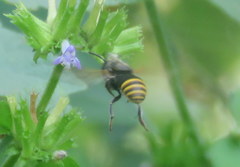
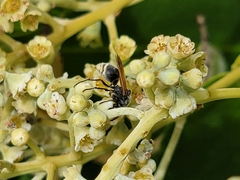
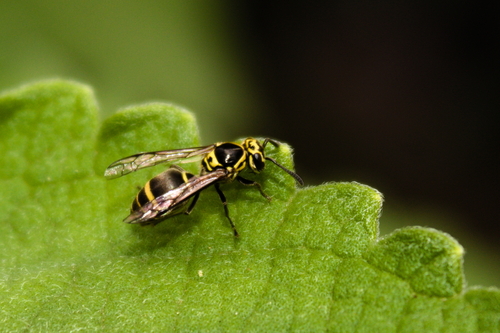
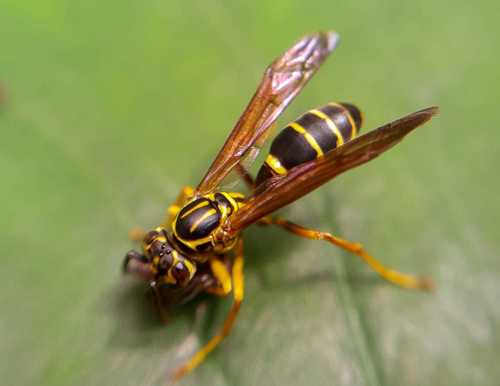
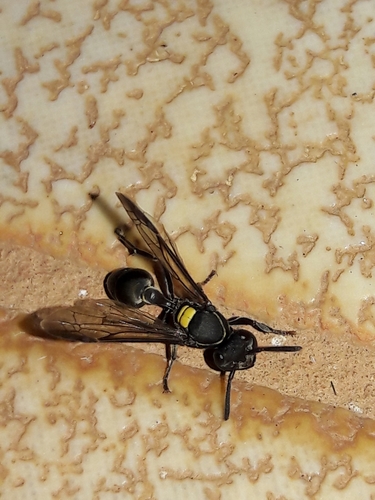
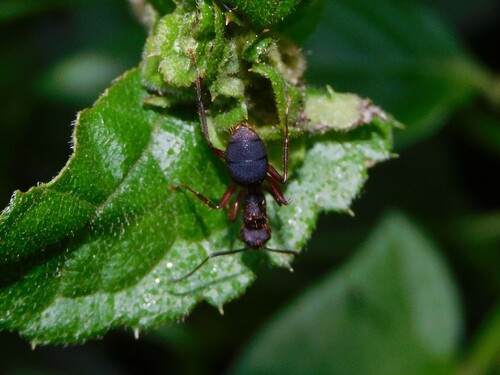
Brachygastra lecheguana
Daily sighting probability <5% · Rare
at São Paulo

In 3 days ~10% in a week ~20%

14 Verified sightings at São Paulo
117 In 1 park From 2019 to 2026
June Best month
☀️ Diurnal When it's spotted

About the Brachygastra lecheguana

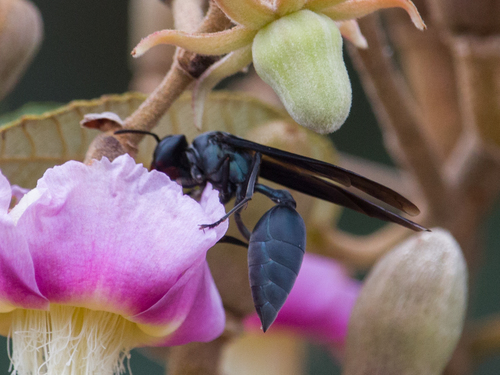
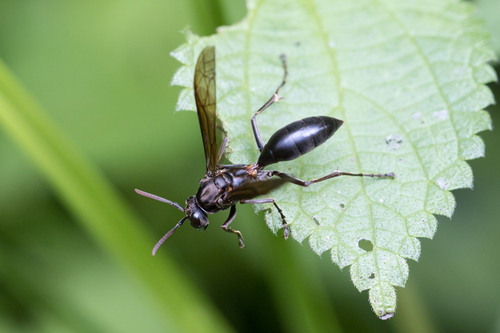
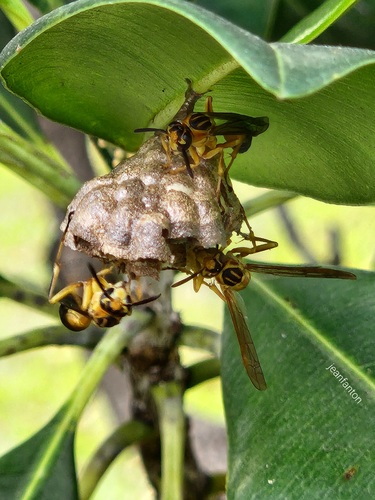
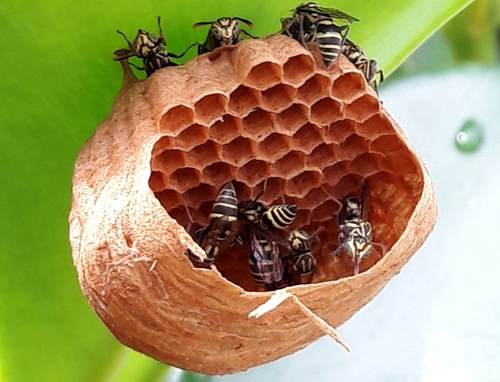
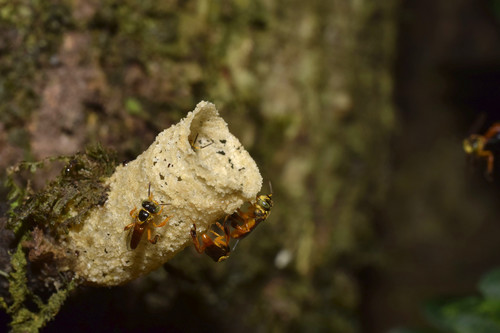
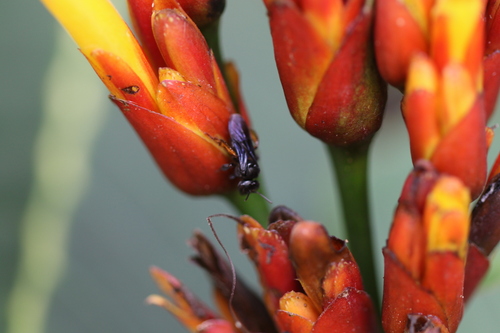
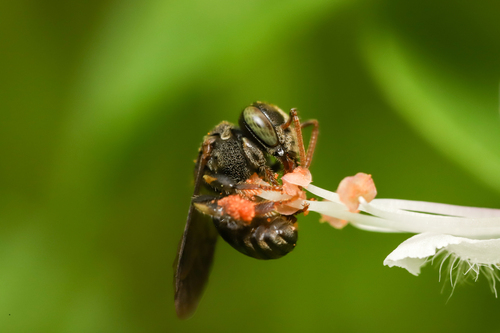
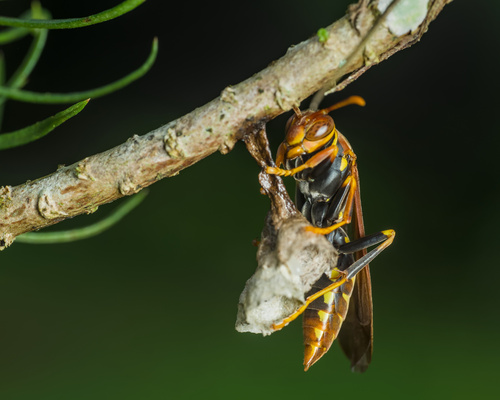
Brachygastra lecheguana (Latreille, 1824), formerly known as Nectarina lecheguana, is a species of dark paper wasp found across tropical to subtropical America. It nests in underbrush in grassland-type environments, and species of the genus Brachygastra store honey, a trait characteristic of the genus.

Common names include marimbondo-do-campo, marimbondo-do-pasto, marimbondo-exu, marimbondo-de-pote, marimbondo-de-purrão, and avispa-de-pote, among others depending on the location. It is called tu in the Kwaza language of Rondônia, Brazil.

B. lecheguana belongs to the Epiponini tribe of Polistinae wasps, sometimes referred to as Polybiinae wasps. It is a Neotropical social wasp species that falls under the genus Brachygastra. Brachygastra wasps are identified, as noted in Andena and Carpenter (2012), by an anatomical projection over their posterior. The scutellum, metanotum, and propodeum, three of the hymenopteran back structures, combined form a flat, vertical surface in the middle of the body (mesosoma).

B. lecheguana is very closely related to B. mellifica and B. borellii, and indeed some authors suggest that B. lecheguana and B. mellifica can only be differentiated... Wikipedia →
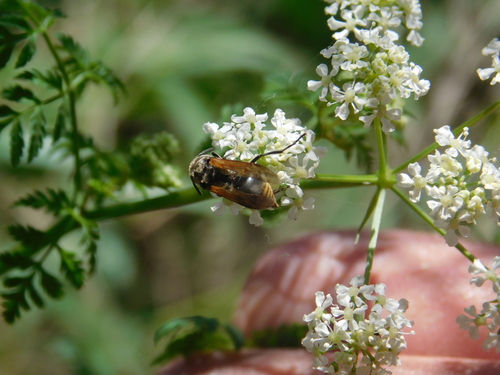
Global Distribution

Parks Where Found

# Park Country Daily sighting probability
1 Galápagos Islands 🇪🇨 Ecuador
~10%

More parks will be added in future updates.

Cities Where Found

# City Country Daily sighting probability
1 Rosario 🇦🇷 Argentina
~10%
2 Cordoba 🇦🇷 Argentina
~10%
3 Buenos Aires 🇦🇷 Argentina
~10%
4 Montevideo 🇺🇾 Uruguay
~10%
5 Fortaleza 🇧🇷 Brazil
~10%
6 Porto Alegre 🇧🇷 Brazil
~10%
7 São Paulo 🇧🇷 Brazil
<5%

Before you go

What are the chances of seeing a Brachygastra lecheguana in São Paulo?

Rare

Under 5% of wildlife watchers report a Brachygastra lecheguana sighting in São Paulo on a given day, based on 14 verified sightings from GBIF citizen-science data. It is the 402nd most-seen of the 832 insects we can rate there. Over three days the chance rises to about 10%, and over a week to about 20%, if each day is a fresh chance.

When is the best time to see a Brachygastra lecheguana in São Paulo?

June and September

In those months about 10% of wildlife watchers report a Brachygastra lecheguana in São Paulo on a given day, against under 5% in July–August and October–May, the lowest months. Those are among São Paulo's driest months, with about 65 mm of rain a month against 230 mm in January.

What time of day is best to see a Brachygastra lecheguana?

Between 10 am and 1 pm

Across all the parks we cover, that three-hour window holds the most Brachygastra lecheguana sightings with a recorded time, and nearly all of them come between 6 am and 6 pm: it is a daytime animal.

Is São Paulo the best place to see a Brachygastra lecheguana?

7th of 7

Of the 7 cities where we can rate Brachygastra lecheguana sightings, São Paulo ranks 7th at under 5%. The best odds are in Rosario (Argentina, about 10%), Cordoba (Argentina, about 10%) and Buenos Aires (Argentina, about 10%).

Which relatives of the Brachygastra lecheguana live in São Paulo?

Same family: Vespidae

The closest relatives of the Brachygastra lecheguana that you can see in São Paulo (family Vespidae, Hornets, Paper Wasps, Potter Wasps, and Allies) are Protonectarina sylveirae (about 10%) and Agelaia multipicta (about 10%), with each one's daily chance of a sighting.

Where does the Brachygastra lecheguana sighting chance come from?

GBIF citizen-science records

It is estimated from how often the Brachygastra lecheguana is recorded against all the insects logged in São Paulo (14 verified sightings), calibrated against known sighting rates. Figures are rounded to the nearest 10% because citizen-science data supports honest approximations, not decimals, and months with records from fewer than five people show "—". How it works.

← Back to São Paulo