Guibe's Flame Snake

Guibe's Flame Snake

Oxyrhopus guibei

Silhouette: Beth Reinke · PhyloPic

LCLeast ConcernNTVUENCR
Daily sighting probability ~10% · With luck
at São Paulo

In 3 days ~10% in a week ~30%

17 Verified sightings at São Paulo
June Best month
☀️🌙 Day & Night When it's spotted

About the Guibe's Flame Snake

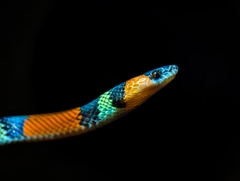
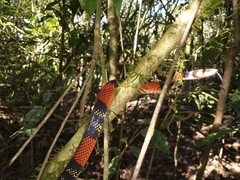
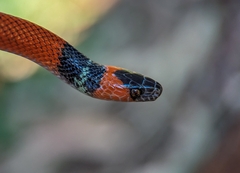
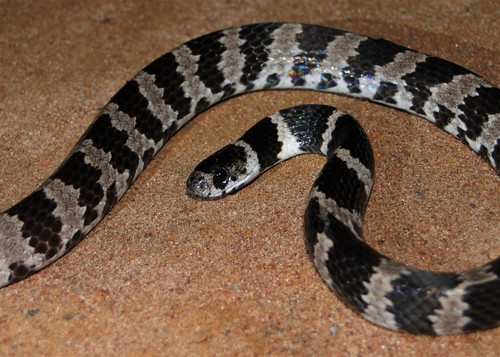
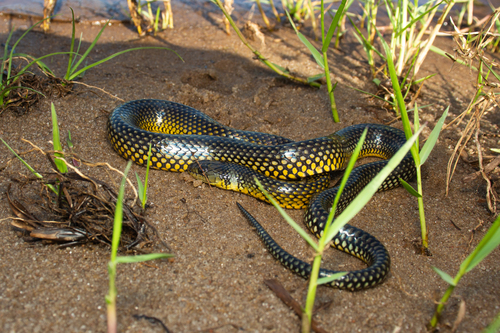
Oxyrhopus guibei is a species of snake in the family Colubridae. The species is endemic to South America. It is often called the false coral snake, but this common name can refer to any of a long list of other species, genera, and even entire families of snakes. Many nonvenomous snakes have evolved coloration that mimics that of venomous true coral snakes, a trait which helps them avoid predation.

The specific name, guibei, is in honor of French herpetologist Jean Guibé. O. guibei is native to central sections of South America, in parts of Bolivia, Brazil, Paraguay, and Argentina. The species O. guibei has been described as common to abundant.

O. guibei can reach 1 m (3.3 ft) to 1.25 m (4.1 ft) in total length (including tail). Females can reach much larger sizes than males. The preferred natural habitat of O. guibei is forest, including forest edges and open areas. The snake is sometimes seen near human activity and habitation, for example, on farms and in backyards.

O. guibei is mostly nocturnal, but is sometimes out basking during the day. It spends most of its time on... Wikipedia →

Global Distribution

Parks Where Found

# Park Country Daily sighting probability

More parks will be added in future updates.

Cities Where Found

# City Country Daily sighting probability
1 Brasilia 🇧🇷 Brazil
~10%
2 São Paulo 🇧🇷 Brazil
~10%

Before you go

What are the chances of seeing a Guibe's Flame Snake in São Paulo?

With luck

About 10% of wildlife watchers report a Guibe's Flame Snake sighting in São Paulo on a given day, based on 17 verified sightings from GBIF citizen-science data. It is the 13th most-seen of the 23 reptiles we can rate there. Over three days the chance rises to about 10%, and over a week to about 30%, if each day is a fresh chance.

When is the best time to see a Guibe's Flame Snake in São Paulo?

January, April–June and August–September

In those months about 10% of wildlife watchers report a Guibe's Flame Snake in São Paulo on a given day, against under 5% in February–March, July and October–December, the lowest months.

What time of day is best to see a Guibe's Flame Snake?

Between 7 and 10 pm

Across all the parks we cover, that three-hour window holds the most Guibe's Flame Snake sightings with a recorded time, and about 6 in 10 of them come between 6 am and 6 pm: it is seen both by day and at night.

Is São Paulo the best place to see a Guibe's Flame Snake?

Among the best

Of the 2 cities where we can rate Guibe's Flame Snake sightings, São Paulo ranks 2nd at about 10%, level with the leaders once rounded. The best odds are in Brasilia (Brazil, about 10%).

Which relatives of the Guibe's Flame Snake live in São Paulo?

Same family: Colubridae

The closest relatives of the Guibe's Flame Snake that you can see in São Paulo (family Colubridae, Colubrid Snakes) are Pampas Snake (about 10%), Brazilian Slug-eating Snake (about 10%) and Military Ground Snake (about 10%), with each one's daily chance of a sighting.

Where does the Guibe's Flame Snake sighting chance come from?

GBIF citizen-science records

It is estimated from how often the Guibe's Flame Snake is recorded against all the reptiles logged in São Paulo (17 verified sightings), calibrated against known sighting rates. Figures are rounded to the nearest 10% because citizen-science data supports honest approximations, not decimals, and months with records from fewer than five people show "—". How it works.

← Back to São Paulo