Patagonian Racer

Patagonian Racer

Philodryas patagoniensis

Silhouette: Alex Slavenko · PhyloPic

LCLeast ConcernNTVUENCR
Daily sighting probability <5% · Rare
at São Paulo

In 3 days ~10% in a week ~20%

8 Verified sightings at São Paulo
6 In 1 park From 2019 to 2026
February Best month
☀️ Diurnal When it's spotted

About the Patagonian Racer

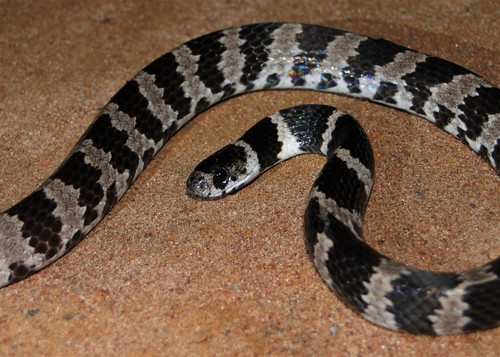
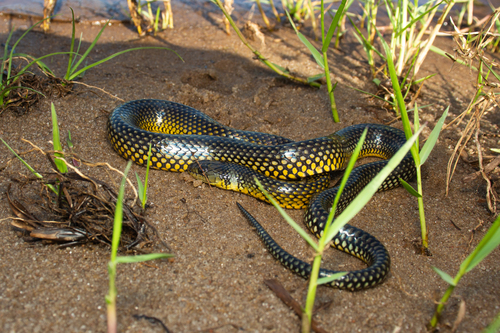
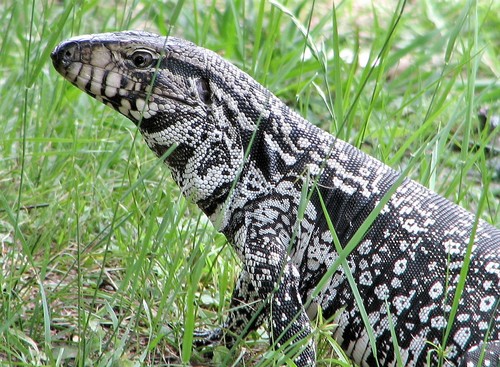
Philodryas patagoniensis, also known as the Patagonia green racer, is a species of rear-fanged (opisthoglyphous) venomous snake in the family Colubridae. The species is endemic to cis-Andean South America from northern Argentina to northeastern Brazil; despite its name, most of its range is outside Patagonia.

P. patagoniensis is a medium-sized, cylindrical and robust snake, with a moderately long tail. It can grow to a maximum total length (including tail) of 150 cm (59 in). The snout is rounded. The eye is medium-sized with a round pupil. The dorsal scales are smooth with unique apical scores.

P. patagoniensis is terrestrial, fundamentally arboreal when foraging, and has daytime habits. It has a brownish color that helps in its camouflage. P. patagoniensis has sexual dimorphism in adult specimens. Females have a longer body, with greater corpulence, while males have a longer tail. Females are born with a greater rostro-cloacal length and reach sexual maturity later than males, about 2-years-old. Males can reach sexual maturity at 1-year-old. Reproduction is seasonal, with the vitellogenic season occurring between... Wikipedia →

Global Distribution

Parks Where Found

# Park Country Daily sighting probability
1 Serra da Canastra National Park 🇧🇷 Brazil
~20%

More parks will be added in future updates.

Cities Where Found

# City Country Daily sighting probability
1 São Paulo 🇧🇷 Brazil
<5%

Before you go

What are the chances of seeing a Patagonian Racer in São Paulo?

Rare

Under 5% of wildlife watchers report a Patagonian Racer sighting in São Paulo on a given day, based on 8 verified sightings from GBIF citizen-science data. It is the 19th most-seen of the 23 reptiles we can rate there. Over three days the chance rises to about 10%, and over a week to about 20%, if each day is a fresh chance.

When is the best time to see a Patagonian Racer in São Paulo?

February and December

In those months about 10% of wildlife watchers report a Patagonian Racer in São Paulo on a given day, against under 5% in January and March–November, the lowest months. Those are among São Paulo's wettest months, with about 180 mm of rain a month against 35 mm in August.

What time of day is best to see a Patagonian Racer?

Between 9 am and noon

Across all the parks we cover, that three-hour window holds the most Patagonian Racer sightings with a recorded time, and about 9 in 10 of them come between 6 am and 6 pm: it is a daytime animal.

Where else can you see a Patagonian Racer?

Only São Paulo, in our data

São Paulo is the only city on Wallace's Line with enough records to rate Patagonian Racer sightings: under 5% of wildlife watchers there report one on a given day.

Where does the Patagonian Racer sighting chance come from?

GBIF citizen-science records

It is estimated from how often the Patagonian Racer is recorded against all the reptiles logged in São Paulo (8 verified sightings), calibrated against known sighting rates. Figures are rounded to the nearest 10% because citizen-science data supports honest approximations, not decimals, and months with records from fewer than five people show "—". How it works.

← Back to São Paulo