
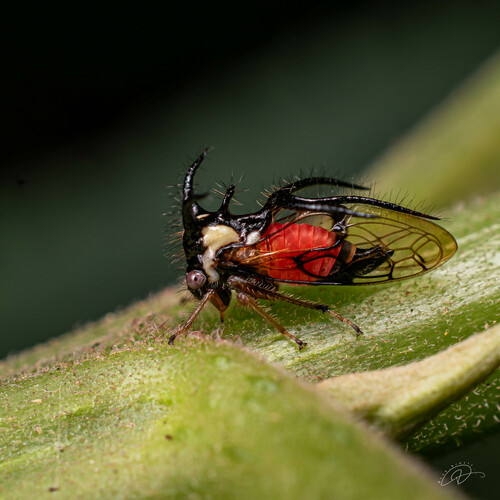
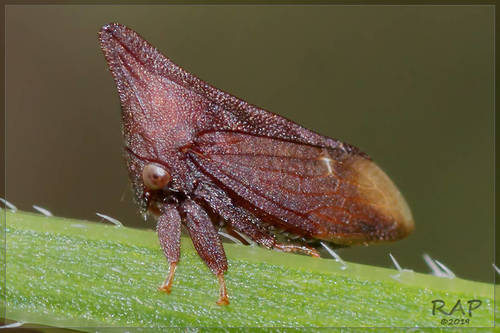
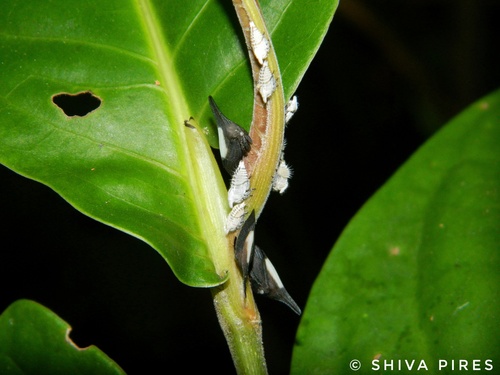
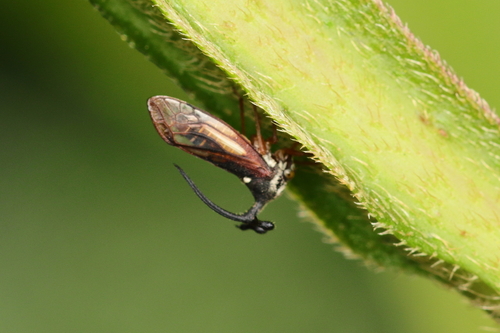
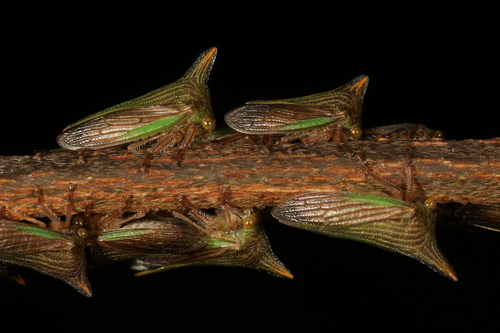
Keeled Treehopper

Keeled Treehopper

Entylia carinata

Daily sighting probability <5% · Rare
at São Paulo

In 3 days ~10% in a week ~20%

7 Verified sightings at São Paulo
52 In all 2 parks From 2019 to 2026
May Best month
☀️ Diurnal When it's spotted

About the Keeled Treehopper

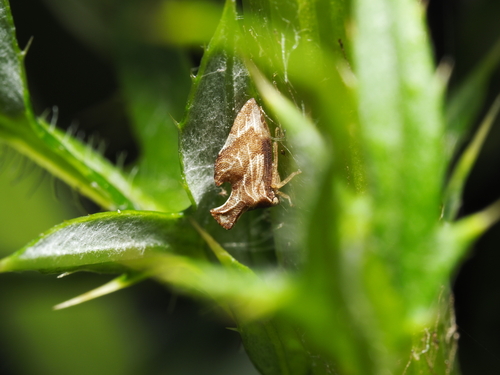
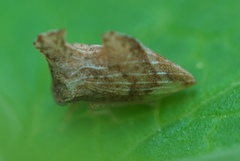
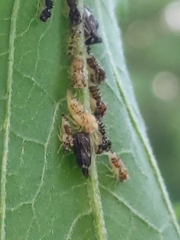
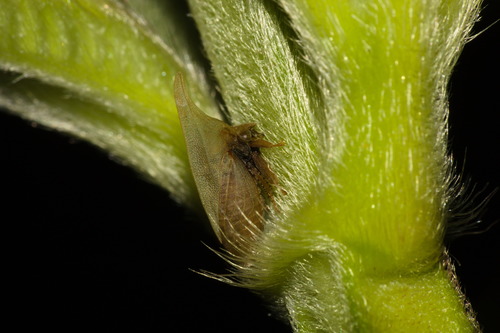
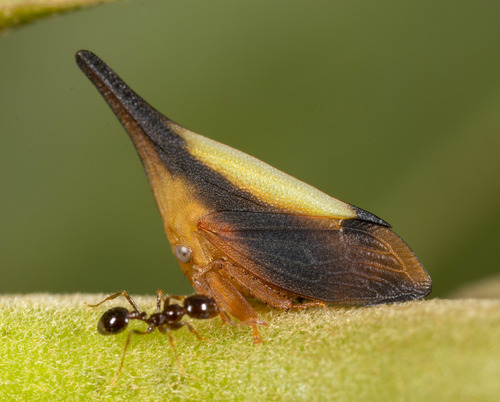
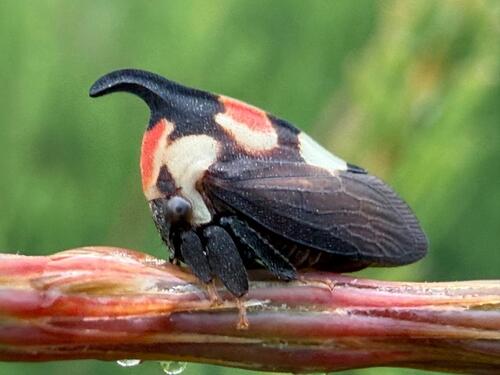
Entylia carinata, commonly known as the keeled treehopper, is a species of treehopper in the family Membracidae. They can be found in Brazil, Panama, Mexico, the United States, and Canada. Keeled treehoppers are often attended by ants which feed on the honeydew they excrete. In return, the ants offer protection from predators. Keeled treehoppers typically feed on plants in the aster family and they are not known to transmit plant diseases and are not considered significant plant pests.

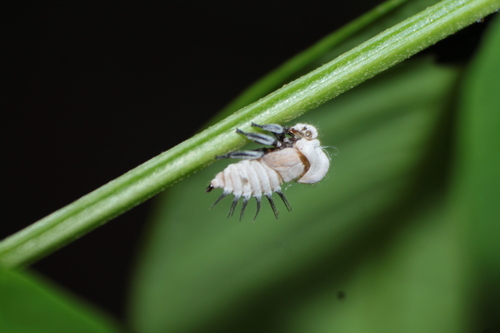
As adults, keeled treehoppers spend the winter months in leaf litter and debris, finally emerging in March. They begin to reproduce and implant their eggs on aster leafs. During this time of year plants produce vulnerable growth and soft tissues which make it an optimal time to embed their eggs. Occasionally the laid eggs cause the leaf to fold over, forming a protected environment for the nymphs to develop in once they hatch.

Keeled treehoppers mothers exhibit parental care and spend time protecting their egg masses. They are phloem feeders, and their diet consists of liquids extracted from plants. Plant sap, while a convenient material to feed on, is lacking... Wikipedia →

Global Distribution

Parks Where Found

# Park Country Daily sighting probability
1 Shenandoah National Park 🇺🇸 United States
~10%
2 Great Smoky Mountains National Park 🇺🇸 United States
~10%

Cities Where Found

# City Country Daily sighting probability
1 Baltimore 🇺🇸 United States
~10%
2 Washington 🇺🇸 United States
~10%
3 Boston 🇺🇸 United States
<5%
4 Philadelphia 🇺🇸 United States
<5%
5 Dallas 🇺🇸 United States
<5%
6 Chicago 🇺🇸 United States
<5%
7 Austin 🇺🇸 United States
<5%
8 São Paulo 🇧🇷 Brazil
<5%
9 New York City 🇺🇸 United States
<5%
10 Toronto 🇨🇦 Canada
<5%

Before you go

What are the chances of seeing a Keeled Treehopper in São Paulo?

Rare

Under 5% of wildlife watchers report a Keeled Treehopper sighting in São Paulo on a given day, based on 7 verified sightings from GBIF citizen-science data. It is the 615th most-seen of the 832 insects we can rate there. Over three days the chance rises to about 10%, and over a week to about 20%, if each day is a fresh chance.

When is the best time to see a Keeled Treehopper in São Paulo?

Any time of year

In every month with enough records, under 5% of wildlife watchers report a Keeled Treehopper in São Paulo on a given day, so our monthly data shows no clear season.

What time of day is best to see a Keeled Treehopper?

Between 10 am and 1 pm

Across all the parks we cover, that three-hour window holds the most Keeled Treehopper sightings with a recorded time, and about 9 in 10 of them come between 6 am and 6 pm: it is a daytime animal.

Is São Paulo the best place to see a Keeled Treehopper?

8th of 10

Of the 10 cities where we can rate Keeled Treehopper sightings, São Paulo ranks 8th at under 5%. The best odds are in Baltimore (United States, about 10%), Washington (United States, about 10%) and Boston (United States, under 5%).

Which relatives of the Keeled Treehopper live in São Paulo?

Same family: Membracidae

The closest relatives of the Keeled Treehopper that you can see in São Paulo (family Membracidae, Typical Treehoppers) are Enchenopa squamigera (about 10%) and Membracis dorsata (about 10%), with each one's daily chance of a sighting.

Where does the Keeled Treehopper sighting chance come from?

GBIF citizen-science records

It is estimated from how often the Keeled Treehopper is recorded against all the insects logged in São Paulo (7 verified sightings), calibrated against known sighting rates. Figures are rounded to the nearest 10% because citizen-science data supports honest approximations, not decimals, and months with records from fewer than five people show "—". How it works.

← Back to São Paulo