Scarce Bamboo Page

Scarce Bamboo Page

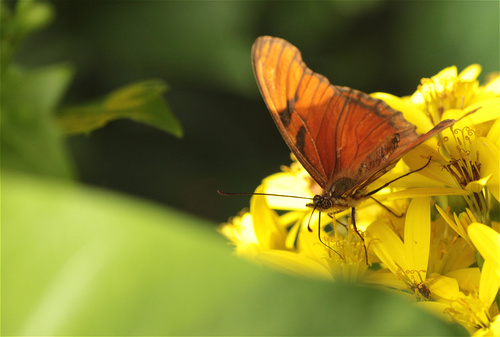
Philaethria dido

Daily sighting probability ~10% · With luck
at São Paulo

In 3 days ~20% in a week ~30%

42 Verified sightings at São Paulo
22 In all 3 parks From 2019 to 2026
July Best month
☀️ Diurnal When it's spotted

About the Scarce Bamboo Page

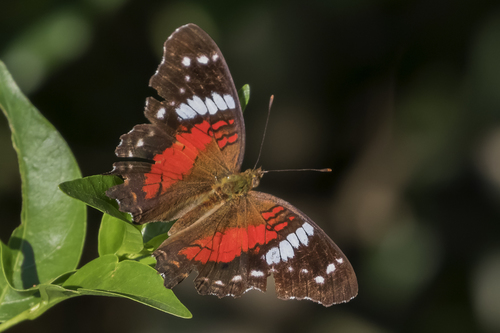
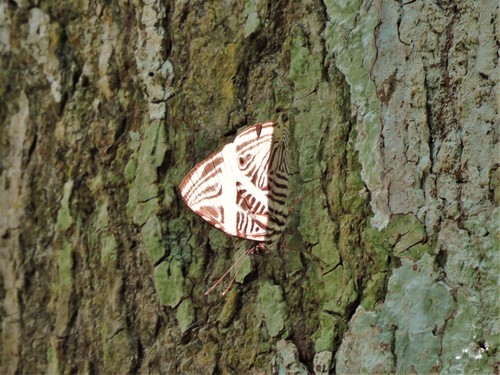
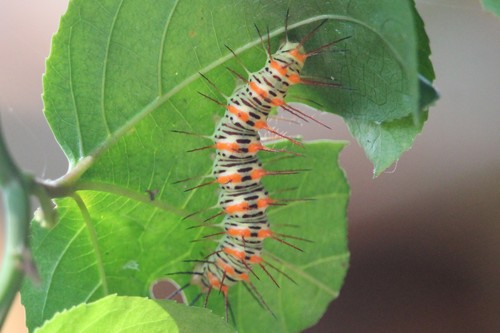
Philaethria dido, the scarce bamboo page or dido longwing, is a butterfly in the family Nymphalidae. It is found in Central America and tropical South America, both east and west of the Andes, from Brazil and Ecuador northwards to Mexico. Strays can sometimes be found in the lower Rio Grande Valley in southern Texas.

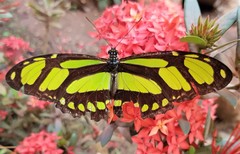
The butterflies have a wingspan of about 110 mm (4.3 in), and in Mexico are on the wing from July to December. The upper surface of the wings is black patterned with translucent green patches. The underside is similar with some brown streaks with gray scales. Philaethria dido is often confused with Siproeta stelenes. They have a similar coloration, but their wing shapes are different and whereas P. dido flies high in the canopy, S. stelenes is often to be seen in forest clearings and open secondary forest.

Three subspecies are recognized. Philaethria dido chocoensis is found only on the western side of the Andes, its range extending from Ecuador to the Chocó region in northwestern Colombia. Philaethria dido dido inhabits tropical rainforests of South America east of the Andes, from Colombia to Bolivia. Philaethria dido panamensis lives... Wikipedia →
Global Distribution

Parks Where Found

# Park Country Daily sighting probability
1 Yasuní National Park 🇪🇨 Ecuador
~10%
2 Tambopata National Reserve 🇵🇪 Peru
~10%
3 Braulio Carrillo National Park 🇨🇷 Costa Rica
~10%

Cities Where Found

# City Country Daily sighting probability
1 Curitiba 🇧🇷 Brazil
~20%
2 São Luís 🇧🇷 Brazil
~10%
3 Manaus 🇧🇷 Brazil
~10%
4 São Paulo 🇧🇷 Brazil
~10%

Before you go

What are the chances of seeing a Scarce Bamboo Page in São Paulo?

With luck

About 10% of wildlife watchers report a Scarce Bamboo Page sighting in São Paulo on a given day, based on 42 verified sightings from GBIF citizen-science data. It is the 168th most-seen of the 832 insects we can rate there. Over three days the chance rises to about 20%, and over a week to about 30%, if each day is a fresh chance.

When is the best time to see a Scarce Bamboo Page in São Paulo?

February and April–August

In those months about 10% of wildlife watchers report a Scarce Bamboo Page in São Paulo on a given day, against under 5% in March and September–January, the lowest months.

What time of day is best to see a Scarce Bamboo Page?

Between 11 am and 2 pm

Across all the parks we cover, that three-hour window holds the most Scarce Bamboo Page sightings with a recorded time, and nearly all of them come between 6 am and 6 pm: it is a daytime animal.

Is São Paulo the best place to see a Scarce Bamboo Page?

4th of 4

Of the 4 cities where we can rate Scarce Bamboo Page sightings, São Paulo ranks 4th at about 10%. The best odds are in Curitiba (Brazil, about 20%), São Luís (Brazil, about 10%) and Manaus (Brazil, about 10%).

Which relatives of the Scarce Bamboo Page live in São Paulo?

Same family: Nymphalidae

The closest relatives of the Scarce Bamboo Page that you can see in São Paulo (family Nymphalidae, Brush-footed Butterflies) are White Peacock (about 20%), Juno Silverspot (about 20%) and Lansdorf's Crescent (about 20%), with each one's daily chance of a sighting.

Where does the Scarce Bamboo Page sighting chance come from?

GBIF citizen-science records

It is estimated from how often the Scarce Bamboo Page is recorded against all the insects logged in São Paulo (42 verified sightings), calibrated against known sighting rates. Figures are rounded to the nearest 10% because citizen-science data supports honest approximations, not decimals, and months with records from fewer than five people show "—". How it works.

← Back to São Paulo