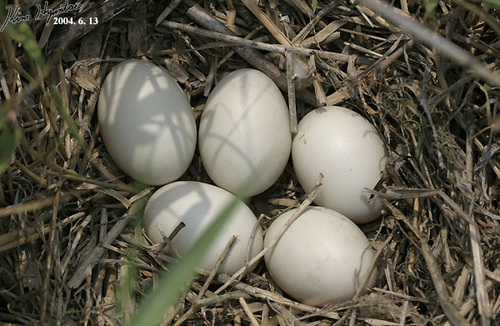
Eastern Buzzard

Eastern Buzzard

Buteo japonicus

Silhouette: Lauren Anderson · PhyloPic

LCLeast ConcernNTVUENCR
Daily sighting probability ~10% · With luck
at Sendai

In 3 days ~40% in a week ~70%

79 Verified sightings at Sendai
176 In all 3 parks From 2019 to 2026
December Best month
🌅 Crepuscular When it's spotted

About the Eastern Buzzard

The eastern buzzard or Japanese buzzard (Buteo japonicus) is a medium to large bird of prey that is sometimes considered a subspecies of the widespread common buzzard (Buteo buteo). It was formerly treated as a subspecies of the common buzzard, but molecular phylogenetic studies revealed that B. buteo as then circumscribed was polyphyletic, leading to the recognition of the eastern buzzard and Himalayan buzzard (B. refectus) as distinct species. It is native to East Asia and some parts of Russia and South Asia, with some birds wintering in Southeast Asia. It is similar to the steppe buzzard. It is carnivorous.

It includes four subspecies: B. j. burmanicus: breeds in Siberia, Mongolia, northern China, and North Korea, winters in Southeast Asia B. j. japonicus: breeds only in Japan, winters from southern Japan to southeastern China and Taiwan

Clements, J. F., T. S. Schulenberg, M. J. Iliff, B.L. Sullivan, C. L. Wood, and D. Roberson. 2011. The Clements checklist of birds of the world: Version 6.6. Downloaded from https://web.archive.org/web/20100821172048/http://www.birds.cornell.edu/clementschecklist/downloadable... Wikipedia →

Sounds

Call0:27

China · 2025

© Bo Shunqi 薄顺奇 · XC995934 · CC BY-NC-SA 4.0

Flight call0:20

Malaysia · 2024

© Lim Ying Hien · XC948991 · CC BY-NC-ND 4.0

Call1:30

China · 2024

© Bo Shunqi薄顺奇 · XC892306 · CC BY-NC-SA 4.0

Global Distribution

Parks Where Found

# Park Country Daily sighting probability
1 Nikko National Park 🇯🇵 Japan
~20%
2 Taroko National Park 🇹🇼 Taiwan
<5%
3 Doi Inthanon National Park 🇹🇭 Thailand
<5%

Cities Where Found

# City Country Daily sighting probability
1 Quanzhou 🇨🇳 China
~20%
2 Jinhua 🇨🇳 China
~20%
3 Sendai 🇯🇵 Japan
~10%
4 Daejeon 🇰🇷 South Korea
~10%
5 Seoul 🇰🇷 South Korea
~10%
6 Busan 🇰🇷 South Korea
~10%
7 Fuzhou 🇨🇳 China
~10%
8 Guiyang 🇨🇳 China
~10%
9 Beijing 🇨🇳 China
~10%
10 Tokyo 🇯🇵 Japan
~10%

Zoos & Centres Where Found

# Zoo / Centre Country
1 Shanghai Zoo 🇨🇳 China In captivity
2 Edogawa Ward Natural Zoo 🇯🇵 Japan In captivity

Before you go

What are the chances of seeing an Eastern Buzzard in Sendai?

With luck

About 10% of wildlife watchers report an Eastern Buzzard sighting in Sendai on a given day, based on 79 verified sightings from GBIF citizen-science data. It is the 48th most-seen of the 107 birds we can rate there. Over three days the chance rises to about 40%, and over a week to about 70%, if each day is a fresh chance.

When is the best time to see an Eastern Buzzard in Sendai?

February–April, September and December

In those months about 20% of wildlife watchers report an Eastern Buzzard in Sendai on a given day, against about 10% in January, May–August and October–November, the lowest months.

What time of day is best to see an Eastern Buzzard?

Between 2 and 5 am

Across all the parks we cover, that three-hour window holds the most Eastern Buzzard sightings with a recorded time, and about 6 in 10 of them come between 6 pm and 6 am: it is most active around dawn and dusk.

Is Sendai the best place to see an Eastern Buzzard?

3rd of 34

Of the 34 cities where we can rate Eastern Buzzard sightings, Sendai ranks 3rd at about 10%. The best odds are in Quanzhou (China, about 20%) and Jinhua (China, about 20%).

Which relatives of the Eastern Buzzard live in Sendai?

Same family: Accipitridae

The closest relatives of the Eastern Buzzard that you can see in Sendai (family Accipitridae, Hawks, Eagles, and Kites) are Black Kite (about 70%) and Eurasian Sparrowhawk (about 10%), with each one's daily chance of a sighting.

Where does the Eastern Buzzard sighting chance come from?

GBIF citizen-science records

It is estimated from how often the Eastern Buzzard is recorded against all the birds logged in Sendai (79 verified sightings), calibrated against known sighting rates. Figures are rounded to the nearest 10% because citizen-science data supports honest approximations, not decimals, and months with records from fewer than five people show "—". How it works.

← Back to Sendai