Japanese Badger

Japanese Badger

Meles anakuma

Silhouette: Margot Michaud · PhyloPic

LCLeast ConcernNTVUENCR Endemic
Daily sighting probability ~50% · Likely
at Sendai

In 3 days ~90% in a week >90%

142 Verified sightings at Sendai
July Best month
☀️🌙 Day & Night When it's spotted

About the Japanese Badger

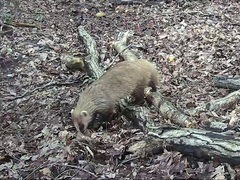
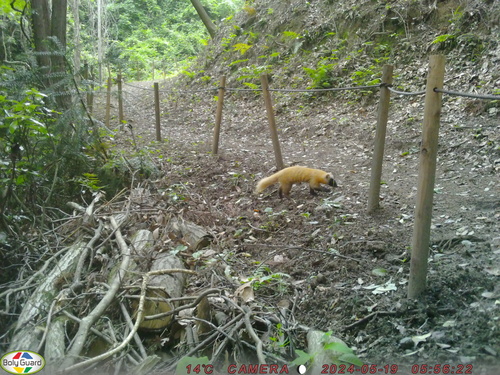
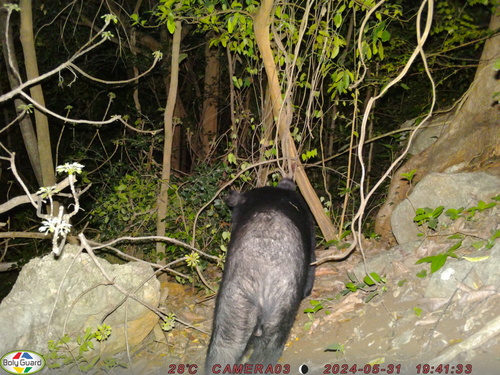
The Japanese badger (Meles anakuma) is a species of carnivoran of the family Mustelidae, the weasels and their kin. Endemic to Japan, it is found on Honshu, Kyushu, Shikoku, and Shōdoshima. It is assigned to the genus Meles with its close relatives, the European (M. meles), Caucasian (M. canescens) and Asian (M. leucurus) badgers. In Japan, it is called by the name anaguma (穴熊, 貛) meaning "hole-bear", or mujina (むじな, 狢, 貉).

At an average length of 79 cm (31 in) in males and 72 cm (28 in) in females, the Japanese badger is generally smaller and less sexually dimorphic (except in the size of the canine teeth) than its European counterparts. Tail length is between 14 and 20 cm (5.5 and 7.9 in). This species is similar or mildly larger than the Asian badger. Adults usually weigh from 3.8 to 11 kg (8.4 to 24.3 lb). The average weight of female Japanese badgers in one study from the Tokyo area was found to be 6.6 kg (15 lb) while that of males was 7.76 kg (17.1 lb). In Yamaguchi Prefecture, the average spring weight of female and male Japanese badgers was 4.4 kg (9.7 lb) and 5.7 kg (13 lb) respectively. The torso is blunt and limbs are short. The front feet are equipped... Wikipedia →

Global Distribution

Parks Where Found

# Park Country Daily sighting probability

More parks will be added in future updates.

Cities Where Found

# City Country Daily sighting probability
1 Sendai 🇯🇵 Japan
~50%
2 Osaka 🇯🇵 Japan
~10%
3 Tokyo 🇯🇵 Japan
~10%

Zoos & Centres Where Found

# Zoo / Centre Country
1 Kyoto City Zoo 🇯🇵 Japan In captivity
2 Noichi Zoological Park of the Kochi Prefecture 🇯🇵 Japan In captivity
3 Inokashira Park Zoo 🇯🇵 Japan In captivity
4 Yukyuzan Mini-Zoo 🇯🇵 Japan In captivity
5 Okinawa Zoo & Museum 🇯🇵 Japan In captivity

Before you go

What are the chances of seeing a Japanese Badger in Sendai?

Likely

About 50% of wildlife watchers report a Japanese Badger sighting in Sendai on a given day, based on 142 verified sightings from GBIF citizen-science data. It is the 4th most-seen of the 11 mammals we can rate there. Over three days the chance rises to about 90%, and over a week to over 90%, if each day is a fresh chance.

When is the best time to see a Japanese Badger in Sendai?

June to August

In those months about 80% of wildlife watchers report a Japanese Badger in Sendai on a given day, against under 5% in December to February, the lowest months.

What time of day is best to see a Japanese Badger?

Between 7 and 10 pm

Across all the parks we cover, that three-hour window holds the most Japanese Badger sightings with a recorded time, and about 6 in 10 of them come between 6 pm and 6 am: it is seen both by day and at night.

Is Sendai the best place to see a Japanese Badger?

Yes

Of the 3 cities where we can rate Japanese Badger sightings, Sendai has the highest daily chance: about 50%. Next come Osaka (Japan, about 10%) and Tokyo (Japan, about 10%).

Where does the Japanese Badger sighting chance come from?

GBIF citizen-science records

It is estimated from how often the Japanese Badger is recorded against all the mammals logged in Sendai (142 verified sightings), calibrated against known sighting rates. Figures are rounded to the nearest 10% because citizen-science data supports honest approximations, not decimals, and months with records from fewer than five people show "—". How it works.

← Back to Sendai