Japanese Marten

Japanese Marten

Martes melampus

Silhouette: Margot Michaud · PhyloPic

LCLeast ConcernNTVUENCR Endemic
Daily sighting probability ~40% · Likely
at Sendai

In 3 days ~80% in a week >90%

75 Verified sightings at Sendai
January Best month
☀️🌙 Day & Night When it's spotted

About the Japanese Marten

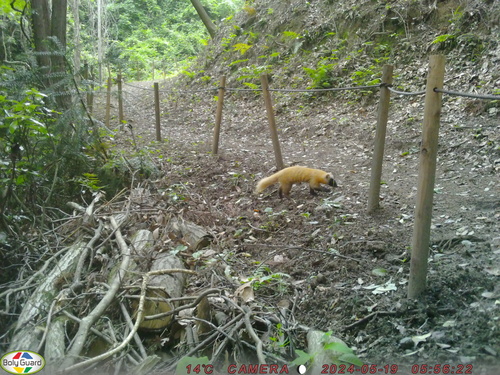
The Japanese marten (Martes melampus) is a marten species endemic to Japan. It is native to the forested regions of Honshu, Kyushu, Shikoku, and Tsushima, Japan. It is agile, territorial, and is important in seed dispersal in northern Japan's shrublands. Its coat varies depending on the region from yellow to brown. It is least concerned in conservations status despite habitat loss from logging and forest fragmentation. Conservation efforts include legal protection and habitat restoration. Additionally, it is associated with shapeshifting and omens in Japanese folklore.

It is 0.5 m (1.6 ft) in length typically, not including a 20 cm (8 in) long tail, and between 1 and 1.5 kg (2.2 and 3.3 lb) in weight. Males are generally larger than females. The pelage varies in color from dark brown to dull yellow with a cream-colored throat. Honshu and Kyushu martens have yellow fur coats, while Tsushima and Shikoku martens have brown fur coats.

Both males and females are territorial; the size of each individual's territory depends on food availability. The Japanese marten is omnivorous, preferring meat from fish, frogs, and small birds and mammals, but consuming... Wikipedia →
Global Distribution

Parks Where Found

# Park Country Daily sighting probability

More parks will be added in future updates.

Cities Where Found

# City Country Daily sighting probability
1 Sendai 🇯🇵 Japan
~40%

Zoos & Centres Where Found

# Zoo / Centre Country
1 Inokashira Park Zoo 🇯🇵 Japan In captivity

Before you go

What are the chances of seeing a Japanese Marten in Sendai?

Likely

About 40% of wildlife watchers report a Japanese Marten sighting in Sendai on a given day, based on 75 verified sightings from GBIF citizen-science data. It is the 5th most-seen of the 11 mammals we can rate there. Over three days the chance rises to about 80%, and over a week to over 90%, if each day is a fresh chance.

When is the best time to see a Japanese Marten in Sendai?

January

In that month about 60% of wildlife watchers report a Japanese Marten in Sendai on a given day, against about 20% in August and September, the lowest months.

What time of day is best to see a Japanese Marten?

Between 4 and 7 pm

Across all the parks we cover, that three-hour window holds the most Japanese Marten sightings with a recorded time, and about half of them come between 6 pm and 6 am: it is seen both by day and at night.

Where else can you see a Japanese Marten?

Only Sendai, in our data

Sendai is the only city on Wallace's Line with enough records to rate Japanese Marten sightings: about 40% of wildlife watchers there report one on a given day.

Where does the Japanese Marten sighting chance come from?

GBIF citizen-science records

It is estimated from how often the Japanese Marten is recorded against all the mammals logged in Sendai (75 verified sightings), calibrated against known sighting rates. Figures are rounded to the nearest 10% because citizen-science data supports honest approximations, not decimals, and months with records from fewer than five people show "—". How it works.

← Back to Sendai