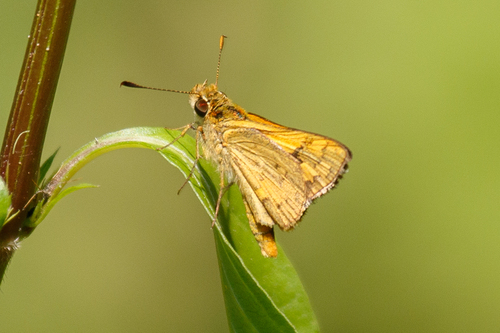
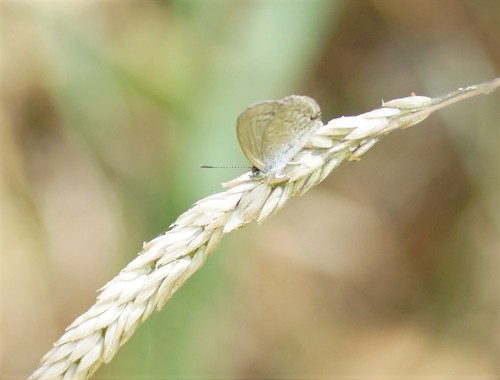
Dainty Swallowtail

Dainty Swallowtail

Papilio anactus

Daily sighting probability <5% · Rare
at Sydney

In 3 days ~10% in a week ~20%

15 Verified sightings at Sydney
17 In all 2 parks From 2019 to 2026
November Best month
☀️ Diurnal When it's spotted

About the Dainty Swallowtail

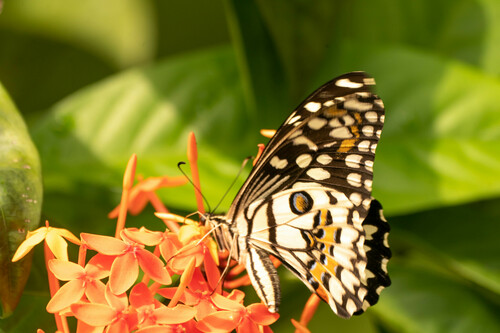
Papilio anactus, the dainty swallowtail, dingy swallowtail or small citrus butterfly is a medium-sized butterfly from the family Papilionidae, that is endemic to Australia. For protection against predators, this non-poisonous butterfly mimics the poisonous male Cressida cressida, another swallowtail butterfly that obtains its toxic properties through its host plant, the Dutchman's pipe.

Papilio anactus is endemic to Australia. It was originally only present in New South Wales, Victoria and Queensland, but due to the growing of citrus, a larval food plant of this species, in orchards, the species spread to South Australia in the late 1920s. Papilio anactus is not present on Kangaroo Island or elsewhere in Australia, as there are currently too few citrus trees. Sadly this butterfly is much less common than it once used to be.

It also occurs on New Caledonia. There, it may be an introduced species or a vagrant. The eggs are relatively large, pale yellow, and roughly spherical. The eggs change to an orange colour when the larvae are almost ready to emerge.

Females only lay eggs on the newly grown leaves of the host plant. They are laid at the... Wikipedia →

Global Distribution

Parks Where Found

# Park Country Daily sighting probability
1 Hattah-Kulkyne National Park 🇦🇺 Australia
~10%
2 Blue Mountains National Park 🇦🇺 Australia
~10%

Cities Where Found

# City Country Daily sighting probability
1 Melbourne 🇦🇺 Australia
~20%
2 Brisbane 🇦🇺 Australia
~10%
3 Sydney 🇦🇺 Australia
<5%

Before you go

What are the chances of seeing a Dainty Swallowtail in Sydney?

Rare

Under 5% of wildlife watchers report a Dainty Swallowtail sighting in Sydney on a given day, based on 15 verified sightings from GBIF citizen-science data. It is the 377th most-seen of the 742 insects we can rate there. Over three days the chance rises to about 10%, and over a week to about 20%, if each day is a fresh chance.

When is the best time to see a Dainty Swallowtail in Sydney?

Any time of year

In every month with enough records, under 5% of wildlife watchers report a Dainty Swallowtail in Sydney on a given day, so our monthly data shows no clear season.

What time of day is best to see a Dainty Swallowtail?

Between 2 and 5 pm

Across all the parks we cover, that three-hour window holds the most Dainty Swallowtail sightings with a recorded time, and about 8 in 10 of them come between 6 am and 6 pm: it is a daytime animal.

Is Sydney the best place to see a Dainty Swallowtail?

3rd of 3

Of the 3 cities where we can rate Dainty Swallowtail sightings, Sydney ranks 3rd at under 5%. The best odds are in Melbourne (Australia, about 20%) and Brisbane (Australia, about 10%).

Which relatives of the Dainty Swallowtail live in Sydney?

Same genus: Papilio

The closest relatives of the Dainty Swallowtail that you can see in Sydney (genus Papilio, Common Swallowtails) are Orchard Swallowtail (about 20%) and Lime Swallowtail (about 10%), with each one's daily chance of a sighting.

Where does the Dainty Swallowtail sighting chance come from?

GBIF citizen-science records

It is estimated from how often the Dainty Swallowtail is recorded against all the insects logged in Sydney (15 verified sightings), calibrated against known sighting rates. Figures are rounded to the nearest 10% because citizen-science data supports honest approximations, not decimals, and months with records from fewer than five people show "—". How it works.

← Back to Sydney